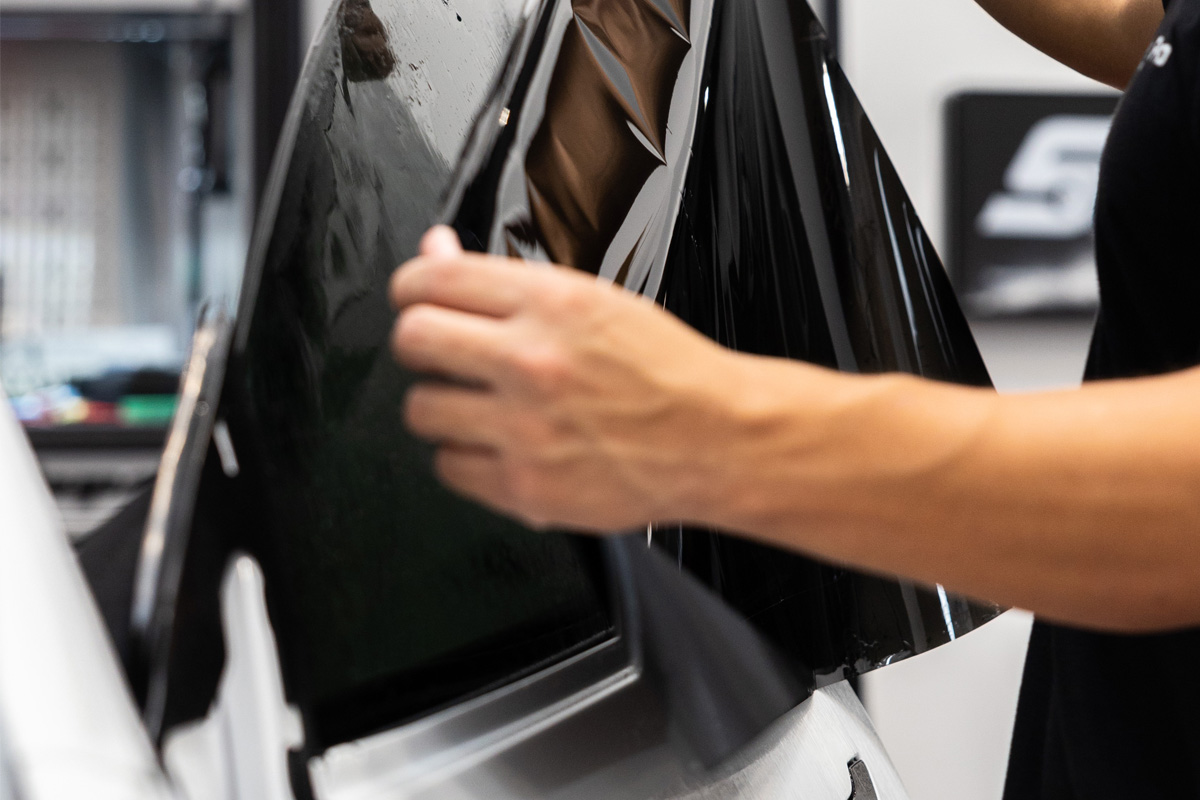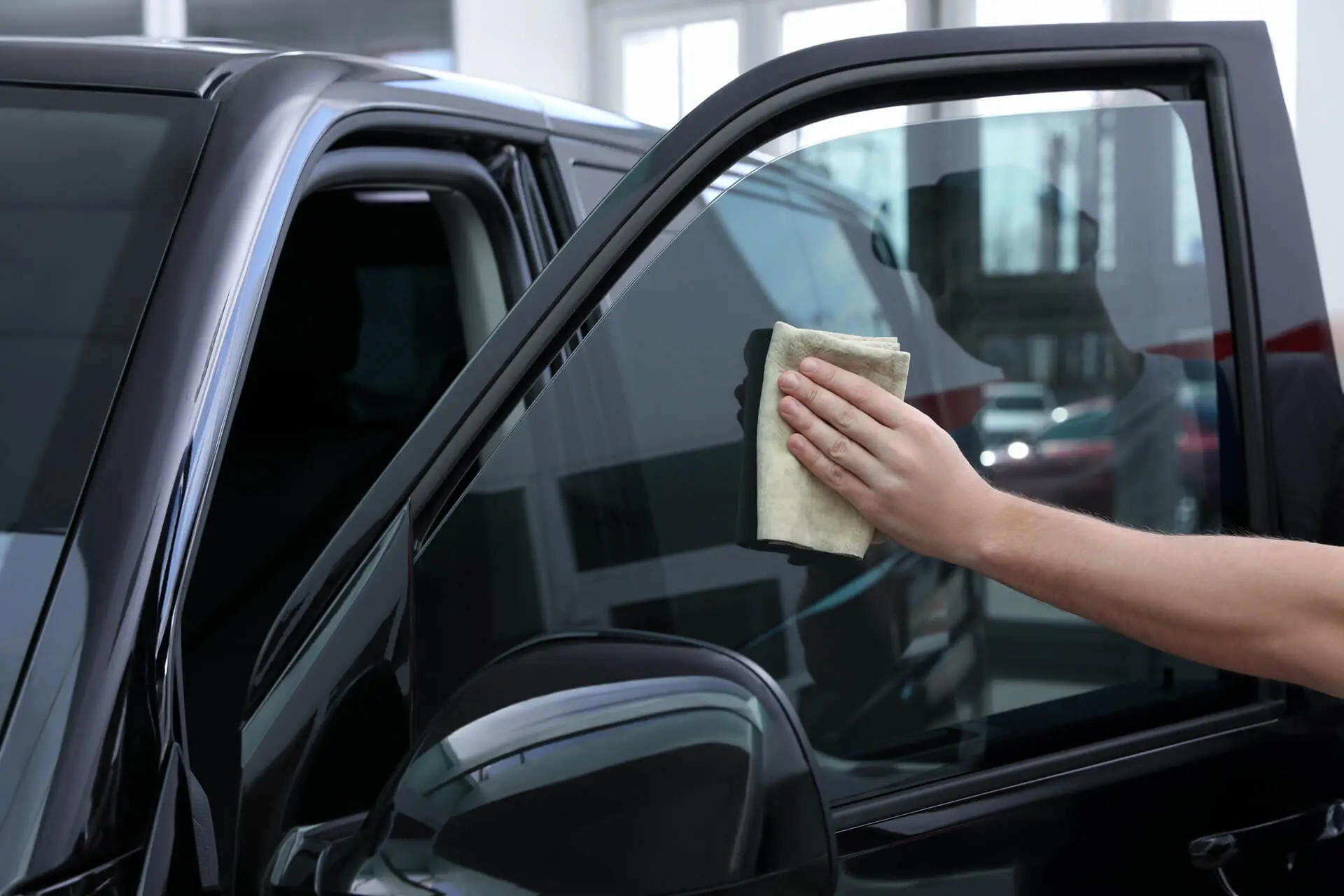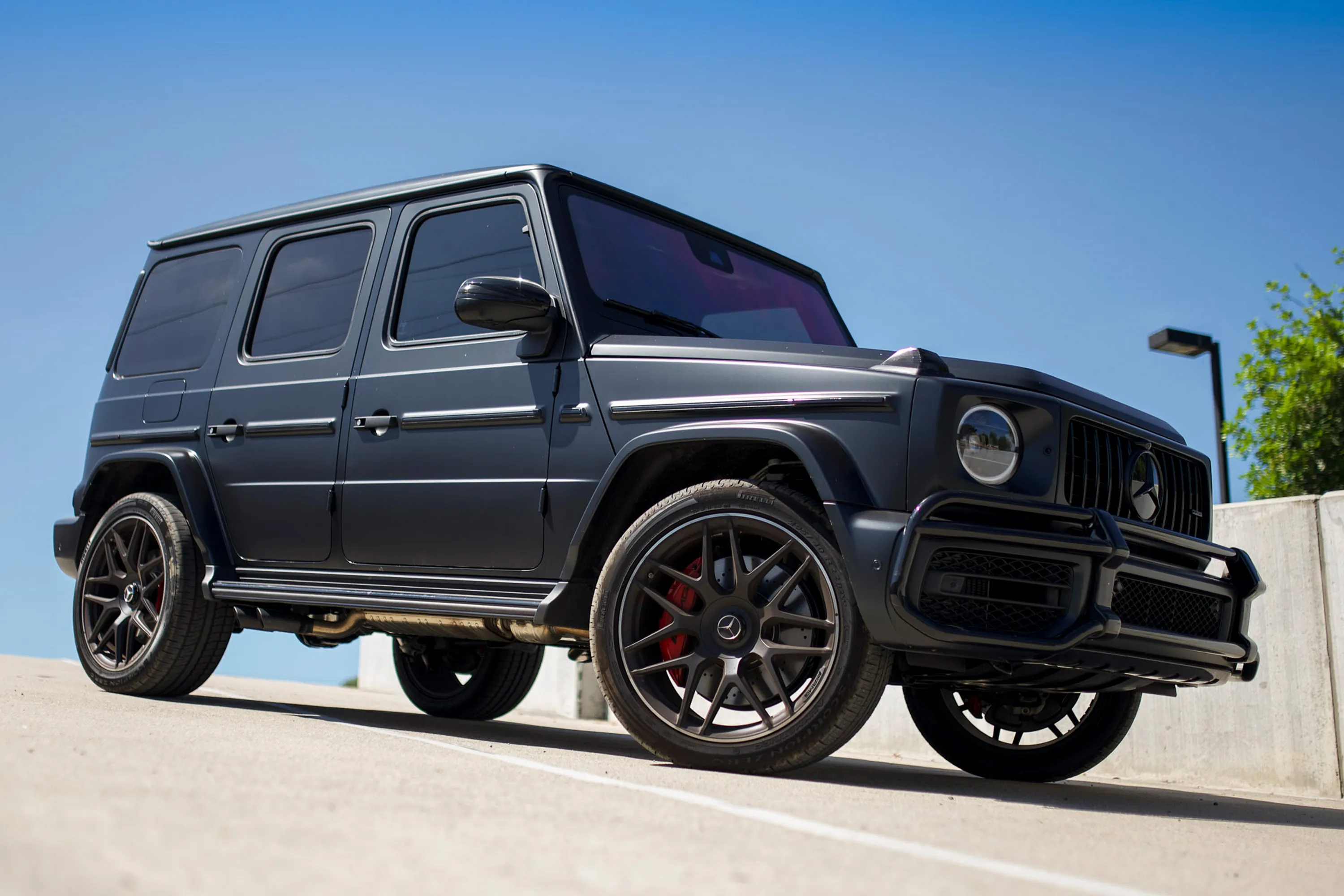

Ceramic Window Tint in Las Vegas can make a noticeable difference in cabin comfort when your vehicle spends hours under Southern Nevada sun. The biggest mistake many buyers make is assuming darker tint automatically means better heat rejection. Tint darkness and heat rejection are related only in part. The film construction matters just as much.
Ceramic Pro offers several automotive window film tiers, including Carbon X, Ceramic IR, and Ultimate IR. Each uses a different construction and offers a different level of infrared heat rejection.
That gives Las Vegas, NV drivers several choices.
A driver who wants a darker appearance and solid heat control may be happy with one film. Someone with a large windshield, panoramic roof, or luxury vehicle may want stronger infrared rejection even at a lighter shade.
Ceramic Pro Las Vegas is an official Ceramic Pro Elite Dealer located at 8540 Dean Martin Dr. Ste 170 in Las Vegas, NV. We install Ceramic Pro window tint for drivers from Las Vegas, NV, Henderson, NV, Summerlin, NV, and nearby areas.
Ceramic window tint is automotive window film made with ceramic or ceramic-based particles rather than relying on traditional metallic film construction.
Ceramic Pro uses nano-ceramic materials in several of its window films.
The goal is to reject portions of solar energy while maintaining clear visibility and avoiding the electronic interference associated with some metallic films.
Depending on the Ceramic Pro film selected, benefits can include:
The amount of heat rejection changes from one film line to another.
That is why buyers comparing Ceramic Window Tint in Las Vegas should look beyond shade percentage alone.
Las Vegas, NV vehicles can spend hours parked or driven under intense sun.
Window glass gives solar energy a path into the cabin. Seats, dashboards, steering wheels, consoles, and trim absorb that energy and become warm.
Air conditioning can cool the cabin, but tint can reduce part of the solar energy entering through the glass in the first place.
Ceramic Pro’s current window film lineup is built around different levels of infrared and UV rejection.
For Las Vegas drivers, that can make window film selection less about appearance alone and more about how the vehicle is used.
Think about:
Two vehicles with the same tint darkness can perform differently if the films use different technology.
Infrared radiation is part of the solar energy that contributes to the heat you feel through automotive glass.
Window film manufacturers often report infrared rejection as a percentage.
A higher figure means the film rejects more infrared energy within the wavelength range used for that test.
This number is useful, but buyers should pay attention to how it was measured.
Ceramic Pro’s published window film specification sheet lists infrared rejection across defined wavelength ranges and also publishes Total Solar Energy Rejected, commonly called TSER.
Those numbers do not mean exactly the same thing.
Infrared rejection measures how much infrared radiation is rejected within a stated wavelength range.
TSER measures the percentage of total solar energy rejected through the glass-film combination.
When comparing Ceramic Window Tint in Las Vegas, both figures can help you understand film performance.
VLT stands for Visible Light Transmission.
It tells you how much visible light passes through the film.
A higher VLT means a lighter film.
A lower VLT means a darker film.
For example:
One of the biggest advantages of higher-performing ceramic film is that heat rejection does not depend only on making the glass dark.
Ceramic Pro publishes light-shade films with strong infrared rejection.
That gives drivers another choice.
You can select a lighter appearance while still getting substantial heat control.
Not always.
This is one of the most common misunderstandings about automotive tint.
A darker film reduces more visible light, but visible light transmission and infrared rejection are separate measurements.
A dark, low-cost film may block plenty of visible light while offering weaker infrared heat rejection than a lighter ceramic film.
Ceramic Pro’s own published data shows this clearly.
Its Ultimate IR 80 film is a very light film, yet Ceramic Pro reports infrared rejection figures around 95% for portions of the infrared spectrum under its published test conditions.
That means drivers do not necessarily need very dark tint to get strong infrared rejection.
For Las Vegas, NV owners who want heat control without making every window very dark, that can be a major reason to compare ceramic film tiers.
Ceramic Pro positions Carbon X as an entry point into its higher-performing window film lineup.
The company says Carbon X uses nano-carbon particles and infrared-blocking materials.
Ceramic Pro’s published specification sheet lists different results depending on shade.
Examples from its film data include:
Ceramic Pro also reports infrared rejection figures that vary by VLT and test wavelength.
Carbon X can make sense for drivers who want:
Ceramic Pro Las Vegas offers Ceramic Pro Carbon X Window Tint for vehicle owners who want to compare it with other Ceramic Pro films.
Ceramic IR moves farther into infrared-focused heat control.
Ceramic Pro states that its Ceramic IR Window Tint can block up to 96% of infrared heat, depending on the shade and test conditions.
The film uses nano-ceramic technology combined with infrared-blocking materials.
Ceramic Pro also states that Ceramic IR can still reject about 88% of infrared energy at a light 70% VLT under its published testing.
That is a useful point for Las Vegas drivers.
A lighter film can still provide strong infrared rejection.
Ceramic IR may fit drivers who want:
This can be especially useful on a windshield or other large piece of glass where a driver wants heat rejection without making the glass very dark.
Ultimate IR sits at the top of Ceramic Pro’s current automotive tint lineup.
Ceramic Pro states that Ultimate IR blocks up to 99% of infrared radiation under its published testing.
The manufacturer’s specification sheet lists several Ultimate IR shades.
Examples include:
The lighter options are one of the more interesting parts of the lineup.
Ceramic Pro reports that Ultimate IR can still reject up to about 95% of infrared radiation with its light 80% VLT film within specified test ranges.
That allows drivers to keep a close-to-clear appearance while still targeting infrared heat.
Ultimate IR may fit:
Ceramic Pro states that Ultimate IR is available through Ceramic Pro Elite Dealers.
Ceramic Pro Las Vegas is an official Elite Dealer.
When comparing Ceramic Window Tint in Las Vegas, it helps to think of these films as different levels of heat control.
Carbon X can be a fit when you want a ceramic-infused film with good heat control, UV filtering, glare reduction, and multiple shades.
It offers a step up from simple appearance-focused tint.
Ceramic IR places more attention on infrared rejection.
Ceramic Pro reports up to 96% infrared heat rejection with Ceramic IR, depending on the film shade and testing conditions.
This can be a good middle choice for drivers who place a high value on cabin comfort.
Ultimate IR is Ceramic Pro’s highest-performing heat-rejection film.
Ceramic Pro reports up to 99% infrared rejection.
It also maintains strong infrared performance at lighter VLTs.
That can make it attractive for windshields, panoramic roofs, luxury cars, EVs, and vehicles with large glass areas.
Windshields represent a large area of automotive glass, so they can play a major role in cabin heat.
A very dark windshield film may not be suitable or legal for normal road use.
That is where light ceramic films become useful.
Ceramic Pro publishes high-VLT options designed to reject infrared heat while maintaining a much lighter appearance.
Ultimate IR 70 and 80 are examples.
Ceramic IR also offers a 70 VLT option with strong reported infrared rejection.
Before applying any windshield tint, the installation should comply with current Nevada law.
The shop should discuss film placement and VLT with you before installation.
Panoramic roofs can add a large amount of glass above the cabin.
Ceramic Pro specifically identifies Ultimate IR as suitable for large automotive glass areas such as panoramic sunroofs.
That can make high-infrared-rejection film worth considering on vehicles with large glass roofs.
Examples include many:
The right film depends on the factory glass, desired appearance, and legal application.
Do not assume factory privacy glass already provides the same infrared rejection as a high-performing ceramic film.
Factory glass darkness and aftermarket film performance are separate topics.
Infrared heat rejection is only part of the reason drivers install ceramic tint.
Ceramic Pro reports more than 99% UV filtering across several of its current window films.
UV exposure can contribute to fading and deterioration of interior materials over time.
That can affect:
UV filtering can also reduce UV exposure reaching vehicle occupants through treated glass.
Ceramic Pro publishes UV rejection figures around 99.9% for many Ultimate IR and Carbon X shades.
When comparing films, ask about both UV and infrared performance.
They are not the same measurement.
Ceramic Pro says its nano-ceramic and nano-carbon window films are metal-free and designed to avoid signal interference.
That matters because some metallic window films can interfere with radio-frequency signals.
Modern vehicles rely on several wireless systems, including:
Ceramic Pro states that Ultimate IR and Ceramic IR are designed without metallic construction that interferes with these signals.
For vehicles packed with electronics, this can be another reason to compare ceramic film with older metallic tint technologies.
Traditional dyed window tint mainly changes appearance and reduces visible light.
Ceramic tint places more attention on solar performance.
A ceramic film can provide stronger infrared rejection without depending entirely on darkness.
That distinction matters in Las Vegas, NV.
If the goal is simply a darker look, many tint types can provide that.
If the goal is reducing the infrared heat reaching the cabin, look at the actual performance data for the film.
Ask for:
Do not compare tint based only on how dark it looks from outside.
EVs often have large glass areas.
Many Tesla models also use large windshields and roof glass.
That makes film performance worth comparing carefully.
Drivers may want a lighter film with strong infrared rejection so the cabin gets heat control without making the glass appear extremely dark.
Ceramic Pro Las Vegas offers dedicated Tesla window tinting services.
Tesla Cybertruck owners can also review our Cybertruck window tint page.
The same heat-rejection principles apply to other EVs with large glass surfaces.
Start with what you want the tint to do.
Compare Ceramic IR and Ultimate IR.
Look at infrared rejection and TSER rather than choosing only by darkness.
Carbon X may be worth comparing with Ceramic IR.
Your preferred VLT can help narrow the choice.
Ultimate IR deserves a close look because Ceramic Pro publishes strong infrared rejection even in higher VLT options.
Ask about Ultimate IR and other films suitable for large glass areas.
Lower VLT films allow less visible light through and create a darker appearance.
A lighter shade may fit your preferences better.
The right answer is not automatically the darkest film or highest-performing film.
It depends on the vehicle, glass, desired appearance, heat concerns, and legal limits.
Heat rejection does not override Nevada window tint law.
Nevada regulates automotive window tint and maintains rules covering visible light transmission and windshield applications.
The Nevada Department of Motor Vehicles also has a formal window-tint exemption process for qualifying medical situations, with separate requirements.
Because laws can change and vehicle glass can affect measured VLT, discuss the intended installation with the shop before choosing a shade.
You can also review current motor vehicle regulations through the Nevada Legislature.
Do not choose a tint percentage based only on what looks good in a photo.
The final installation still needs to comply with applicable law.
A good window tint comparison should answer more than one question.
Do not ask only, “How dark is it?”
Ask:
For Las Vegas, NV driving, infrared heat rejection can be one of the most useful numbers to compare.
Carbon X, Ceramic IR, and Ultimate IR each occupy a different position in Ceramic Pro’s window film lineup.
Bottom line, Ceramic Window Tint in Las Vegas should be chosen based on heat rejection, appearance, visibility, glass area, and legal requirements rather than darkness alone.
If you are comparing Ceramic Window Tint in Las Vegas, Ceramic Pro Las Vegas can show you the available Ceramic Pro films and discuss which heat-rejection level fits your vehicle.
We can talk about:
Visit us at:
Ceramic Pro Las Vegas
8540 Dean Martin Dr. Ste 170
Las Vegas, NV
We serve drivers from Las Vegas, NV, Henderson, NV, Summerlin, NV, and nearby communities.
Our shop is open Monday through Friday from 9 a.m. to 6 p.m.
Call (702) 943-8877 or visit our contact page to schedule an appointment.
Ceramic window tint is automotive film that uses ceramic-based particles to help reject infrared heat and UV radiation while controlling visible light. Ceramic Pro offers several ceramic and ceramic-infused window film options.
No. Darkness is measured by visible light transmission, while infrared rejection measures a different part of solar energy. A high-performing light ceramic film can reject more infrared heat than a darker lower-performing film.
Ceramic Pro states that Ultimate IR can reject up to 99% of infrared radiation under its published testing. Performance varies by film shade and test wavelength.
Ceramic Pro reports up to 96% infrared rejection for Ceramic IR and up to 99% for Ultimate IR. Ultimate IR also maintains strong infrared performance in lighter VLT options.
Ceramic Pro reports more than 99% UV rejection for its higher-performing window films, with many published specifications showing about 99.9% UV rejection.
Ceramic Pro states that its nano-ceramic films use non-metallic construction designed to avoid interference with cellular, GPS, Bluetooth, satellite radio, and other electronic signals.
Ceramic Pro Las Vegas is located at 8540 Dean Martin Dr. Ste 170 in Las Vegas, NV. Call (702) 943-8877 or visit our contact page to schedule an appointment.
Ceramic Pro Window Tint
Publisher: Ceramic Pro
Publication Date: Current reference page
URL: https://ceramicpro.com/window-tint/
Ultimate IR Window Tint
Publisher: Ceramic Pro
Publication Date: Current reference page
URL: https://ceramicpro.com/ultimate-ir/
Ceramic IR Window Tint
Publisher: Ceramic Pro
Publication Date: Current reference page
URL: https://ceramicpro.com/kavaca/window-tint/ceramic-ir-window-tint/
KAVACA Window Film Specification Sheet
Publisher: Ceramic Pro
Publication Date: 2022
URL: https://ceramicpro.com/wp-content/uploads/2022/12/WF-Spec-SheetText.pdf
Ceramic Pro KAVACA Window Films
Publisher: Ceramic Pro
Publication Date: Current reference page
URL: https://ceramicpro.com/kavaca/window-tint/
Nevada Revised Statutes Chapter 484D
Publisher: Nevada Legislature
Publication Date: Current 2025 NRS
URL: https://www.leg.state.nv.us/NRS/NRS-484D.html
Nevada Window Tint Exemption Application
Publisher: Nevada Department of Motor Vehicles / Department of Public Safety
Publication Date: Current form
URL: https://dmv.nv.gov/pdfforms/do200.pdf
Tell us about your vehicle, daily driving, and goals so we can recommend the best package for protection and style. Share the services you want to compare, such as paint protection film, ceramic coating, window tint, vinyl wrap, or paint correction. Include your timeline and any photos that show panels, glass, or problem areas. The more details you provide, the more precise our estimate and scheduling will be.
Explore the many services we offer by clicking the boxes below