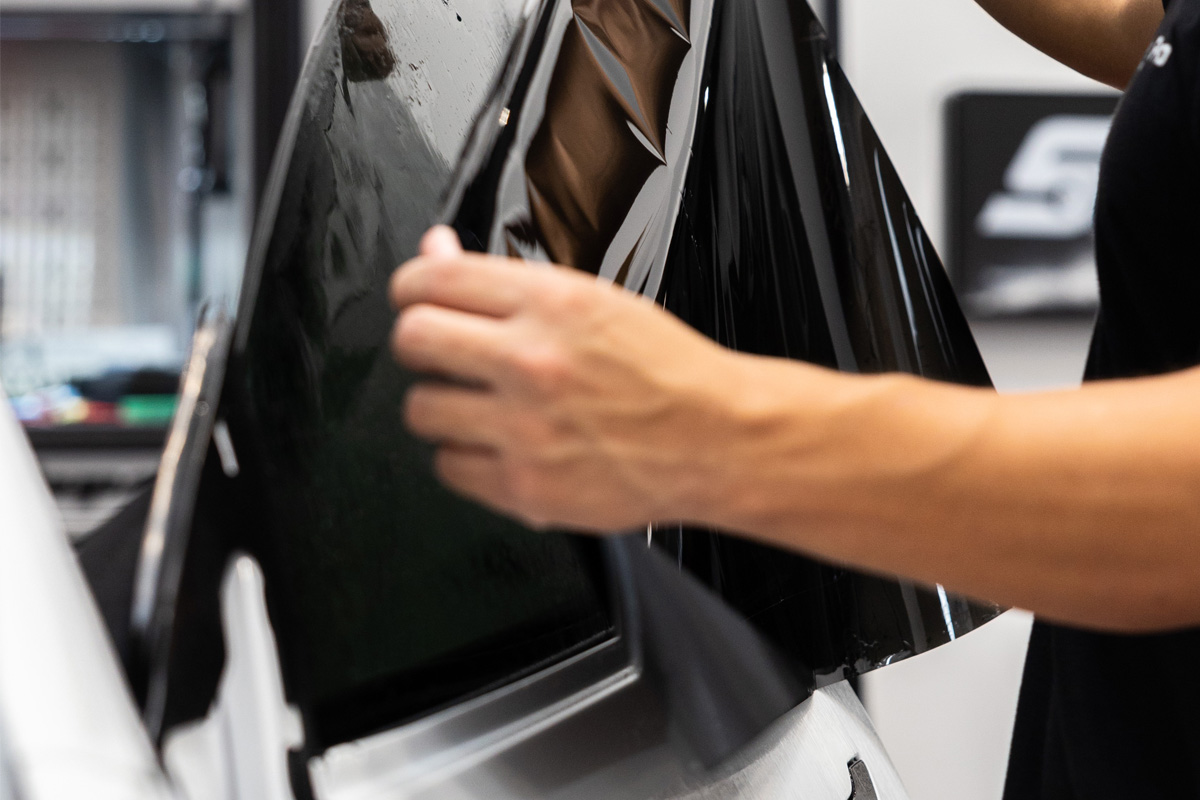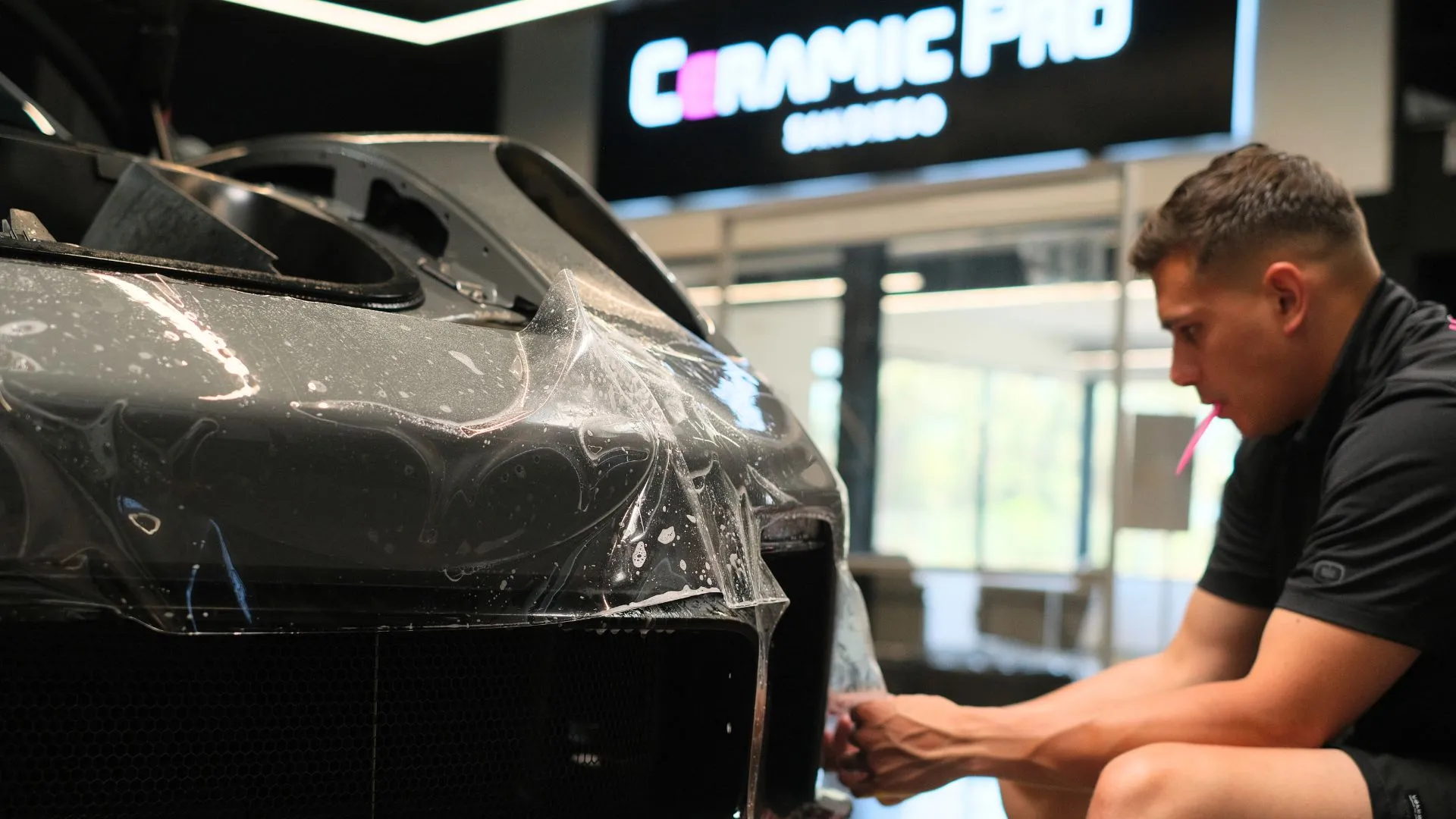

PPF removal and replacement in Las Vegas becomes necessary when paint protection film is damaged, badly worn, lifting, heavily stained, or simply ready to be exchanged for fresh film. The job may involve one damaged bumper section, a full-front package, or film across an entire vehicle.
Removal deserves just as much attention as installation.
Good paint protection film is designed to protect the surface underneath, but removing aged film is not a job where you want someone aggressively pulling material from cold paint. Film age, adhesive condition, previous bodywork, paint quality, temperature, and removal technique all affect how the job should be handled.
The replacement side of the job also varies. Once old film comes off, the paint may need adhesive removal, cleaning, inspection, polishing, chip repair, or other prep before new PPF goes on.
Ceramic Pro Las Vegas installs professional paint protection film for drivers in Las Vegas, NV, Henderson, NV, Summerlin, NV, Spring Valley, NV, Enterprise, NV, and nearby Las Vegas Valley communities.
If you are researching PPF removal and replacement in Las Vegas, this guide explains when removal makes sense, what changes the quote, how paint safety is handled, and what should happen before fresh film is installed.
There is no single age when every piece of paint protection film must come off.
Film condition matters more than a generic calendar date.
You may want to discuss PPF removal and replacement in Las Vegas when you notice:
A damaged front bumper does not automatically mean film on the rest of the vehicle needs removal.
One of the useful traits of PPF is that individual panels can often be replaced.
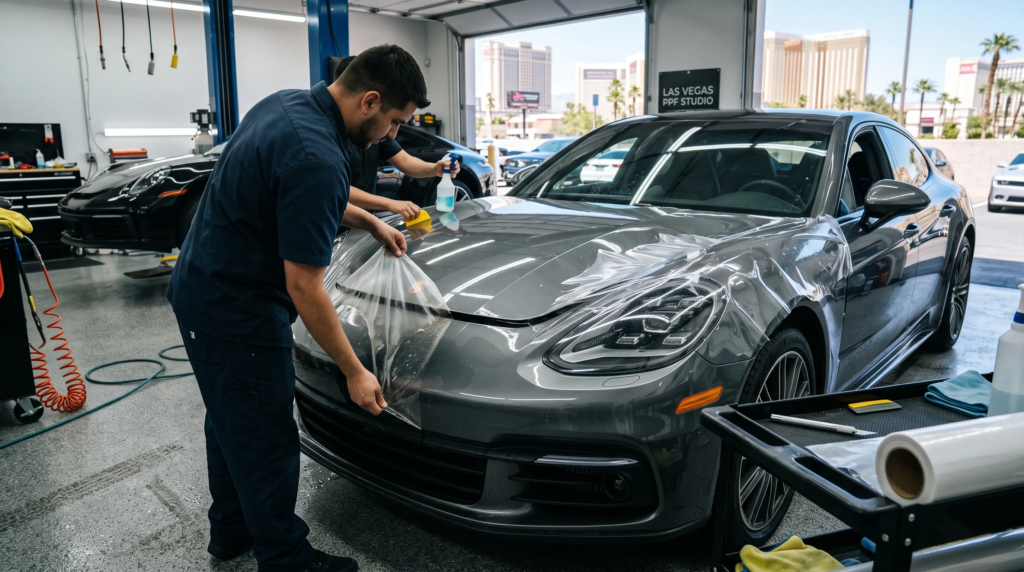
If one fender takes a hit while the hood and bumper film still look good, the shop can inspect whether only that section needs attention.
No.
Replacement can be panel-specific.
A vehicle may need:
The decision depends on why the film is being removed.
A rock, scrape, or parking incident may damage one section.
If a body shop repairs or repaints a panel, the PPF on that panel usually has to come off.
Fresh film can be installed later when the repaired paint is ready for it and the installer is comfortable with the surface.
If all front-end film was installed at the same time and has aged similarly, replacing the package together may produce a more uniform appearance.
Owners moving to matte PPF, black PPF, or color PPF may choose to remove much more of the existing clear film.
Professional film removal is a controlled process.
XPEL, another major PPF manufacturer, recommends professional removal of paint protection film.
Its published removal directions call for using steam to keep the film pliable and wet, then pulling the film back at a shallow angle of less than 45 degrees.
That technique is meant to help the adhesive come away with the film rather than staying on the paint.
A shop performing PPF removal and replacement in Las Vegas may adjust its method based on:
Removal should not be treated like tearing off a sticker.
The technician needs to watch what the film and paint are doing as the material comes away.
Cold PPF can behave differently from warmed film.
Heat can soften the adhesive and keep the polyurethane more flexible during removal.
XPEL’s current care instructions recommend steam for PPF removal and a pull angle under 45 degrees.
Pulling film nearly parallel to the panel can help reduce adhesive left behind.
A steep upward pull can place different forces on the surface.
That matters most when the paint history is uncertain.
Heat also needs to be controlled.
More heat is not automatically better.
A trained installer works with the film and adhesive rather than overheating the paint or nearby trim.
High-quality PPF is made to be removable from suitable automotive paint when the job is performed correctly.
XPEL states that properly removed PPF should not harm the underlying paint.
There is still an important qualification.
The condition and history of the paint matter.
Paint safety can be affected by:
Ceramic Pro’s current PPF warranty applies its film coverage to exterior factory clear-coated automotive panels and recommends addressing chips, scuffs, scrapes, and other imperfections before PPF installation to reduce problems such as paint lifting.
That is why PPF removal and replacement in Las Vegas should begin with a paint-history conversation.
Factory paint and aftermarket refinishing are not always the same.
A repainted bumper or hood may have:
If a panel has been repainted, tell the PPF installer before removal begins.
Do not assume the shop can identify every repaired area just by looking at it.
Useful details include:
A professional shop may approach a repainted panel more cautiously because there is a greater unknown beneath the film.
Sometimes PPF comes away cleanly.
Other times adhesive remains on the paint.
The amount can depend on:
XPEL’s removal guidance recommends a general adhesive remover when adhesive remains after film removal.
3M also sells an automotive adhesive remover made to dissolve adhesive residue on most cured automotive paint without abrasive scraping.
The product used by a shop should be suitable for the surface being cleaned.
The technician should not attack adhesive with aggressive scraping tools that can cut or gouge paint.
Once residue is removed, the panel should be cleaned and inspected before new film is installed.
Removing the PPF is only the first part of a replacement job.
The underlying panel then needs to be evaluated.
The shop may check for:
This inspection tells the installer what needs to happen next.
If the paint looks clean and healthy, preparation may be straightforward.
If the surface has defects, additional work may be needed before new PPF is installed.
Sometimes.
Removing film can reveal paint that has been covered for years.
That surface may look very good because the PPF took much of the road exposure.
It can also reveal:
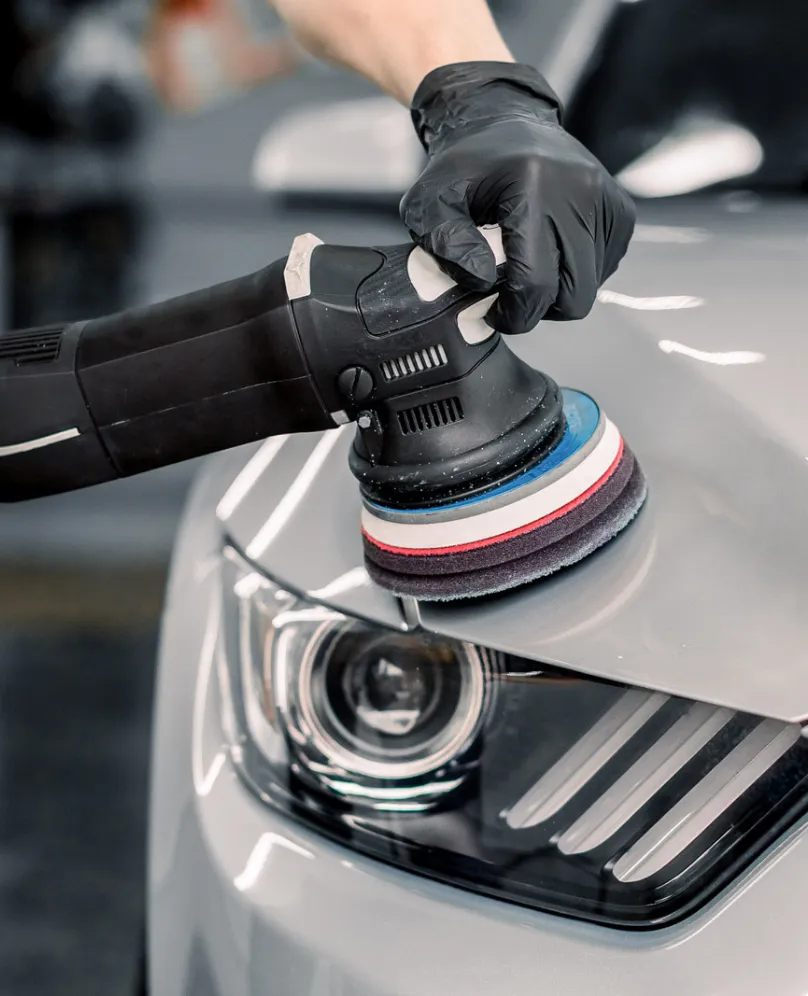
Paint correction may be recommended when suitable defects should be reduced before new clear film goes on.
Ceramic Pro’s current warranty guidance strongly recommends machine polishing for vehicles more than three months old before PPF installation.
That does not mean every replacement job needs heavy polishing.
The paint should be inspected after the film is removed.
A shop should not promise an exact prep process before seeing what is underneath.
There is no responsible single price that applies to every PPF removal and replacement in Las Vegas job.
The quote depends on the vehicle and what the technician finds.
We recommend requesting a vehicle-specific quote rather than relying on generic online pricing.
Factors that can change the quote include:
Removing one bumper takes less work than stripping a full vehicle.
Older film may behave differently during removal than newer material.
Film that releases cleanly can require less cleanup than film leaving extensive residue.
Complex bumpers, vents, mirrors, spoilers, and body lines can add removal and replacement work.
A repainted panel may need a slower, more cautious removal process.
Correction, chip work, adhesive cleanup, or other prep can add work before replacement.
Replacing one panel is different from installing an entire full-front or full-body package.
Clear, matte, black, and color PPF are different projects.
The shop should know whether coating is present on uncovered surfaces or related panels.
The most useful quote identifies removal, surface prep, and replacement coverage separately so you know what work is being performed.
A panel-by-panel approach can make sense when damage is isolated.
Suppose the front bumper film has several deep impacts, but the hood and fender film remain clear and well attached.
The bumper may be the only section that needs replacement.
The shop can inspect:
There is one appearance issue worth considering.
Old film and fresh film may not look exactly the same if the surrounding PPF has been exposed to years of driving and washing.
That does not mean every older panel must automatically be replaced.
It simply gives you another point to discuss before approving the work.
Sometimes the work can move from removal into preparation and replacement without a long gap.
Other vehicles may need extra work.
A same-day transition depends on what is discovered after removal.
Possible reasons the replacement stage may need more attention include:
If the old film comes off and the underlying paint is healthy, the process can be more straightforward.
If a problem appears, putting new film over it immediately may not be the right choice.
The installer should address the surface first.
Las Vegas heat affects how exterior films age, but removal should still happen under controlled shop conditions.
A vehicle baking outside in summer sun can have extremely hot body panels.
That does not make a parking lot the ideal place to peel film.
A professional shop can manage the temperature instead of relying on whatever the afternoon weather provides.
Controlled warmth allows the technician to work with the adhesive while monitoring the paint.
Desert conditions also make timely replacement worth considering when damaged film starts exposing paint.
If PPF is torn through and the paint beneath is exposed, that area no longer has the same physical barrier against sand, gravel, bugs, and road debris.
DIY removal is possible in some situations, but there is more risk when you do not know the paint history or adhesive condition.
XPEL recommends professional film removal.
If someone chooses to remove film outside a shop, XPEL’s published directions call for:
The problem is that generic instructions cannot tell you what condition is under your specific film.
A repainted hood, damaged clear coat, old body repair, or unknown adhesive can make the situation different.
If protecting the paint is the reason you bought PPF in the first place, professional removal is usually worth discussing before taking the material off yourself.
Aged or damaged film may not always come off in large clean pieces.
It can tear or break during removal.
That can make the job more time-consuming because the technician has to work in smaller sections.
Film condition can also change how much adhesive remains.
This is another reason removal cost can vary.
A shop cannot always know exactly how an old film will behave until the removal begins.
Tell the installer:
That information can help the shop plan the work.
A rock chip under film may become visible once the old PPF is removed.
Ceramic Pro recommends addressing chips and other paint defects before installation because such defects can contribute to paint-lifting concerns.
If you are replacing film and discover chips, ask whether they should be repaired before fresh PPF is applied.
New film will protect the panel going forward, but it does not repaint a chip that already exists.
The appearance of touch-up work can also vary.
Discuss your expectations before the new film goes on.
Accident repair often creates a reason for PPF removal and replacement in Las Vegas.
If a protected bumper, fender, hood, door, or quarter panel needs bodywork, the film on that panel usually cannot stay in place through the repair.
After repair:
Do not rush fresh PPF onto newly refinished paint without checking with both the body shop and film installer.
The curing requirements for the refinishing system should be respected.
Yes, compatible ceramic coating can be used over many PPF products.
If the old film had coating on it, that coating leaves with the removed film.
The replacement PPF can then receive compatible coating when the installation process allows.
Ceramic Pro Las Vegas offers ceramic coating that can be discussed alongside PPF work.
Coating over film can add:
It does not replace the physical impact protection provided by the PPF itself.
Waiting until film is badly cracked, brittle, or heavily deteriorated can make removal more involved.
If you notice changes, have the film inspected.
Watch for:
Not every cosmetic mark means immediate replacement is needed.
PPF is a sacrificial layer.
It is supposed to take wear so the paint beneath it does not have to.
A professional inspection can help separate normal film wear from a panel that is ready for replacement.
Before scheduling PPF removal and replacement in Las Vegas, ask:
These questions make the scope much clearer before work begins.
Ceramic Pro Las Vegas is an official Ceramic Pro Elite Dealer serving Las Vegas, NV and nearby Las Vegas Valley communities.
Our shop is located at:
8540 Dean Martin Dr. Ste 170, Las Vegas, NV 89139
Business hours are Monday through Friday, 9am to 6pm.
We serve drivers from:
Our services include:
For a quote on PPF removal and replacement in Las Vegas, call (702) 943-8877 or visit the Ceramic Pro Las Vegas contact page.
Tell us:
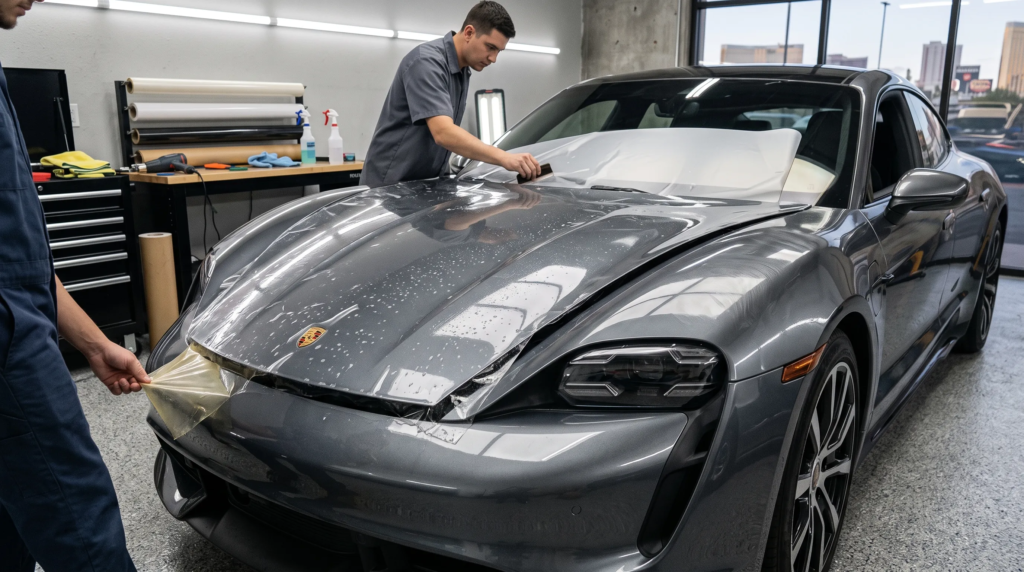
Photos can also help show the current condition before an in-person inspection.
PPF may be ready for replacement when it has deep damage, tears, persistent lifting, severe staining, cracking, delamination, or accident damage. Replacement does not always have to involve the entire vehicle. A damaged panel can often be handled separately.
Quality PPF is designed to come off suitable automotive paint when removed correctly. XPEL states that proper removal should leave original paint intact. Paint history still matters, and repainted, failing, chipped, or previously damaged surfaces can carry more risk.
Manufacturer guidance from XPEL recommends using steam to keep film flexible, then pulling the film back at a shallow angle of less than 45 degrees. Adhesive residue can be treated with a suitable adhesive remover. A shop may adjust the process based on film and paint condition.
The quote depends on film coverage, age, adhesive condition, vehicle design, paint history, prep work, and the replacement film being installed. We do not publish a generic price because one-panel removal and full-body replacement are very different jobs. Call (702) 943-8877 or use the contact page for a vehicle-specific quote.
Sometimes. The paint first needs to be cleaned and inspected. Adhesive residue, paint defects, chips, repair work, or correction may need attention before replacement film is installed.
It can be. Refinished panels can have different paint adhesion and repair history compared with original factory paint. Tell the installer about any known repainting before removal begins so the panel can be handled accordingly.
Ceramic Pro Las Vegas is an official Ceramic Pro Elite Dealer at 8540 Dean Martin Dr. Ste 170, Las Vegas, NV 89139. Call (702) 943-8877 or visit the contact page to discuss film condition, removal, paint prep, and replacement coverage.
Tell us about your vehicle, daily driving, and goals so we can recommend the best package for protection and style. Share the services you want to compare, such as paint protection film, ceramic coating, window tint, vinyl wrap, or paint correction. Include your timeline and any photos that show panels, glass, or problem areas. The more details you provide, the more precise our estimate and scheduling will be.
Explore the many services we offer by clicking the boxes below