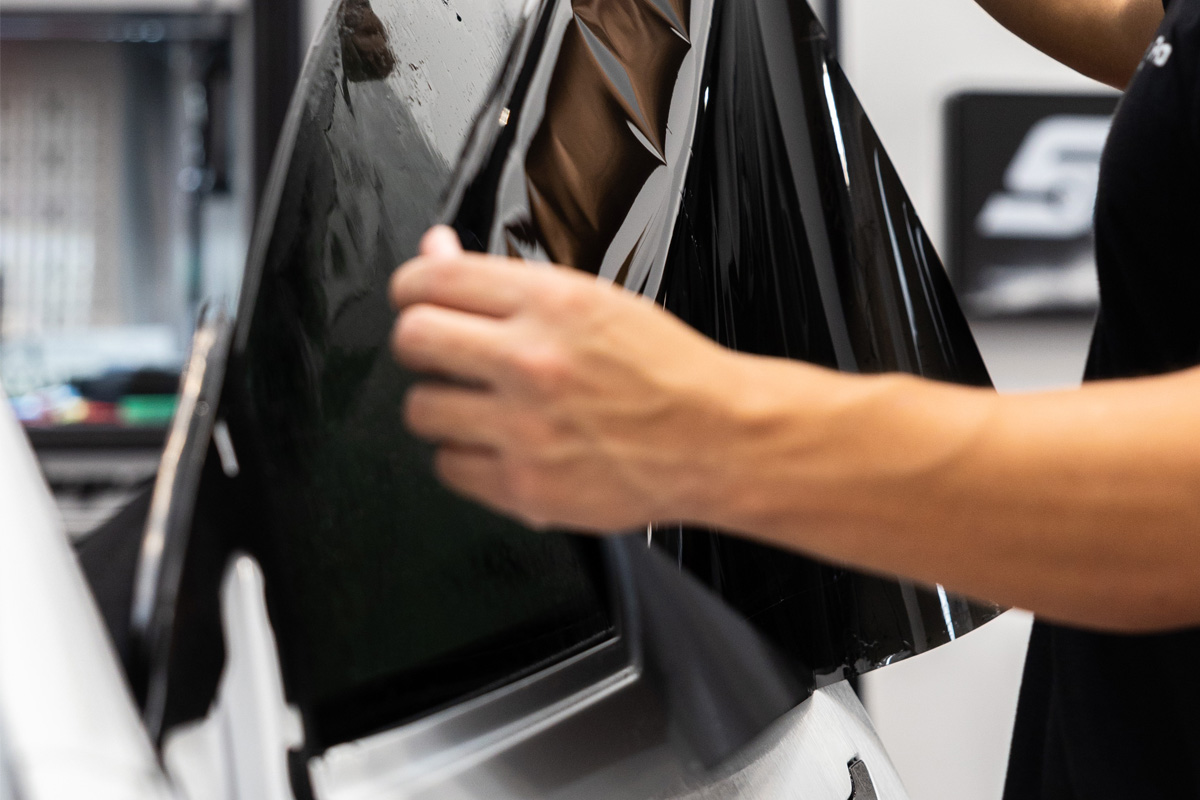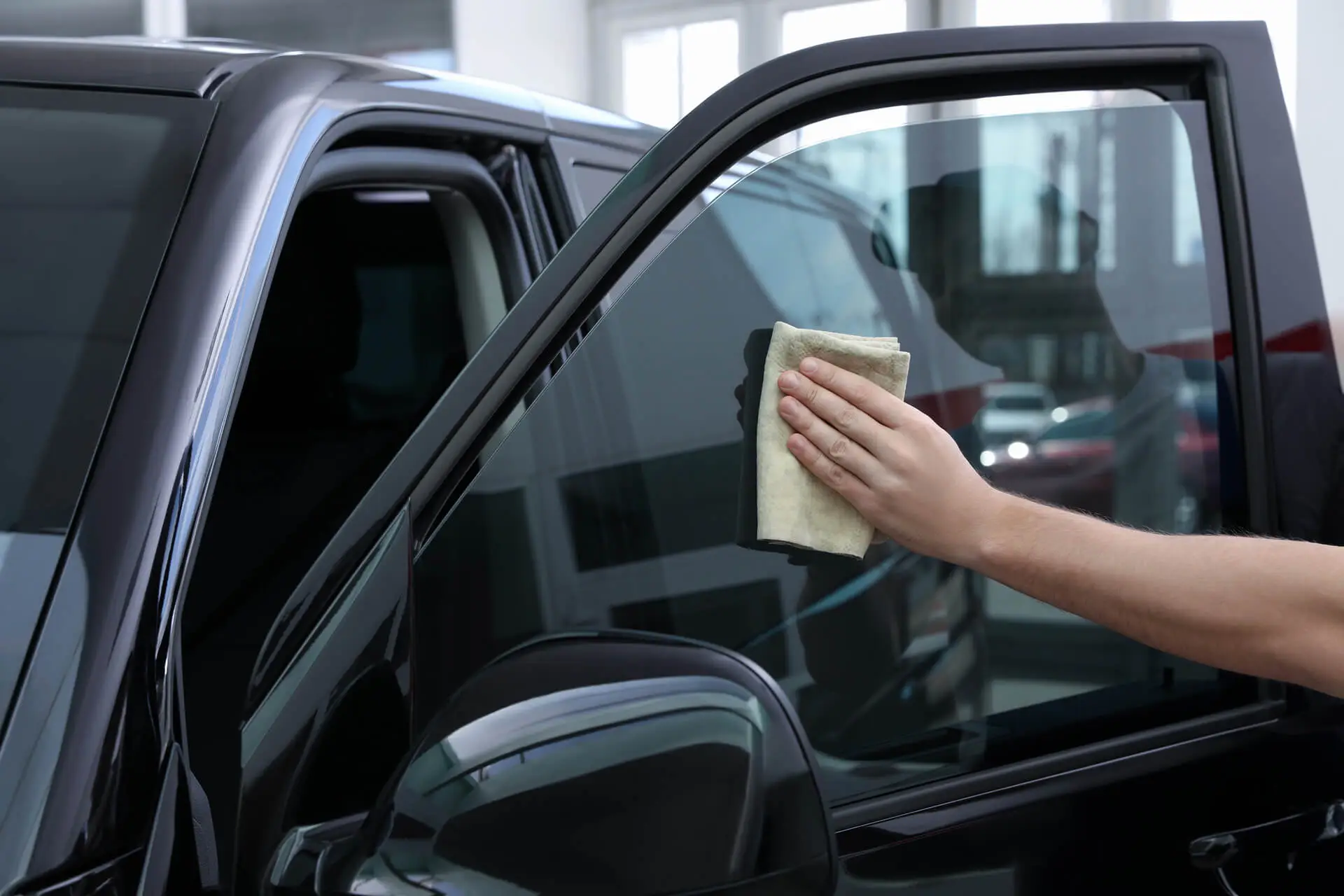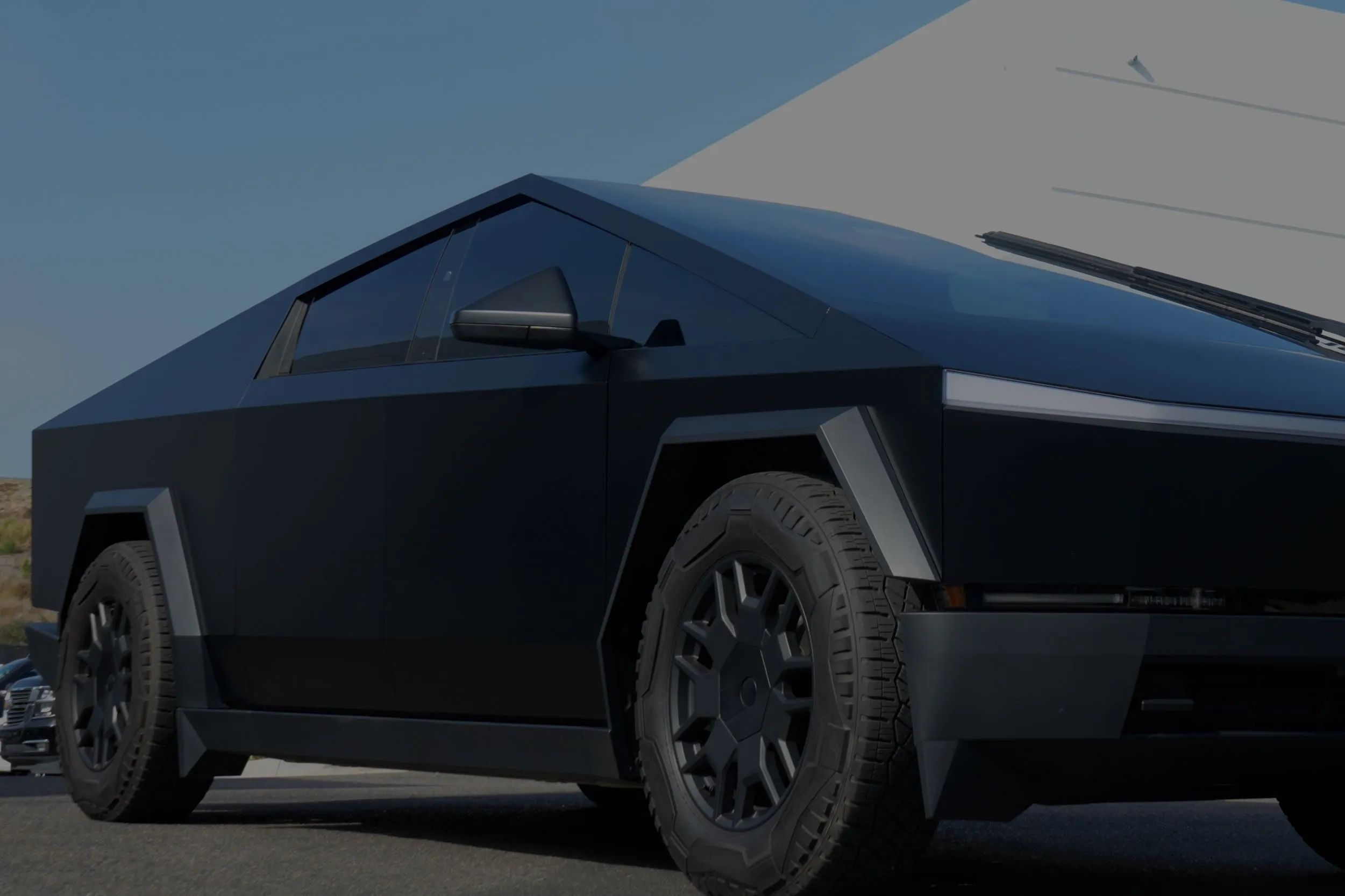

Tesla window tint in Summerlin, NV can help reduce the heat, glare, and UV exposure that come with spending time on Southern Nevada roads. Whether you own a Model 3, Model Y, Model S, or Model X, choosing the right ceramic window film can make your cabin more comfortable without sacrificing the clean appearance that makes Tesla vehicles stand out.
If you’ve spent a summer afternoon around Summerlin, you already know how quickly a parked vehicle can heat up.
Imagine leaving your Tesla outside while shopping at Downtown Summerlin. When you return, the touchscreen feels warm, your seats have absorbed heat, and sunlight is pouring through the side windows.
You turn on the air conditioning, but the cabin still needs time to cool down.
Tesla vehicles have factory glass designed with solar protection in mind. Many models also feature expansive glass roofs, which make the cabin feel open and spacious.
But here’s the question many owners ask.
Is the factory glass enough for the Las Vegas desert, or should you consider additional ceramic window tint?
At Ceramic Pro Las Vegas, we provide professional Tesla window tinting services using Ceramic Pro films, including Ceramic X, Ceramic IR, and Ultimate IR.
As an official Ceramic Pro Elite Dealer, we help Tesla owners compare heat rejection, glass coverage, window shades, and installation options.
Let’s look at how Tesla’s glass works and how to choose window tint for the conditions you encounter around Summerlin.
Summerlin, NV is known for sunny weather, beautiful desert surroundings, and convenient access to major roads throughout the Las Vegas Valley.
Those sunny conditions are part of what makes the area appealing, but they can also make vehicle interiors uncomfortable.
According to the National Weather Service’s Climate of Las Vegas, Las Vegas receives abundant sunshine throughout the year, with summer temperatures regularly reaching triple digits.
For Tesla owners, that means paying attention to how sunlight enters the cabin.
Tesla vehicles feature distinctive glass designs.
Depending on the model and production year, you may have large side windows, an expansive rear windshield, and a fixed glass roof.
These features create an open cabin with plenty of natural light.
They also mean that several glass surfaces are exposed to sunlight during the day.
Automotive glass already provides some solar protection, but the amount varies according to its construction and factory treatments.
Adding compatible ceramic window film to selected windows may reduce solar heat entering the cabin.
You don’t have to spend hours on the 215 Beltway to notice the desert sun.
A short trip to a restaurant, shopping center, or neighborhood park can leave your vehicle parked outdoors.
The seats and dashboard absorb solar energy while the cabin warms.
Even after you begin your trip home, sunlight continues reaching the interior through the glass.
Tesla window tint in Summerlin can help reduce incoming solar energy while you’re traveling, although it won’t keep a parked vehicle cool indefinitely.
Heat isn’t the only reason owners consider ceramic tint.
Window film can also reduce visible glare and filter UV radiation.
That may help make sunny commutes more comfortable and slow certain forms of interior fading.
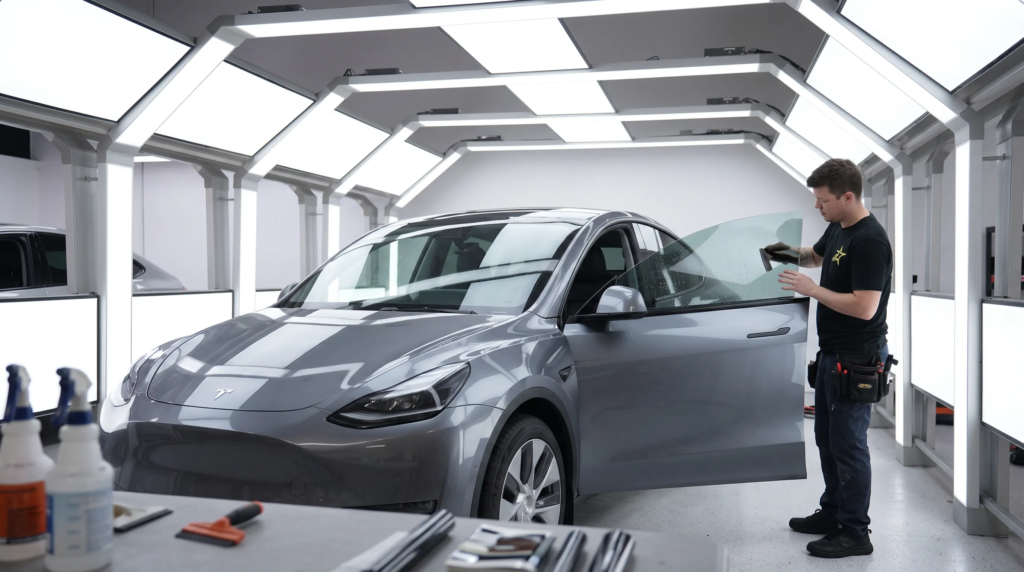
The amount of protection depends on the selected film, its shade, and the glass it covers.
This is one of the most common questions Tesla owners ask.
The short answer is yes. Tesla already provides solar protection through its factory glass.
But the amount of protection depends on the model, production year, and particular glass panel.
Tesla designs many of its glass roof systems to reduce UV exposure and limit portions of incoming solar radiation.
The Tesla Model 3 product information describes its glass roof and factory UV protection, along with infrared protection included in the current vehicle specifications.
This means your Tesla’s roof glass isn’t the same as ordinary untreated window glass.
It already performs part of the job you might expect from an aftermarket film.
So before adding another treatment, it’s worth understanding what you have.
Even with factory solar protection, your cabin can become hot.
Some solar energy still reaches the interior, and the glass itself can absorb heat.
The amount of warmth you notice depends on outside temperature, sun angle, glass construction, and how long the vehicle has been parked.
On a hot Summerlin afternoon, you may feel warmth near the roof even if the glass blocks much of the UV radiation.
That doesn’t automatically mean the factory roof is defective or needs additional tint.
It means the overall cabin is responding to intense solar exposure.
If you’re trying to reduce the heat you feel while traveling, think about where sunlight reaches you.
Does it come through the driver’s side window?
Does your front passenger complain about sunlight on their arm?
Are rear passengers getting too much glare?
These concerns may be addressed by adding suitable ceramic film to the side windows.
For many owners, evaluating side-glass coverage first is a sensible way to plan Tesla window tint in Summerlin.
You may be considering aftermarket tint for your Tesla’s panoramic roof.
That’s understandable, especially in Southern Nevada.
But glass roof film should be approached differently from tint on ordinary side windows.
A Tesla roof may have factory-applied solar coatings and a glass construction that differs from standard automotive side glass.
Adding film can change how the glass absorbs and releases solar energy.
This matters because thermal stress can sometimes contribute to glass damage.
The International Window Film Association’s FAQ explains that glass construction, existing coatings, and film compatibility need to be considered when evaluating potential thermal stress.
An installer should never assume that a film suitable for a side window is automatically suitable for roof glass.
Tesla has changed vehicle features and glass designs across different models and production periods.
Before discussing roof tint, identify your exact model and year.
The installer should review:
Only a film approved for the particular glass configuration should be considered.
Sometimes, the right solution isn’t another film.
Tesla sells removable glass roof sunshades for compatible Model Y vehicles.
For the newer Model Y, Tesla’s official Model Y Sunshades include a mesh glass-roof accessory designed to reduce incoming visible light.
Tesla also offers a sunshade for 2020 through 2024 Model Y vehicles.
These accessories provide another option for owners who want less sunlight coming through the roof without permanently applying aftermarket film.
Compatibility varies, so check the product listing for your vehicle’s year and configuration.
Some owners may still want to ask about roof film.
That’s a conversation to have only after checking the glass construction and relevant product approvals.
If your existing roof already provides strong UV and infrared protection, additional film may not provide the benefit you expect.
At Ceramic Pro Las Vegas, we can discuss roof coverage separately from side-window tint and determine which options are suitable for your Tesla.
When selecting Tesla window tint in Summerlin, NV, one of the biggest decisions is how dark to make the side windows.
Different owners have different preferences.
Some want a subtle appearance that resembles factory glass.
Others want more privacy while keeping the front windows lighter.
Visible Light Transmission, or VLT, measures the percentage of visible light that passes through glass or film.
A higher VLT allows more visible light to enter.
A lower VLT produces a darker appearance.
Here is a general comparison of common film shades:
| Film VLT | General Appearance |
|---|---|
| 70% | Very light, nearly clear |
| 50% | Light tint |
| 35% | Moderate tint |
| 20% | Dark tint |
| 5% | Very dark tint |
These values describe the film’s nominal light transmission, not necessarily the finished reading after installation.
Your Tesla’s factory glass already affects how much visible light passes through.
Nevada generally requires front side windows to meet a combined visible light transmission standard of 35%, subject to the law’s stated tolerance.
That means you cannot simply select film labeled 35% and assume the finished window will comply.
The existing glass must be considered.
Ask your installer to recommend a suitable shade based on the complete glass-and-film combination.
Some Tesla owners prefer a lighter appearance in front and darker windows behind the front seats.
This can provide additional rear-passenger privacy while maintaining better visibility through the front windows.
Nevada has different provisions for rear side windows when a vehicle has qualifying outside mirrors.
Even when a darker shade is permitted, think about visibility after sunset.
Yes.
This is one of the advantages of modern ceramic window film.
A lighter film can still reject infrared energy even though it allows more visible light into the cabin.
That’s why you should compare actual film specifications instead of choosing by darkness alone.
For Tesla owners who want to preserve a subtle factory appearance, lighter ceramic film may be worth considering.
Ceramic Pro Las Vegas offers several window film products with different performance characteristics.
Choosing the right one depends on your preferences, vehicle glass, and how much solar protection you want.
Ceramic Pro Carbon X window tint is a carbon-based product rather than a full ceramic film.
It provides UV filtering, glare reduction, and a dark appearance.
Its nonmetallic construction is designed to avoid signal-interference concerns associated with some metallic films.
Carbon X can be a useful comparison for Tesla owners who want privacy and everyday solar protection.
Ceramic Pro Ceramic X combines ceramic and carbon film technology.
It offers infrared heat rejection, UV filtering, and a rich dark appearance.
This product may appeal to Tesla owners who want a consistent look across multiple windows.
It can also be worth discussing when you want ceramic technology without selecting the highest infrared-rejection tier.
Ceramic Pro Ceramic IR window tint uses nano-ceramic technology designed to reduce infrared radiation.
Ceramic Pro’s current product comparison lists up to 97% infrared rejection for selected Ceramic IR specifications.
That percentage refers to infrared performance under manufacturer test conditions.
It does not mean the film blocks 97% of all solar energy.
For a Tesla that spends plenty of time on Summerlin roads, Ceramic IR can be worth considering when heat rejection is a major concern.
Ceramic Pro Ultimate IR window tint is Ceramic Pro’s highest infrared-rejection tier in its current automotive lineup.
The manufacturer advertises up to 99% infrared rejection for selected specifications.
Ultimate IR is also available in lighter film options, allowing owners to discuss strong infrared performance without automatically choosing extremely dark glass.
The Ceramic Pro automotive window tint comparison provides information about the available film categories and performance.
Consider what you notice most when you’re inside your car.
If glare and appearance are your biggest concerns, Ceramic X may be a useful option to discuss.
If the afternoon heat coming through the side windows bothers you, compare Ceramic IR and Ultimate IR.
If you want a lighter appearance, ask which available shade provides the solar performance you want while meeting Nevada’s requirements.
There’s no need to choose solely by an advertised infrared percentage.
Ask about Total Solar Energy Rejected, visible light transmission, and the finished glass performance too.
Tesla window tint in Summerlin should account for the actual vehicle rather than using one approach for every model.
Glass shape, rear-window size, roof construction, and existing factory treatments can differ.
The Tesla Model 3 has a distinctive glass design, with large rear and roof glass sections.
When discussing tint for a Model 3, consider the front side windows, rear door glass, and rear windshield separately.
The rear glass can require careful film fitting due to its dimensions and curvature.
If you’re considering roof treatment, confirm whether the roof panel is suitable rather than assuming it needs additional film.
The Model Y offers a spacious cabin with an expansive glass roof.
Many owners are interested in reducing sunlight through the side windows while preserving the open feeling created by the roof.
Ceramic IR and Ultimate IR may be worth comparing for the front and rear side glass.
A compatible removable roof sunshade may also help if overhead brightness is the main concern.
Model S and Model X vehicles have their own glass layouts and trim details.
Depending on the production year, there may be differences in roof glass, door windows, and rear glass construction.
An installer should review these details before preparing a film plan.
For owners who prefer a refined factory-style appearance, lighter front windows paired with a suitable rear shade may be worth discussing.
The Cybertruck has a distinctive body design and large glass surfaces.
Our Tesla Cybertruck window tinting service provides options for owners interested in solar protection.
As with other Tesla models, the existing glass and vehicle-specific guidance should be checked before applying additional film.
The goal is to choose suitable coverage without making assumptions about the vehicle’s factory glass.
Before scheduling Tesla window tint in Summerlin, it’s worth understanding the state regulations.
The relevant law is Nevada Revised Statutes 484D.440.
Nevada generally requires the windows immediately beside the driver to be nonreflective and have at least 35% total light transmission.
The statute provides a tolerance of 7 percentage points.
This measurement covers the combination of factory glass and applied film.
The tolerance should not be treated as a reason to deliberately install a film that fails the legal standard.
Nevada allows different treatment for windows behind the driver when the vehicle has qualifying outside mirrors on both sides.
The mirrors must provide the legally required rearward view.
Your installer should check the vehicle configuration before discussing darker rear-window shades.
Nevada generally restricts aftermarket materials that alter windshield color or reduce light transmission, subject to statutory exceptions.
A qualifying upper windshield strip may be permitted if it meets the legal conditions.
Don’t assume that nearly clear ceramic film is automatically allowed across the entire windshield.
Tesla’s Model 3 owner’s manual also cautions against applying certain window treatments where they may affect forward-facing camera visibility.
Legal compliance and vehicle safety equipment should be considered before any windshield treatment.
A Tesla’s climate control system is useful during hot weather.
But the amount of solar heat entering through the windows still matters.
Imagine heading west along Charleston Boulevard during the afternoon.
Sunlight enters through the side glass and warms your arm and the nearby seat.
Ceramic film designed for infrared rejection can reduce some of that incoming energy.
The actual result depends on film performance, the original glass, and the angle of the sun.
Tesla vehicles offer climate-control functions that can help manage cabin temperatures.
Depending on your model and software, you may have access to remote cabin preconditioning or Cabin Overheat Protection.
The Tesla Model Y owner’s manual explains that Cabin Overheat Protection uses the vehicle’s climate system and battery energy.
Ceramic tint and cabin cooling work in different ways.
Tint reduces some incoming solar energy through treated glass, while air conditioning actively cools the interior.
You should not assume ceramic tint will produce a particular increase in electric range.
Actual energy use depends on the vehicle, weather, climate settings, and other conditions.
Even a Tesla with ceramic window tint can become dangerously hot when parked outside.
Cabin Overheat Protection also has operating limits.
Never leave children or pets unattended in a parked vehicle based on the presence of tint or a cabin cooling feature.
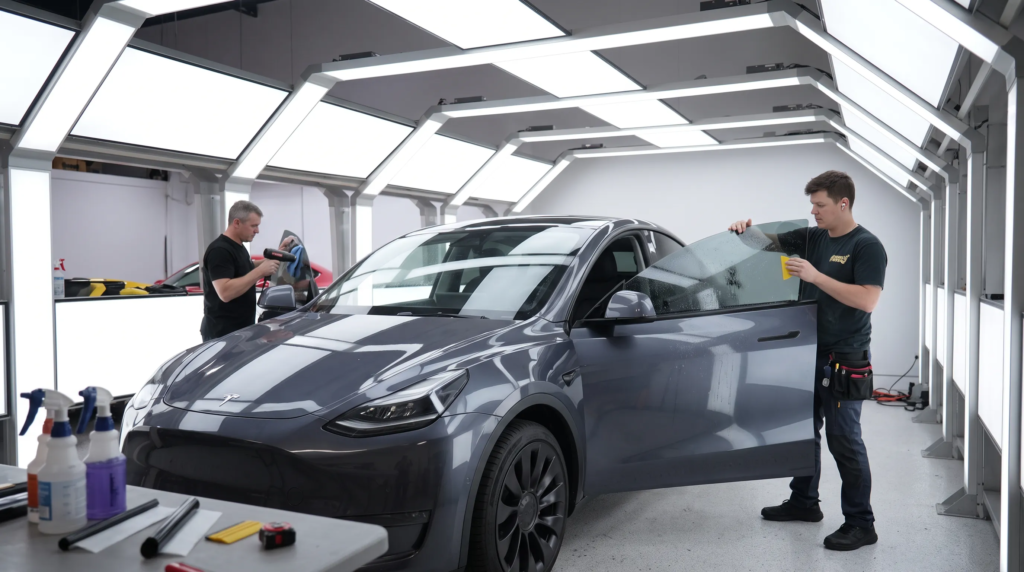
Tesla window tint in Summerlin should be installed with attention to the vehicle’s glass, trim, electronics, and sensors.
Even a good film can look poor if it isn’t fitted correctly.
The installer should inspect each window before applying film.
Existing damage, contamination, factory treatments, and old aftermarket tint may affect preparation.
Cleaning is especially useful in the Las Vegas desert, where airborne dust can settle on glass and trim.
Several Tesla models feature frameless door glass.
The film must be fitted with attention to window edges, seals, and normal glass movement.
A professional installer should account for those details rather than treating every window like a standard framed design.
Some Tesla rear windshields have strong curves or large dimensions.
The film may require careful heat-forming to fit correctly.
Rear defroster elements and nearby interior materials also need protection during installation.
Before applying tint to a Tesla roof, the installer should confirm that the film is suitable for the glass construction and permitted by the relevant manufacturer guidance.
If compatibility cannot be established, a removable sunshade may be the more appropriate option.
Ceramic Pro offers a Limited Lifetime Warranty on qualifying automotive window films, subject to the written terms and exclusions.
Our team can explain the applicable coverage for your selected product.
Ask which glass panels are included in the installation and how warranty claims are handled.
Once your new film is installed, proper aftercare helps protect its appearance.
The Ceramic Pro KAVACA Window Tint Aftercare Guide explains the recommended curing and cleaning process.
Ceramic Pro advises owners to avoid lowering freshly tinted windows for three to five days.
That’s worth planning for if you regularly use a parking garage, access gate, or other location where you normally lower the window.
Follow the instructions supplied for your exact film.
Ceramic Pro states that complete curing may take one to four weeks, depending on environmental conditions.
You may notice temporary haze, faint streaking, or small moisture pockets during this period.
Don’t press against the film or try to move trapped moisture.
If unusual marks remain after the expected curing period, contact your installer.
Ceramic Pro recommends avoiding window cleaning for at least seven days after installation.
Once cleaning is permitted, use products approved for your film.
The manufacturer’s guidance warns against ammonia- and alcohol-based cleaning solutions on KAVACA window tint.
Sharp objects, seatbelt buckles, and abrasive cleaning tools can damage tint.
Use clean microfiber towels and gentle cleaning methods.
If the film begins lifting or becomes scratched, ask a professional to inspect it rather than trying to repair the material yourself.
If you’re searching for Tesla window tint in Summerlin, choosing a shop familiar with Tesla glass designs can help you make a more informed decision.
At Ceramic Pro Las Vegas, we install Ceramic Pro films for Tesla owners throughout the western Las Vegas Valley.
Our services include model-specific window tinting for Model 3, Model Y, Model S, Model X, and Cybertruck vehicles.
We welcome customers from:
Our Las Vegas facility serves owners near Downtown Summerlin, The Ridges, Sun City Summerlin, and surrounding neighborhoods.
Whether your Tesla is a daily commuter or a vehicle you enjoy on weekends, we can discuss tint options based on your glass and comfort preferences.
Window tint helps with solar exposure through treated glass.
Other services can help protect different parts of your Tesla.
Our Tesla paint protection film services can help reduce damage from small stones and road debris on suitable painted surfaces.
We also offer Tesla ceramic coating for owners interested in easier exterior maintenance and added resistance to certain contaminants.
These services serve different purposes from window tint and can be discussed separately.
Ceramic window tint is worth considering if you want to reduce incoming solar heat, glare, and UV exposure through suitable vehicle glass. Summerlin’s sunny desert conditions can make cabin comfort a concern. Many Tesla models already have factory solar-protective glass, so an installer should review the existing glass before recommending additional film.
Not necessarily. Tesla Model Y roof glass already has factory solar protection, and adding aftermarket film may not be suitable for every production year or glass configuration. The installer should check film compatibility, thermal stress concerns, and applicable Tesla guidance. A compatible removable roof sunshade may be another option.
Nevada generally requires the finished front side windows to have at least 35% total visible light transmission, with a statutory tolerance of 7 percentage points. Because factory glass already affects light transmission, the film’s labeled shade alone doesn’t determine compliance. Your installer should help you choose a suitable legal shade.
Yes. Ceramic films use materials designed to reject infrared radiation, which is different from simply making the window darker. Ceramic Pro Ceramic IR and Ultimate IR include film options worth comparing when you want heat rejection while maintaining more visible light. Published specifications should be compared using consistent test methods.
Ceramic Pro’s nonmetallic ceramic films are designed to avoid the signal-interference concerns associated with some metallic films. Camera compatibility is a separate issue. Film should not be applied over camera viewing areas or other sensitive locations without confirmation that the treatment is permitted and suitable for the vehicle.
Ceramic Pro’s KAVACA aftercare guidance states that complete curing may take one to four weeks, depending on temperature and sunlight. Owners are generally advised not to lower freshly tinted windows for three to five days and not to clean them for at least seven days. Follow the instructions for the film installed on your Tesla.
Ceramic Pro Las Vegas provides professional Tesla window tint installation at 8540 Dean Martin Dr., Suite 170, Las Vegas, NV 89139. As an official Ceramic Pro Elite Dealer, we install Ceramic Pro window films and offer applicable warranty-backed services. Call (702) 943-8877 or visit our contact page to discuss your Tesla and schedule an appointment.
Choosing Tesla window tint in Summerlin, NV starts with understanding your vehicle’s factory glass and what you want from an aftermarket film.
If sunlight coming through your side windows makes afternoon trips uncomfortable, a suitable ceramic film may help reduce the incoming heat.
If you want more privacy, choosing the right rear-window shade deserves attention.
And if your glass roof feels too warm, the first step should be checking the factory roof construction and compatible protection options.
At Ceramic Pro Las Vegas, our certified team can explain Ceramic Pro Ceramic X, Ceramic IR, and Ultimate IR, along with the appropriate installation requirements for your Tesla.
We’ll help you compare the available films, discuss Nevada tint rules, and plan the windows you want treated.
Ready to make your Tesla more comfortable under the Las Vegas sun?
Call Ceramic Pro Las Vegas at (702) 943-8877 to discuss Tesla ceramic window tint options.
You can also request a quote and schedule an appointment through our contact page.
Ceramic Pro Las Vegas
8540 Dean Martin Dr., Suite 170
Las Vegas, NV 89139
Business Hours: Monday through Friday, 9 AM to 6 PM
Website: https://ceramicprolv.com
Get professional Tesla window tint selected for your vehicle’s glass, your preferred appearance, and the sunny conditions around Summerlin.
The following manufacturer, automotive industry, government, and local business sources support the information about Tesla glass, ceramic window tint, Nevada regulations, film compatibility, and aftercare.
Tell us about your vehicle, daily driving, and goals so we can recommend the best package for protection and style. Share the services you want to compare, such as paint protection film, ceramic coating, window tint, vinyl wrap, or paint correction. Include your timeline and any photos that show panels, glass, or problem areas. The more details you provide, the more precise our estimate and scheduling will be.
Explore the many services we offer by clicking the boxes below