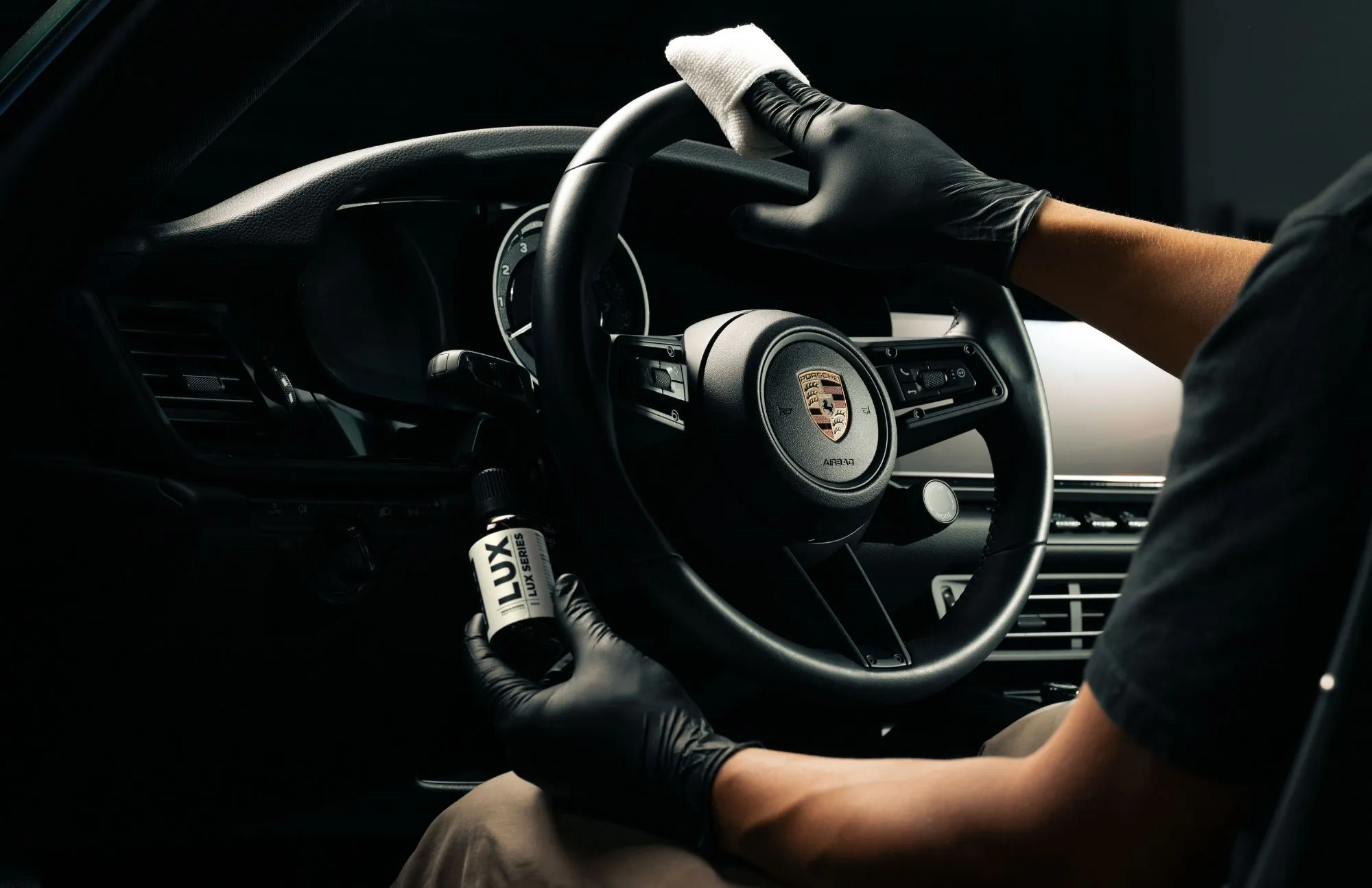

Paint correction in Las Vegas can restore the gloss and clarity of your vehicle’s finish by reducing swirl marks, light scratches, water spot etching, and other defects in the clear coat. If you’re planning to install ceramic coating or paint protection film (PPF), correcting those imperfections before applying protection may make a big difference in the final appearance.
But does every vehicle need paint correction before coating or PPF?
Not necessarily.
A brand-new car might only need careful cleaning and a light polish. A five-year-old SUV covered in swirl marks may benefit from more extensive correction. A vehicle with deep scratches, damaged clear coat, or peeling paint may need repairs that polishing cannot provide.
The trick is knowing what your paint needs before putting a protective product over it.
Think about washing your vehicle on a sunny afternoon in Las Vegas, NV. It looks clean while you’re standing in the shade. Then you pull it into direct sunlight and notice circular scratches across the hood, cloudy reflections on the doors, and water spots that won’t wash away.
Those problems won’t disappear just because you add a ceramic coating or clear film.
At Ceramic Pro Las Vegas, we provide professional paint correction services for customers preparing their vehicles for Ceramic Pro coatings, PPF, or a cleaner-looking finish.
As an official Ceramic Pro Elite Dealer, our team evaluates paint condition before recommending polishing and protection.
Here’s how to determine whether your vehicle needs paint correction and what to expect before installing ceramic coating or PPF.
Paint correction is a professional polishing process that reduces suitable defects in automotive paint.
Most modern vehicles have a paint system consisting of a primer, a colored layer, and a protective clear coat.
That outer clear coat provides gloss and helps protect the color underneath.
Over time, the clear coat can develop scratches, swirl marks, haze, and other imperfections.
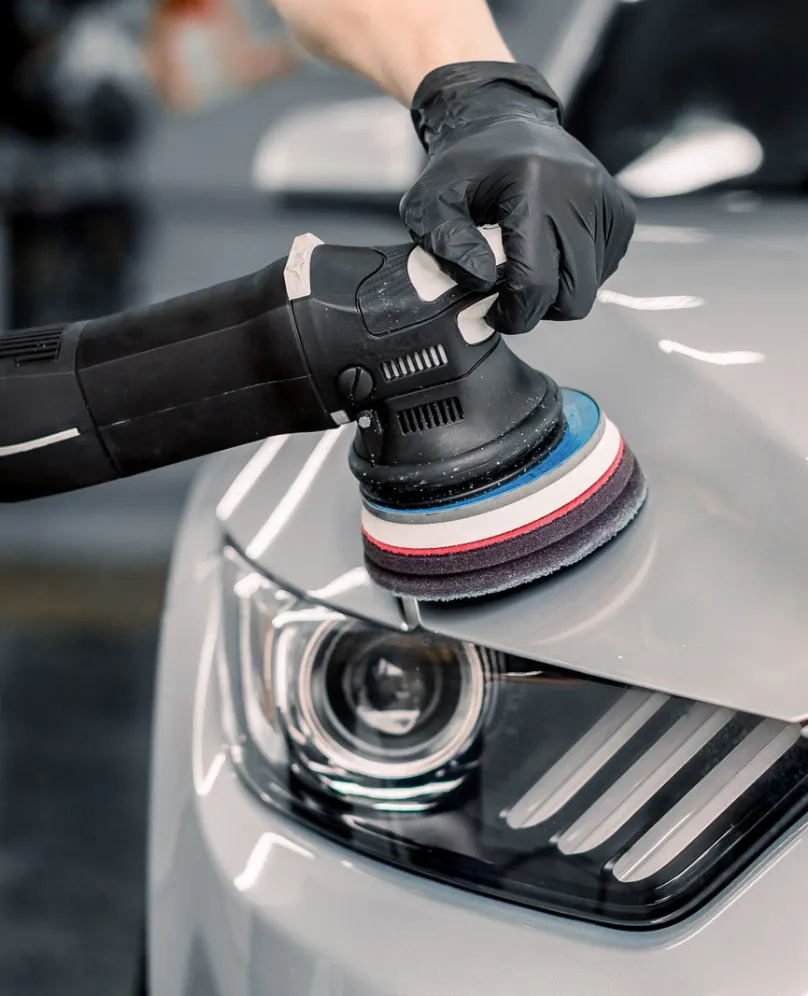
Paint correction uses polishing equipment, pads, and abrasive compounds to carefully refine the surface.
The goal is to improve how light reflects from the paint while preserving as much of the original finish as possible.
Imagine a glossy black hood covered in tiny circular scratches.
The scratches scatter light in different directions, making the paint appear cloudy when viewed under a bright light.
Machine polishing carefully removes a small amount of surface material to reduce those defects.
As the surface becomes more uniform, reflections can look sharper.
According to 3M’s Finesse-it II Machine Polish documentation, professional machine polish can remove fine scratches, swirl marks, light oxidation, and certain water spots from suitable automotive finishes.
The process doesn’t add more clear coat.
It refines the material already there.
That’s why polishing should be performed carefully rather than repeated aggressively.
Waxing and paint correction aren’t the same thing.
Wax adds a temporary protective layer to a prepared surface.
Some products can also make scratches appear less noticeable by filling them.
Paint correction addresses suitable defects within the surface itself.
Once polishing is completed and residual oils are removed, the true condition of the paint becomes easier to see.
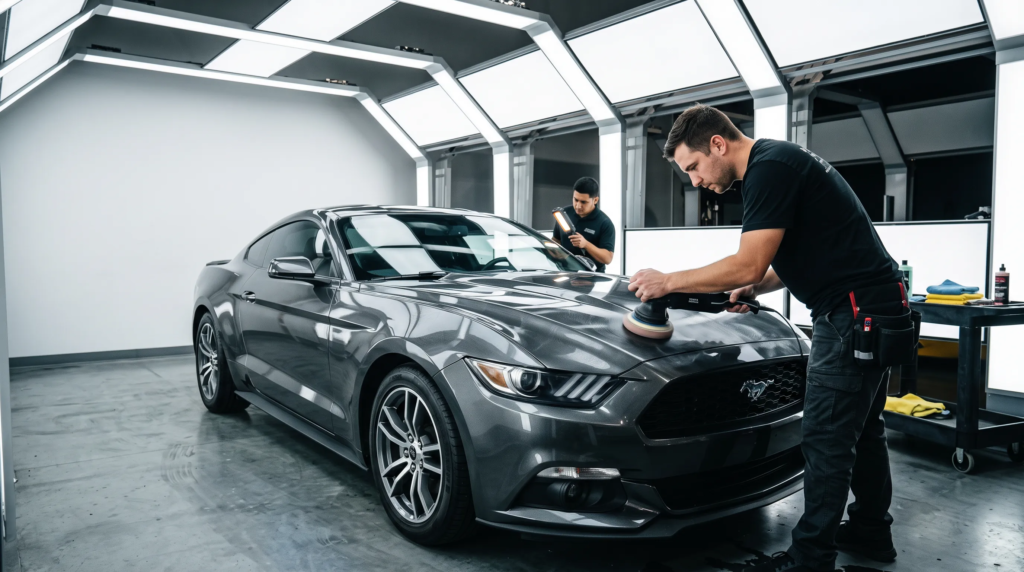
A ceramic coating or PPF can then be installed over a properly prepared finish.
One of the easiest ways to decide whether paint correction in Las Vegas is worth considering is to inspect your vehicle in good lighting.
A freshly washed car can reveal problems that aren’t obvious when it is dusty.
Swirl marks are fine scratches that become visible when bright light reflects from the paint.
They often appear as circular or spiderweb-like patterns around the reflection of the sun or a lamp.
Common causes include:
These marks are especially visible on black, dark blue, and other dark-colored vehicles.
Suitable swirl marks are often candidates for paint correction.
Does your paint look dull even after a thorough wash?
The problem may be surface haze, oxidation, or fine scratches scattering reflected light.
Professional polishing can improve some of these conditions.
The technician first needs to determine whether the problem is within a sound clear coat or involves more serious paint deterioration.
If the clear coat is failing, polishing may not be appropriate.
Water spots are common concerns for Las Vegas vehicle owners.
Sprinkler water and wash water can leave mineral deposits when droplets evaporate.
Some deposits remain on top of the surface and can be removed with appropriate cleaning products.
Others may etch into the clear coat.
Etching sometimes requires polishing after the surface has been properly cleaned.
The treatment depends on the depth of the damage.
A vehicle may develop small scratches around door handles, along lower doors, or on painted panels.
Some defects are shallow enough to improve through polishing.
Others extend beyond the clear coat and may require touch-up paint or refinishing.
A professional inspection can help identify the difference.
Improper machine polishing can leave curved marks called holograms.
These may appear under sunlight or bright inspection lamps.
A suitable finishing polish can often reduce them.
This is one reason paint correction should be performed with appropriate equipment, clean pads, and a process matched to the finish.
Las Vegas, NV has a desert climate with abundant sunshine, hot summers, and periods of blowing dust.
According to the National Weather Service’s Las Vegas climate summary, the area receives extensive sunshine throughout the year and occasionally experiences winds strong enough to carry dust and sand.
These conditions can affect how your vehicle looks and how it should be cleaned.
You may not notice swirl marks when looking at your vehicle inside a garage.
Then you park outside and suddenly see hundreds of tiny lines across the hood.
Direct sunlight makes surface imperfections easier to spot.
That’s why paint correction is often discussed before protecting dark-colored vehicles.
A finish that looks acceptable indoors may reveal noticeable defects under the Nevada sun.
Dust settling on the paint doesn’t automatically create swirl marks.
Problems often begin when the particles are dragged across the surface.
If you wipe dusty paint with a dry towel, grit can become trapped between the towel and clear coat.
Repeated contact can leave fine scratches.
Proper washing helps reduce that risk.
Vehicle panels can become extremely warm while parked outside.
When mineral-containing water dries on those surfaces, visible spots may remain.
Some can be removed by cleaning. Others may have affected the paint surface.
If water spots remain after a suitable wash, have the finish inspected before applying stronger chemicals or using a polishing machine.
A vehicle that spends time outdoors in Enterprise, NV may have different paint concerns from a garage-kept sports car in Summerlin South, NV.
A daily commuter from Henderson, NV might have more highway exposure and wash-related marks.
Paint correction should respond to the actual paint condition rather than following one identical process for every vehicle.
No. Not every car requires extensive paint correction before ceramic coating.
Every vehicle does need suitable surface preparation.
That’s an important distinction.
Ceramic coating is a liquid-applied protective treatment.
It can provide gloss, hydrophobic behavior, and resistance to certain environmental contaminants.
It cannot reliably remove existing swirl marks or scratches.
If you install ceramic coating over damaged-looking paint, those marks may remain visible beneath the transparent coating.
The coating protects the finish you have prepared.
It doesn’t replace the polishing process.
Imagine you recently purchased a new sedan.
The paint looks glossy, but a few light washing marks appear under direct sunlight.
A mild finishing polish may be enough to improve the appearance before coating.
A lengthy multi-stage correction may not be necessary.
The choice depends on how the vehicle looks after cleaning and inspection.
Now consider an older SUV that has been through years of automatic brush washes.
The hood shows spiderweb scratches, the doors have cloudy reflections, and there are visible polishing marks.
This vehicle may benefit from more than one polishing stage before ceramic coating.
The goal is to improve the finish without removing unnecessary clear coat.
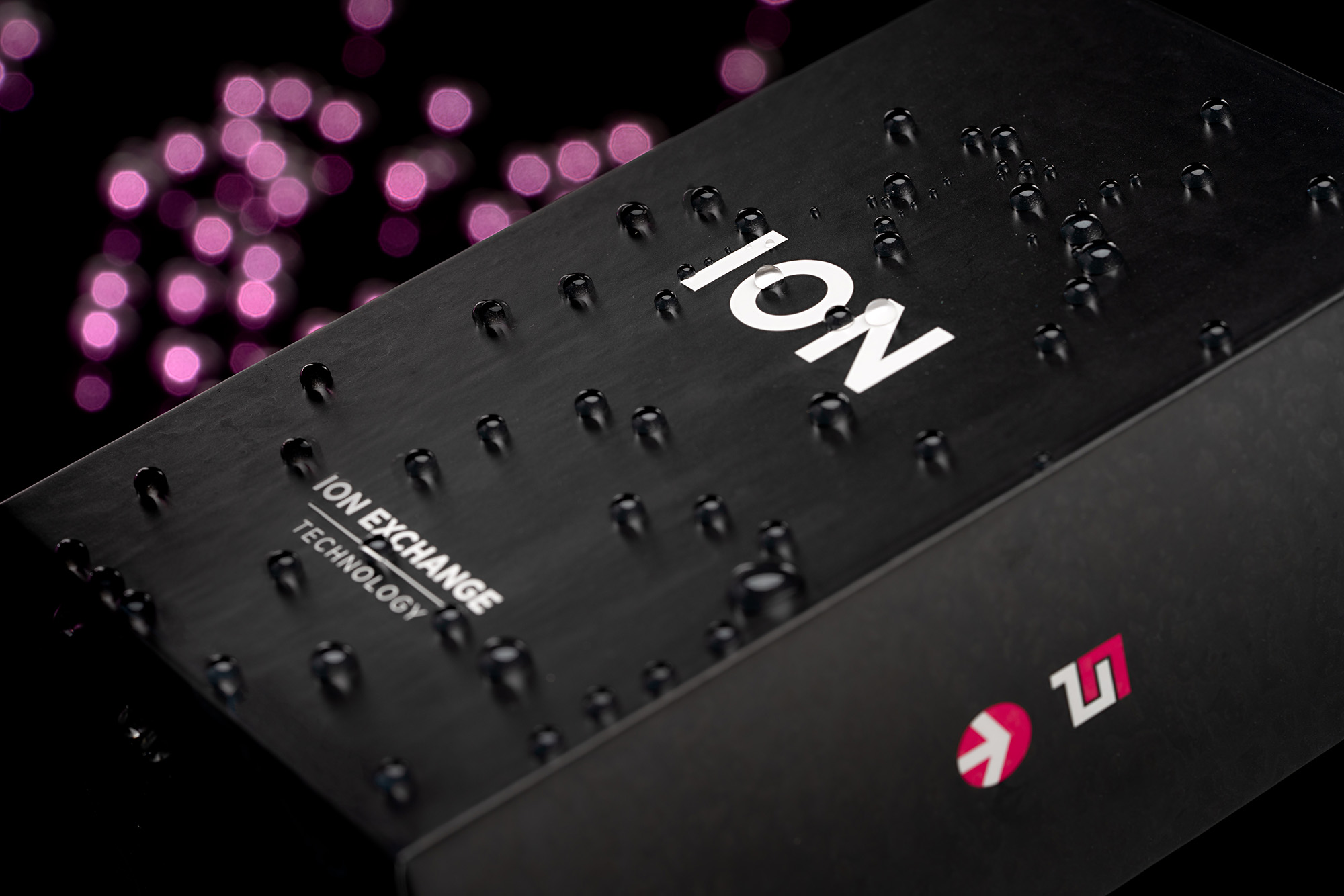
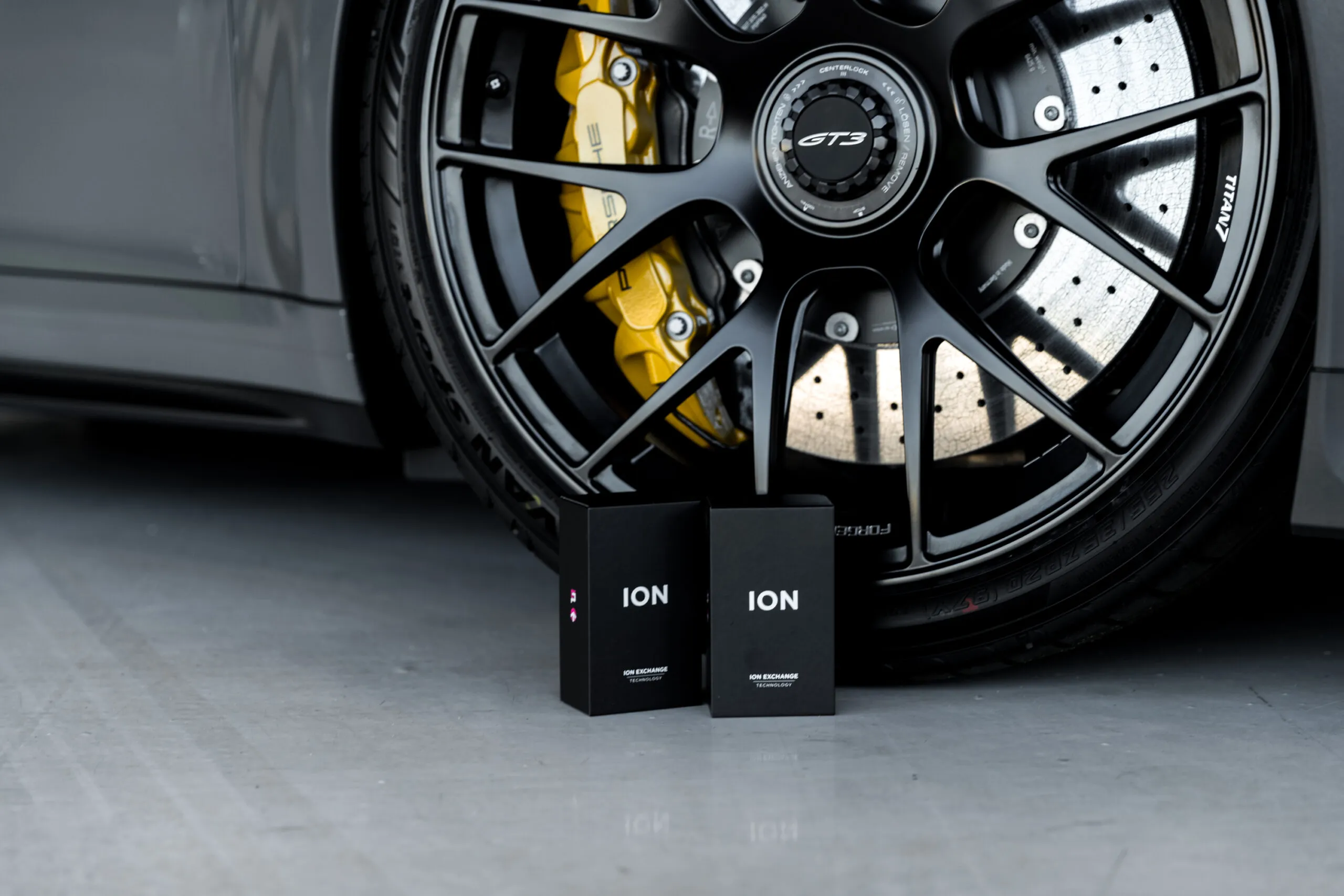
At Ceramic Pro Las Vegas, we offer Ceramic Pro ION.
This professional coating system is designed for gloss, water repellency, and resistance to certain environmental contaminants.
Our ceramic coating services include paint preparation before applying the selected protection system.
If your vehicle has visible defects, we can assess whether correction would improve its appearance before coating.
A surface can look glossy and still contain oils, waxes, or other residues.
These contaminants may interfere with the coating’s ability to bond as intended.
Professional surface preparation includes removing contamination and polishing residue using suitable products.
Meguiar’s Professional M122 Surface Prep is one manufacturer example of a product designed to remove residual polishing oils before ceramic coating.
The exact preparation products should match the coating manufacturer’s installation instructions.
Paint correction before PPF depends on the condition of the paint and the result you want.
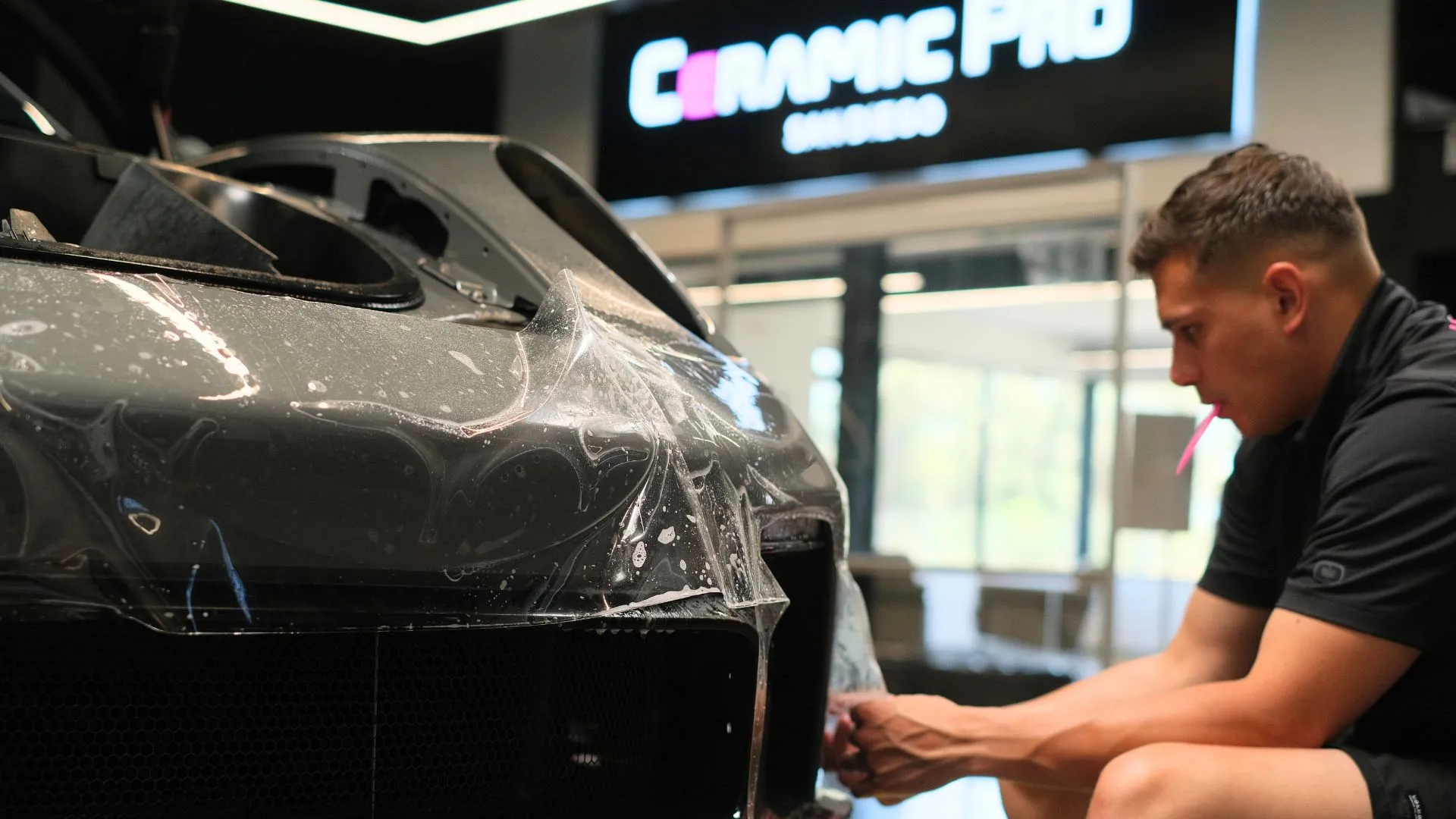
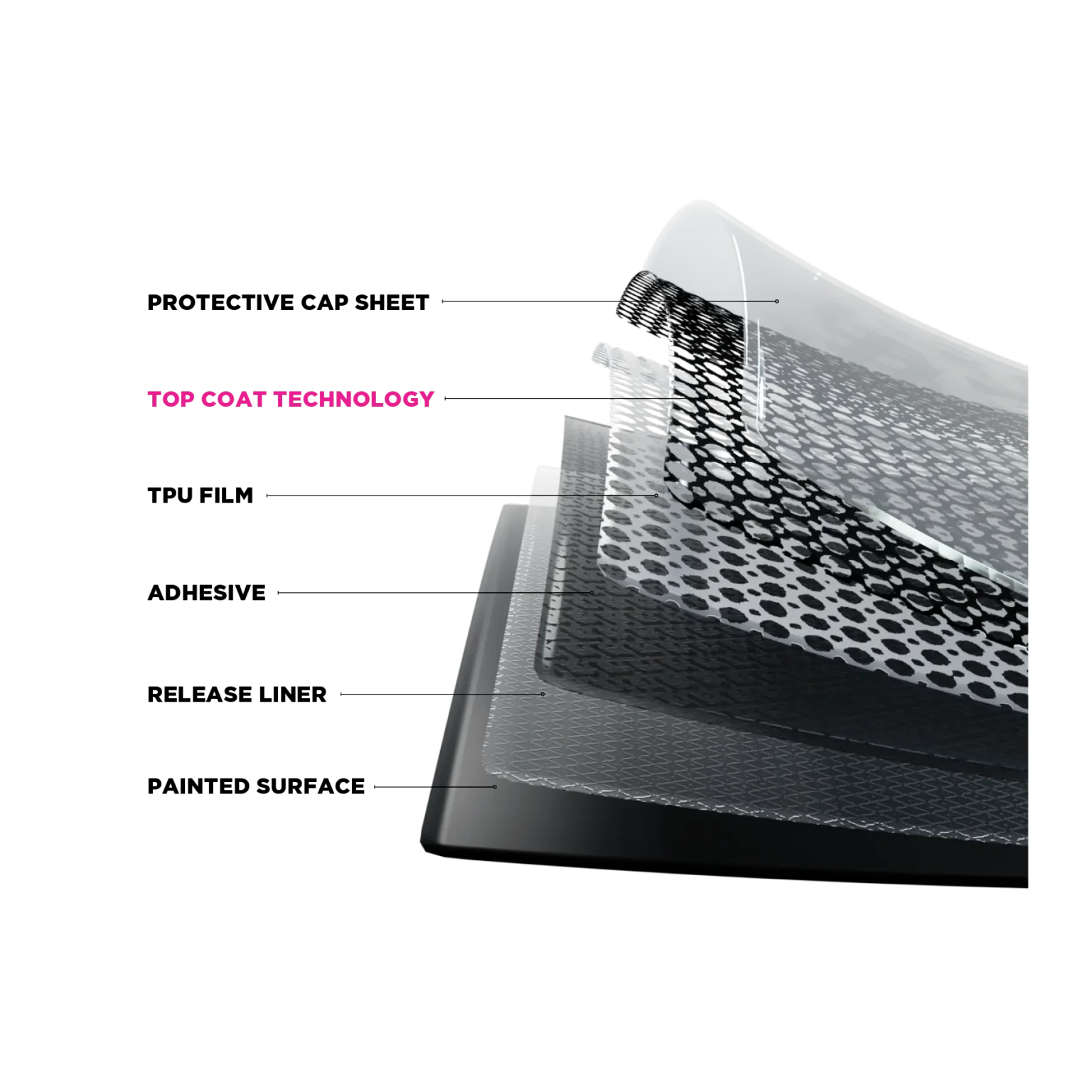
PPF is a transparent protective material installed over suitable painted panels.
It creates a physical barrier that can help reduce damage from small stones, road debris, and light scratches.
But film doesn’t automatically make damaged paint look new.
Imagine installing clear film over a hood with noticeable swirl marks.
Because the film is transparent, some of those defects may remain visible.
The film may change how the surface reflects light, but it shouldn’t be relied on to conceal scratches or poor paint preparation.
Correcting suitable defects before film installation can produce a cleaner final appearance.
This is especially appealing for black, dark metallic, and high-gloss finishes.
Not always.
A sound, clean, properly prepared painted surface may be suitable for PPF without extensive machine polishing.
Surface cleanliness, paint condition, and compatibility are central to the installation.
Polishing is performed when the finish needs refinement, not simply because every panel must be polished before film will adhere.
That’s why an inspection comes first.
Some lightly scratched panels may be suitable for film after the technician evaluates them.
But deep scratches, damaged clear coat, poorly adhered paint, or failing repairs require separate consideration.
The installer may recommend correction, touch-up work, or refinishing before applying PPF.
Our paint protection film services include protection options for suitable painted panels.
Once your hood and bumper look the way you want, PPF can help reduce certain future chips and surface marks.
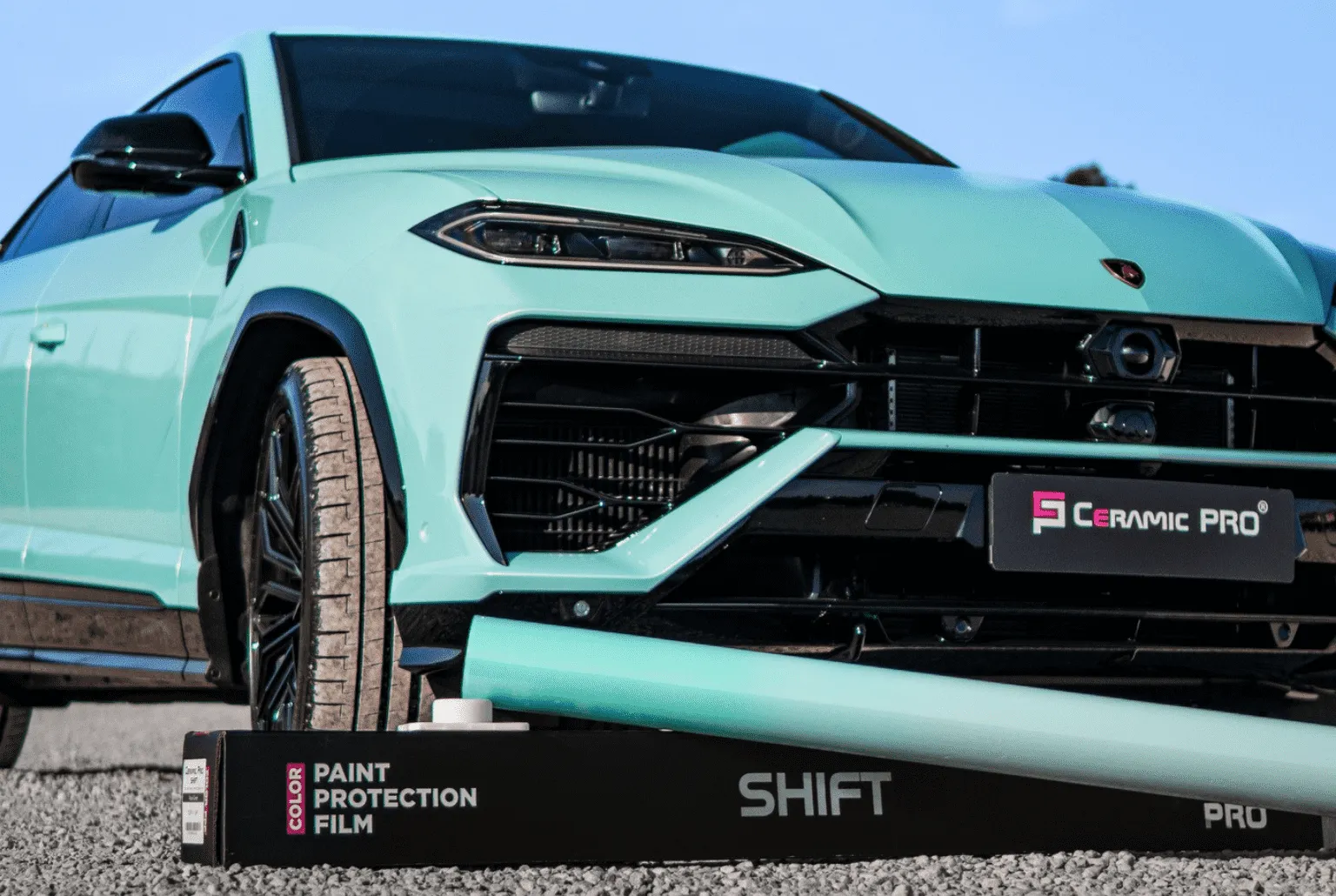
Our Ceramic Pro Paint Protection Film options include protection for exposed areas.
Owners can discuss full front coverage, selected panels, and broader film coverage based on vehicle use.
When researching paint correction in Las Vegas, you’ll often see terms such as single-step correction and two-step correction.
These describe different approaches to polishing.
The right choice depends on your paint’s condition and the amount of safe improvement possible.
A single-step process uses one main polishing stage to improve the appearance of suitable defects.
It may reduce:
This approach can be appropriate for newer or well-maintained vehicles.
The goal is to improve clarity without performing unnecessary additional cutting.
A two-step process commonly begins with compounding to reduce more noticeable defects.
A finer polishing stage follows to improve clarity and remove haze left by the earlier work.
This may help with moderate swirl marks, oxidation, and suitable scratches.
3M’s machine polish documentation describes polishing after compounding as a way to remove fine surface marks and restore gloss.
Not every vehicle needs this process.
Some finishes have deeper scratches, widespread water spot etching, or previous polishing damage.
These conditions may require additional assessment and more extensive work.
The goal should never be to remove as much clear coat as possible.
A technician should decide what can be improved safely and what is better left alone.
Your hood might have noticeable wash scratches.
The roof may be in good condition.
One door may have been repainted.
Those panels may not need the same treatment.
A professional should inspect and test the surfaces instead of automatically applying the most aggressive process to the entire vehicle.
Before scheduling paint correction in Las Vegas, it’s helpful to understand which problems polishing is designed to address.
| Paint Condition | Can Paint Correction Help? |
|---|---|
| Light swirl marks | Often, when the clear coat is sound |
| Minor wash scratches | Often |
| Mild paint haze | Often |
| Some water spot etching | Depends on depth |
| Light oxidation | Sometimes |
| Deep scratches through the color | Not through polishing alone |
| Rock chips with missing paint | No |
| Peeling or failing clear coat | No |
| Factory matte paint | Conventional polishing is generally unsuitable |
This comparison is a general guide. The condition of the actual surface determines what can be done.
If a stone has removed paint from your hood, machine polishing cannot replace that missing material.
Touch-up work or professional refinishing may be appropriate.
PPF can help reduce future impact damage after the surface is suitable for installation.
A scratch that has gone through the clear coat cannot be removed simply by leveling the clear coat around it.
Attempting to polish too deeply may damage the surrounding finish.
A technician may recommend leaving the scratch, arranging touch-up work, or consulting an automotive refinishing specialist.
If the finish is peeling, flaking, or separating, the clear coat may be failing.
Ceramic coating and PPF won’t restore that damaged paint system.
The affected panel may require professional refinishing.
It’s better to identify this problem before installing a protective product.
A new vehicle doesn’t always have flawless paint.
Cars can pick up minor defects during transportation, dealership preparation, washing, or storage.
That doesn’t mean every new vehicle needs heavy polishing.
It means the paint deserves an inspection.
A new car may be washed several times before delivery.
If improper washing methods are used, fine scratches may appear in the clear coat.
These marks can become visible when the car is parked in direct sunlight.
A light polish may improve the appearance before ceramic coating or PPF.
Some vehicles arrive with small surface marks from handling or preparation.
A technician should determine whether those marks are superficial and safe to polish.
Paint correction can improve suitable defects, but it should not be used to conceal serious damage.
If you’ve recently bought a Tesla, BMW, Mercedes-Benz, Porsche, or another vehicle, have the finish inspected before adding protection.
Our Tesla paint correction services focus on preparing compatible Tesla finishes for a cleaner appearance.
We also offer Tesla ceramic coating and Tesla paint protection film for owners interested in protecting their vehicles after preparation.
A brand-new vehicle with clean, glossy paint may not need much correction.
Unnecessary polishing removes material without providing a meaningful improvement.
The right plan begins with what the paint actually looks like.
Sometimes the safest decision is not to polish.
That may sound surprising when you’re shopping for a paint correction service, but preserving the finish matters more than chasing every visible mark.
Machine polishing removes small amounts of material.
Repeated aggressive correction can reduce the remaining protective clear coat.
Professional technicians may use paint thickness readings, inspection lighting, and test areas to guide their work.
A thickness gauge can help identify differences between panels, but a standard reading does not always reveal the exact thickness of the clear-coat layer by itself.
PPG’s automotive refinish guidance warns that excessive compounding and polishing can reduce paint-film thickness and create problems, especially around edges and sharp contours.
Factory matte paint requires special care.
Conventional machine polishing can make matte surfaces shiny and leave permanent-looking patches.
PPG’s guidance for low-gloss finishes explains that polishing matte clear coat can alter its appearance.
A vehicle with a matte or satin finish should be evaluated for products and cleaning methods intended for that surface.
If your goal is added film protection, ask about compatible Ceramic Pro Matte PPF.
If a body shop recently repainted your bumper, hood, or door, tell the installer before scheduling correction, ceramic coating, or PPF.
Fresh paint can have specific curing and care requirements.
The proper waiting period depends on the paint products, refinishing process, and instructions from the body shop and protection manufacturer.
Do not assume that freshly painted panels are ready for polishing or protective film immediately.
Peeling clear coat, poor adhesion, severe cracking, and other paint failures may make correction or PPF unsuitable.
A refinishing specialist may need to address those defects first.
Protective products should be applied only when the underlying surface is suitable.
Professional paint correction in Las Vegas should be planned around the condition of your vehicle.
At Ceramic Pro Las Vegas, our paint correction service describes a process based on inspection, paint preparation, test polishing, and surface refinement.
Here’s what that process involves.
The technician examines the body panels for scratches, haze, oxidation, previous repairs, and other defects.
The paint’s condition helps determine which approach may be safe.
Not every scratch can or should be removed.
The vehicle is washed to remove loose dirt and road film.
This reduces the chance of grinding contamination into the clear coat during later steps.
In dusty Las Vegas conditions, proper washing matters.
Some contaminants remain bonded to the surface after normal washing.
Suitable chemical or mechanical decontamination may be used where needed.
The goal is to create a clean surface before machine polishing.
Mechanical methods must be handled carefully because they can create additional fine marks if used improperly.
A test area helps the technician determine which pad, compound, and polishing process work for the particular paint.
Some finishes respond well to mild polishing.
Others may require a different approach.
Testing helps reduce unnecessary material removal.
The technician refines the surface using the selected process.
Depending on the condition of the paint, this may involve a finishing polish alone or a compounding stage followed by final polishing.
Edges and sensitive areas require particular care.
Polishing compounds can leave oils or other residue on the surface.
These should be removed with suitable products before the final inspection and protective treatment.
PPG’s polishing guidance explains why cleaning between polishing stages helps reveal whether defects have actually been removed rather than temporarily masked.
The finish should be reviewed under appropriate lighting.
Once the finish is ready, the selected protective product can be installed following its manufacturer’s requirements.
Ceramic coating and PPF have different application procedures.
Your installer should explain what will be applied, which panels are covered, and how to care for the finished vehicle.
After paint correction, the next question is often how to protect the improved finish.
The right product depends on the kind of exposure your vehicle faces.
A ceramic coating can help maintain gloss, reduce the attachment of certain contaminants, and make regular cleaning easier.
This may appeal to owners who spend time on city streets, keep their vehicles in garages, or want simpler exterior care.
Ceramic coating doesn’t reliably prevent rock chips.
Paint protection film provides a thicker physical layer over suitable painted panels.
This may be useful for the bumper, hood, fenders, and other road-facing areas.
For customers concerned about commuting-related paint damage, Ceramic Pro Urban PPF and other available film options are worth comparing.
Film can reduce certain chips and light surface marks, but it cannot prevent every impact.
Some owners want both physical paint protection and easier washing.
Compatible PPF and ceramic coating products can be combined in an installation plan approved by the manufacturer.
Ceramic Pro Las Vegas offers Ceramic Pro Ultimate Armor as one option to discuss.
The choice should follow your vehicle’s needs, not the assumption that every car requires every available service.
Paint correction can dramatically improve the appearance of a suitable finish.
But if you return to the same washing habits that caused swirl marks, new defects may appear.
Don’t use a dry towel to remove dust from the hood or roof.
Rinse loose particles away before touching the paint.
This helps reduce the chance of dragging grit across the surface.
Wash mitts and microfiber towels should be clean before use.
Keep separate equipment for wheels and painted panels.
Avoid using towels that have collected sand or other abrasive particles.
Automatic brush car washes can create fine scratches when contaminated equipment comes into contact with the finish.
Ceramic Pro’s coating aftercare instructions recommend careful hand washing and avoiding brush-style automatic car washes for coated vehicles.
Ceramic Pro’s published coating aftercare guidance states that curing may take two to three weeks depending on environmental conditions.
The manufacturer advises avoiding vehicle washing for at least two weeks after delivery.
Follow the instructions provided for your exact installation, especially during the initial curing period.
Paint protection film has its own aftercare instructions.
The Ceramic Pro PPF Aftercare Guide explains cleaning restrictions, film care, and precautions around edges.
If you receive both PPF and ceramic coating, ask your installer which care instructions apply to each surface.
Once a ceramic coating is installed, abrasive polishing can remove or damage that coating.
It may also remove more clear coat.
If new swirl marks appear, have the surface assessed before attempting another correction.
Regular maintenance should focus on preserving the finish rather than repeatedly cutting into it.
If you’re looking for paint correction in Las Vegas before ceramic coating or PPF, the first step should be an honest assessment of your paint.
At Ceramic Pro Las Vegas, we inspect the finish and discuss the degree of correction that makes sense before installing protection.
Our team handles paint preparation for a range of vehicles, including sedans, SUVs, luxury cars, trucks, sports cars, and Teslas.
Our facility welcomes vehicle owners from:
Whether you have a garage-kept sports car, a daily commuter, or a recently purchased SUV, we can discuss your paint condition and protection goals.
When contacting Ceramic Pro Las Vegas, share your vehicle’s year, make, and model.
It also helps to mention whether the car has:
Our team can explain which issues may respond to polishing and which need a different solution.
As an official Ceramic Pro Elite Dealer, we provide professional paint correction, Ceramic Pro coating, and PPF installation services.
We can help you plan the order of work so the paint is properly prepared before protection is applied.
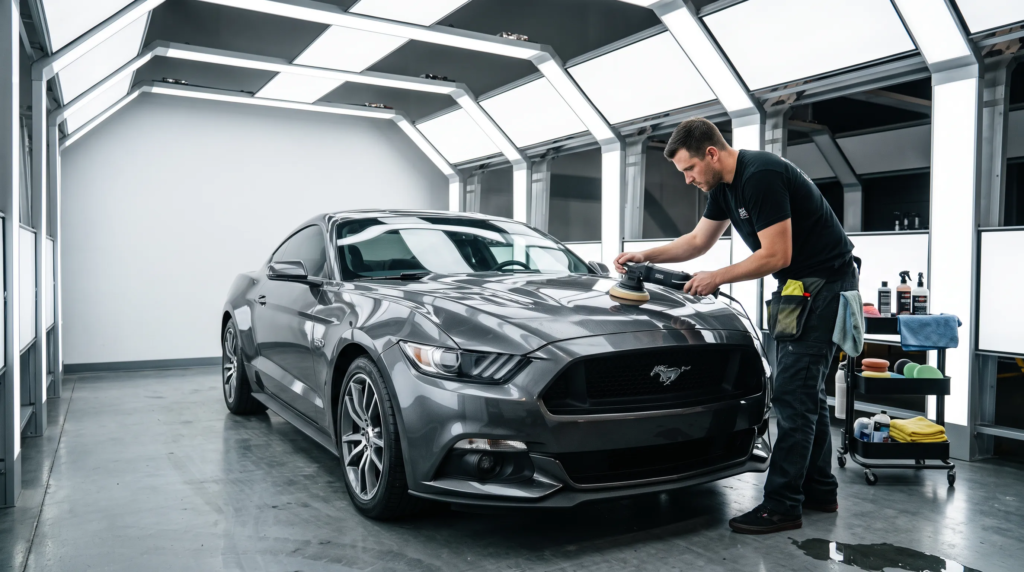
The goal is a clean finish with a level of correction appropriate for the condition of your vehicle.
Not every vehicle needs extensive paint correction before ceramic coating. If the finish has swirl marks, haze, or suitable light scratches, polishing may improve its appearance before protection. A vehicle with clean, glossy paint may need only preparation and limited refinement. Every coating installation requires proper surface cleaning so the product can bond according to manufacturer instructions.
Not always. PPF can be installed on suitable, clean painted surfaces without extensive polishing. If visible swirl marks or scratches are present, correcting them first may improve the final appearance because clear film can leave underlying defects visible. An inspection determines whether polishing, paint repair, or ordinary preparation is appropriate.
Paint correction can reduce some scratches within sound clear coat, but it cannot replace missing paint. Deep scratches that reach the colored layer or primer may require touch-up or refinishing. Rock chips also need separate evaluation. Aggressive polishing should not be used to chase damage beyond the safe limits of the clear coat.
Some new vehicles arrive with light washing marks, transportation-related defects, or minor haze. Others have clean finishes that require very little polishing. A professional inspection under suitable lighting helps determine whether correction would improve the appearance before coating or PPF. A new car should not receive aggressive polishing without a reason.
The time depends on the vehicle’s size, paint condition, number of panels, and correction process. A single-step polish generally involves less work than a multi-stage process. Existing repairs, water spot etching, and heavily scratched surfaces may require additional assessment. Contact Ceramic Pro Las Vegas to discuss the expected schedule for your vehicle.
Ceramic coating can make certain contamination easier to remove, helping support gentler maintenance. It doesn’t make paint scratch-proof. Dirty wash mitts, abrasive particles, and automatic brush car washes can still create scratches. Regular safe washing remains necessary to preserve the finish after paint correction and coating.
Ceramic Pro Las Vegas offers professional paint correction, ceramic coating, and PPF installation at 8540 Dean Martin Dr., Suite 170, Las Vegas, NV 89139. Our certified team can inspect your vehicle’s paint and discuss suitable preparation before protection. Call (702) 943-8877 or visit our contact page to request a quote and schedule an appointment.
If your paint looks cloudy, scratched, or covered in swirl marks, installing a ceramic coating or PPF without addressing those defects may leave you disappointed with the appearance.
Paint correction in Las Vegas helps refine suitable imperfections before protective products are applied.
But the process should match the condition of your vehicle.
Some finishes need only a light polish. Others may benefit from a multi-stage correction. Deep scratches, failing clear coat, and specialty finishes require different care.
At Ceramic Pro Las Vegas, our team can inspect your paint and explain what can be improved safely.
We offer paint correction, Ceramic Pro ION ceramic coatings, and professional paint protection film for vehicle owners throughout Las Vegas, NV and surrounding communities.
Ready to see what your paint needs before coating or PPF?
Call Ceramic Pro Las Vegas at (702) 943-8877 to discuss your vehicle’s paint condition and available services.
You can also request a quote and schedule an appointment through our contact page.
Ceramic Pro Las Vegas
8540 Dean Martin Dr., Suite 170
Las Vegas, NV 89139
Business Hours: Monday through Friday, 9 AM to 6 PM
Website: https://ceramicprolv.com
Get your vehicle’s finish properly assessed, correct the defects that can safely be improved, and choose protection that helps preserve the results.
The following automotive manufacturer, paint-care, refinishing, weather, and local service sources support the information about paint correction, polishing safety, ceramic coating preparation, and PPF.
Tell us about your vehicle, daily driving, and goals so we can recommend the best package for protection and style. Share the services you want to compare, such as paint protection film, ceramic coating, window tint, vinyl wrap, or paint correction. Include your timeline and any photos that show panels, glass, or problem areas. The more details you provide, the more precise our estimate and scheduling will be.
Explore the many services we offer by clicking the boxes below