
Clay bar decontamination before ceramic coating helps remove stubborn particles that remain attached to your vehicle’s paint even after a thorough wash. In Las Vegas, NV, where desert dust, road grime, and airborne contamination are familiar problems, preparing the paint properly can make a major difference in how a ceramic coating looks and bonds to the surface.
Here’s a situation you might recognize.
You wash your vehicle, rinse away the dust, and dry it with a clean microfiber towel. The paint looks shiny, especially from a few feet away.
But when you gently run your fingertips across a clean section of the hood, the finish doesn’t feel completely smooth.
There’s a faint, gritty texture.
That roughness may come from contamination bonded to the surface. Ordinary car shampoo can remove loose dirt, but it doesn’t always remove embedded fallout, tar residue, overspray, or other stubborn particles.
Applying ceramic coating without addressing that contamination can leave you with a less-than-ideal surface underneath the protection.
The answer isn’t automatically to scrub the paint with a clay bar, either. Clay treatment needs to be performed carefully, and not every vehicle requires the same amount of decontamination.
At Ceramic Pro Las Vegas, we prepare vehicle finishes before installing professional ceramic coating and paint protection film.
As an official Ceramic Pro Elite Dealer, our team evaluates paint condition, removes suitable contamination, and performs paint correction when needed before applying the selected protective product.
Let’s look at what clay bar treatment actually does, when it’s useful, and why surface preparation deserves attention before ceramic coating.
A clay bar is a pliable detailing material used to remove bonded contamination from suitable vehicle surfaces.
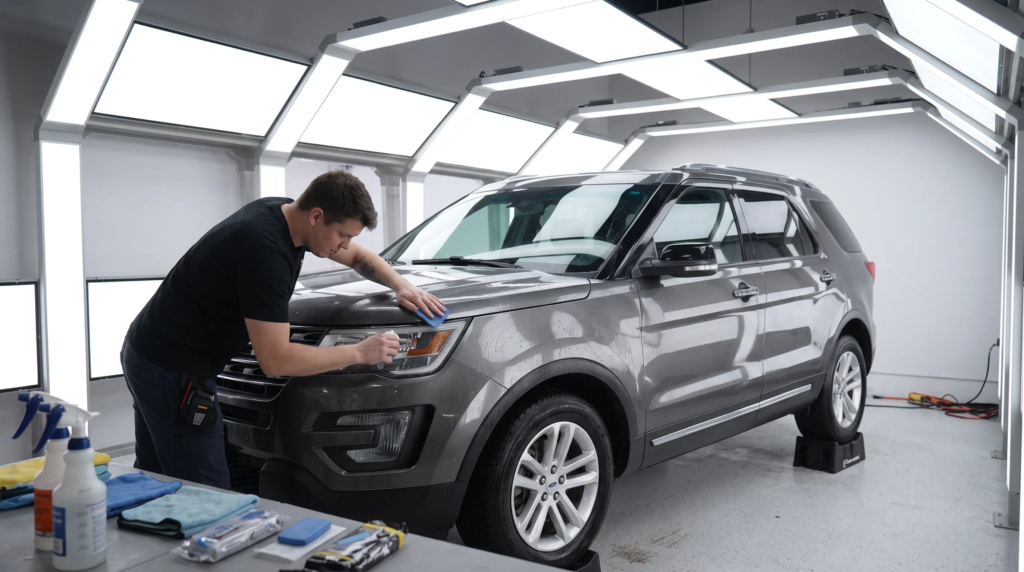
During treatment, a detailer glides the clay over lubricated paint.
As the clay contacts surface contamination, it can lift or dislodge particles that ordinary washing leaves behind.
The goal is to produce a cleaner, smoother finish before polishing or applying protection.
Clay bars are commonly used to address contamination such as:
The GYEON Q²M Clay Bars product guide describes clay as a way to remove ingrained contamination that normal washing may not remove.
Not every contaminant should be handled with clay alone.
Some materials respond better to a dedicated chemical treatment first.
A vehicle’s clear coat can hold tiny particles that bond to the surface.
When you wash the car, loose dust and grime come away.
Bonded particles may remain.
That’s why a vehicle can look clean but still feel slightly rough.
Meguiar’s discusses this distinction in its automotive paint preparation guidance, recommending an assessment of surface roughness after washing to determine whether clay treatment may help.
That rough texture is a reason to inspect the paint, not a reason to start scrubbing aggressively.
No.
Clay bar treatment removes suitable contamination sitting on or attached to the surface.
Paint correction uses polishing abrasives to reduce defects within the clear coat.
They solve different problems.
A vehicle may need clay treatment, polishing, both services, or neither beyond ordinary cleaning.
Vehicle owners throughout Las Vegas, NV deal with environmental conditions that can make exterior care more demanding.
According to the National Weather Service’s Climate of Las Vegas, the region experiences dry weather, abundant sunshine, and periods of strong wind that can carry blowing dust and sand.
Those conditions can leave cars looking dirty soon after washing.
But not all contamination comes directly from the desert.
Fine dust can collect across the hood, roof, trunk, and side panels.
Most loose dust should be removed through proper rinsing and washing.
It doesn’t automatically require a clay bar.
The concern is contamination that stays attached after washing, along with scratches that can occur when loose grit is rubbed across the paint.
This is why rinsing thoroughly before any mechanical contact matters.
Vehicles traveling along I-15, the 215 Beltway, and other busy roads encounter traffic-related contamination.
Road film can contain a mixture of dirt, oils, and other residue.
Small metallic particles from vehicle braking systems may also settle on nearby surfaces.
Some contamination can remain bonded to paint after a normal wash.
A suitable iron-removing product can help address ferrous particles before mechanical decontamination is considered.
Las Vegas, NV continues to see construction activity in many neighborhoods.
Certain vehicles may encounter airborne paint overspray or other job-site residue.
These particles can attach to the clear coat and create a gritty texture.
A clay bar may help remove suitable overspray, but the safest approach depends on the material and paint condition.
If you suspect heavy overspray, have the surface inspected rather than attempting aggressive removal yourself.
Mineral-containing water can leave spots on automotive paint after evaporation.
Some deposits remain on the surface.
Others may etch into the clear coat.
Clay isn’t necessarily the right treatment for mineral spotting or etching.
A detailer should identify the contamination before choosing a cleaning or correction method.
Ceramic coating is designed to bond to a properly prepared surface.
That surface needs to be free from contamination that could interfere with the application.
Clay bar decontamination before ceramic coating is one possible preparation step when bonded particles remain after washing and suitable chemical cleaning.
Think about applying a transparent protective treatment over a dirty surface.
Even if the paint looks glossy, leftover contamination can interfere with consistent application.
A clay bar can help remove stubborn particles before the coating is installed.
But clay treatment alone doesn’t complete the preparation.
Polishing oils, previous waxes, cleaning residue, and other materials may still need to be removed.
Meguiar’s Professional M122 Surface Prep is one manufacturer example of a product intended to remove polishing residue and prepare paint before coating.
The final cleaning product should be compatible with the selected coating system.
Bonded particles can interfere with subsequent polishing or coating work.
They may also contaminate polishing pads if not removed first.
By removing those particles, the technician can work on a cleaner finish.
This helps support consistent preparation across the treated panels.
Ceramic coating is generally transparent.
It isn’t a filler designed to cover rough contamination.
If the paint contains visible defects or bonded residue, the coating doesn’t automatically make them disappear.
That’s why preparation needs to come before protection.
Here’s an important distinction.
Clay bar decontamination before ceramic coating is useful when the paint has bonded contamination that needs mechanical removal.
It isn’t necessary to aggressively clay every panel just because a coating is being installed.
If the paint is already clean and smooth after inspection and chemical preparation, a detailer may decide that extensive claying is unnecessary.
That avoids creating new surface marks without a good reason.
You don’t need to guess whether your vehicle has bonded contamination.
A professional can inspect the surface after it has been properly washed.
Several signs may indicate that additional cleaning is needed.
After washing, a clean painted panel should generally feel smooth.
If it feels gritty, there may be bonded contamination.
Don’t repeatedly rub the surface with your bare hand.
A gentle inspection using an appropriate method is enough to determine whether further assessment is worthwhile.
You may notice tiny particles on the hood, roof, or lower doors.
Light-colored vehicles can make certain deposits easier to see.
Some metallic fallout appears as small dark or rust-colored specks.
A chemical iron remover may be a suitable first treatment for those deposits.
If your vehicle was parked near painting or construction work, you may notice a fine rough texture on the body panels.
Suitable clay treatment can sometimes remove light overspray.
Heavier contamination may require another method.
Don’t use aggressive solvents or abrasive products without verifying compatibility with the finish.
Sometimes a vehicle remains rough despite repeated washing.
Using more pressure with a wash mitt won’t necessarily help.
It can instead increase the chance of scratches.
This is a good time to ask for a paint decontamination assessment.
Clay bars aren’t the only tools used during paint preparation.
Professional detailers often combine carefully selected chemical and mechanical methods.
Each addresses different types of contamination.
Chemical products are designed to react with, soften, or dissolve certain contaminants.
Iron removers target metallic fallout.
Tar removers are formulated for suitable adhesive or petroleum-based road contamination.
The product should be selected according to the material and the manufacturer’s instructions.
Chemical treatment may remove contamination without requiring as much mechanical contact.
A clay bar or compatible synthetic clay tool uses physical contact to remove suitable bonded contamination.
Proper lubrication helps the material glide across the paint.
It should not be forced across a dirty or dry surface.
The GYEON coating preparation guide describes washing, iron removal, and clay treatment as separate stages of surface preparation.
For a contaminated vehicle, a typical professional approach may include washing, applying suitable chemical decontamination products, rinsing, and then checking whether mechanical treatment is still needed.
This can reduce the amount of bonded material that the clay has to remove.
The exact order and products depend on the surface and their instructions.
| Preparation Method | Main Purpose | What It Does Not Do |
|---|---|---|
| Car shampoo | Removes loose dirt and road film | May leave bonded particles |
| Iron remover | Targets suitable ferrous contamination | Does not remove every type of residue |
| Tar remover | Targets compatible tar and adhesive residue | Does not correct scratches |
| Clay bar | Removes suitable bonded surface contamination | Does not polish away swirl marks |
| Paint correction | Reduces suitable clear-coat defects | Does not replace missing paint |
| Panel preparation cleaner | Removes oils and residue before coating | Does not substitute for all earlier cleaning |
The goal is to use the least aggressive suitable method rather than treating every vehicle identically.
Yes.
Clay bar treatment can cause fine surface scratches, often called marring.
This is one of the biggest reasons professional technique matters.
Clay physically contacts the painted surface.
If it traps abrasive particles, is used with too little lubricant, or is pressed too hard, it can leave visible marks.
Some paint finishes show marring more easily than others.
Dark paint can make the marks especially noticeable in direct sunlight.
Clay products come in different levels of aggressiveness.
Milder clay is intended for lighter contamination.
Coarser clay can remove heavier deposits but may increase the chance of visible marks.
GYEON’s official clay bar instructions warn that its coarse clay can leave light marring and recommend it before paint correction.
That doesn’t mean every clay bar will visibly scratch every vehicle.
It means the selected material and technique need to match the surface.
Clay should glide over the paint using a lubricant approved for the product.
The Americana Global Clay Bar available through the Ceramic Pro Webstore instructs users to apply a dedicated lubricant or suitable detailing spray to reduce friction and the risk of marring.
A dry clay bar should not be rubbed across painted panels.
A dropped clay bar can collect abrasive particles.
Those particles may become trapped in the material.
For conventional detailing clay, the safest practice is to discard any portion that has contacted a dirty surface rather than risk rubbing grit against the clear coat.
A small saving in material isn’t worth damaging a painted panel.
If the clay leaves fine marks, suitable machine polishing may be needed to restore clarity.
This is one reason professionals often place mechanical decontamination before paint correction.
The remaining polishing stage can address appropriate surface marring.
It is also a reason to avoid unnecessary clay treatment on already clean paint.
Clay bar decontamination before ceramic coating works best as part of a careful preparation plan.
At Ceramic Pro Las Vegas, the amount of preparation depends on the vehicle’s condition and the protection selected.
A typical professional sequence may look like this.
The first step is to identify the surfaces being treated and their condition.
The technician checks for contamination, scratches, existing film, specialty finishes, and previous repairs.
This helps determine which cleaning methods are suitable.
Before mechanical decontamination, the exterior needs to be washed.
Loose dust and grit should be rinsed away rather than dragged across the finish.
A suitable automotive shampoo and clean wash equipment help remove ordinary road grime.
When needed, the technician may use an iron remover or another approved cleaning product.
These treatments are selected for the type of contamination present.
They must be used according to the manufacturer’s instructions, including temperature, dwell time, and rinsing.
After cleaning, the technician checks which painted areas still have bonded contamination.
A suitable clay product is used with approved lubrication and light pressure.
Not every panel necessarily needs identical treatment.
The goal is to remove contamination without introducing unnecessary marks.
Once the surface has been cleaned, the technician checks for any fine marks left by mechanical decontamination.
Some finishes may need a finishing polish.
Others may not.
This decision should be based on the paint’s condition.
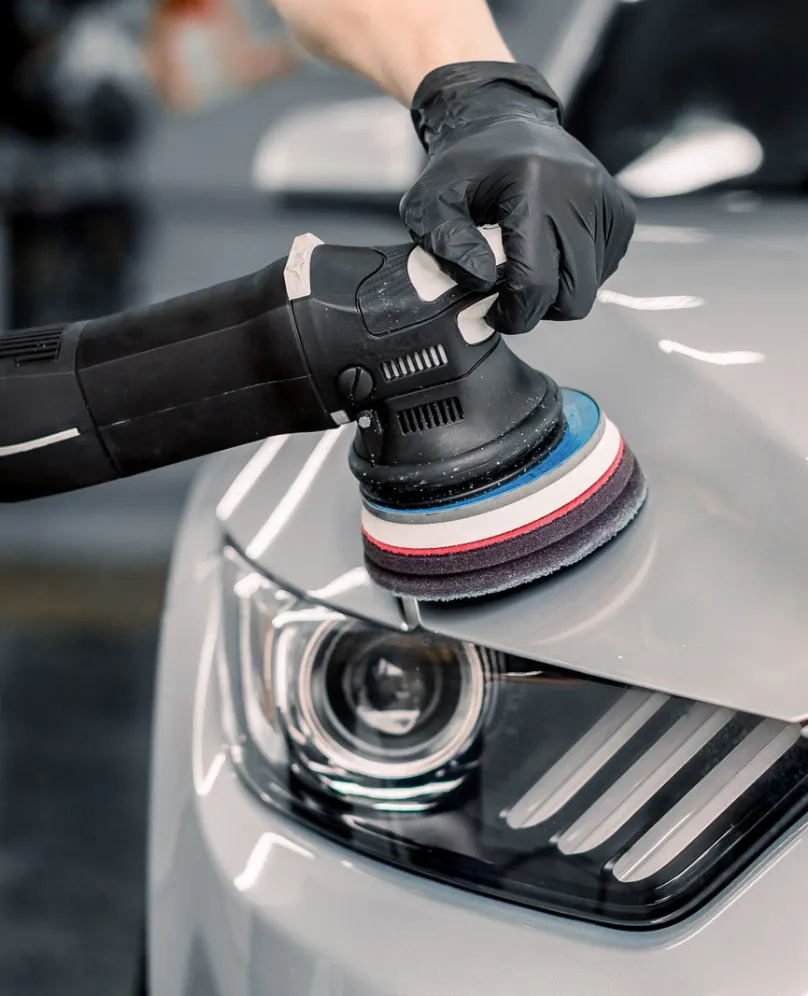
If the vehicle has swirl marks, haze, or suitable scratches, professional polishing may improve its appearance.
Our paint correction services focus on refining appropriate clear-coat defects.
Paint correction removes a small amount of surface material, so it should be performed only as needed.
After polishing, the paint should be free from oils and residue that could interfere with the coating.
A coating-compatible panel preparation product is used according to manufacturer instructions.
Once the surface is ready, the selected ceramic coating can be installed.
It’s easy to confuse clay treatment with paint correction because both can be part of the same appointment.
But they have different jobs.
Clay works on particles attached to the surface.
If your paint looks clean but feels gritty, decontamination may be appropriate.
It does not level scratches in the clear coat.
Paint correction can reduce swirl marks, haze, light scratches, and certain other defects.
It works through controlled polishing.
If your paint already feels smooth but has visible circular scratches, clay may not be the solution.
Polishing might be more appropriate.
Yes.
A vehicle may have bonded contamination along with wash-related scratches.
The surface can be cleaned, decontaminated, inspected, and polished before coating.
This sequence avoids polishing over loose or bonded particles that could create more damage.
Also yes.
A well-maintained vehicle with clean, smooth paint may not require aggressive mechanical treatment or extensive correction.
Proper washing and final coating preparation may be sufficient.
The decision should come from a paint inspection rather than an automatic checklist.
A new vehicle can have bonded contamination.
That surprises some owners.
You might assume that a car arriving from the dealership has perfectly clean paint.
But new vehicles can encounter outdoor storage, transportation, washing, and handling before delivery.
Vehicles may travel by truck, rail, or other transportation methods before reaching a dealership.
During that time, some can accumulate airborne particles or surface contamination.
The amount varies.
A new car doesn’t automatically need clay treatment, but it deserves an inspection before ceramic coating.
Some new vehicles arrive with clean, smooth finishes.
Others may have light contamination, polishing residue, or wash-related marks.
The safest approach is to inspect the paint rather than assuming every new vehicle needs a complete clay treatment.
Owners of Tesla, BMW, Mercedes-Benz, Porsche, Lexus, and other vehicles may want protection soon after purchase.
We offer Tesla ceramic coating and Tesla paint correction for compatible finishes.
If your new vehicle has bonded contamination, that should be addressed before protection.
If the finish is already clean and smooth, unnecessary abrasive work should be avoided.
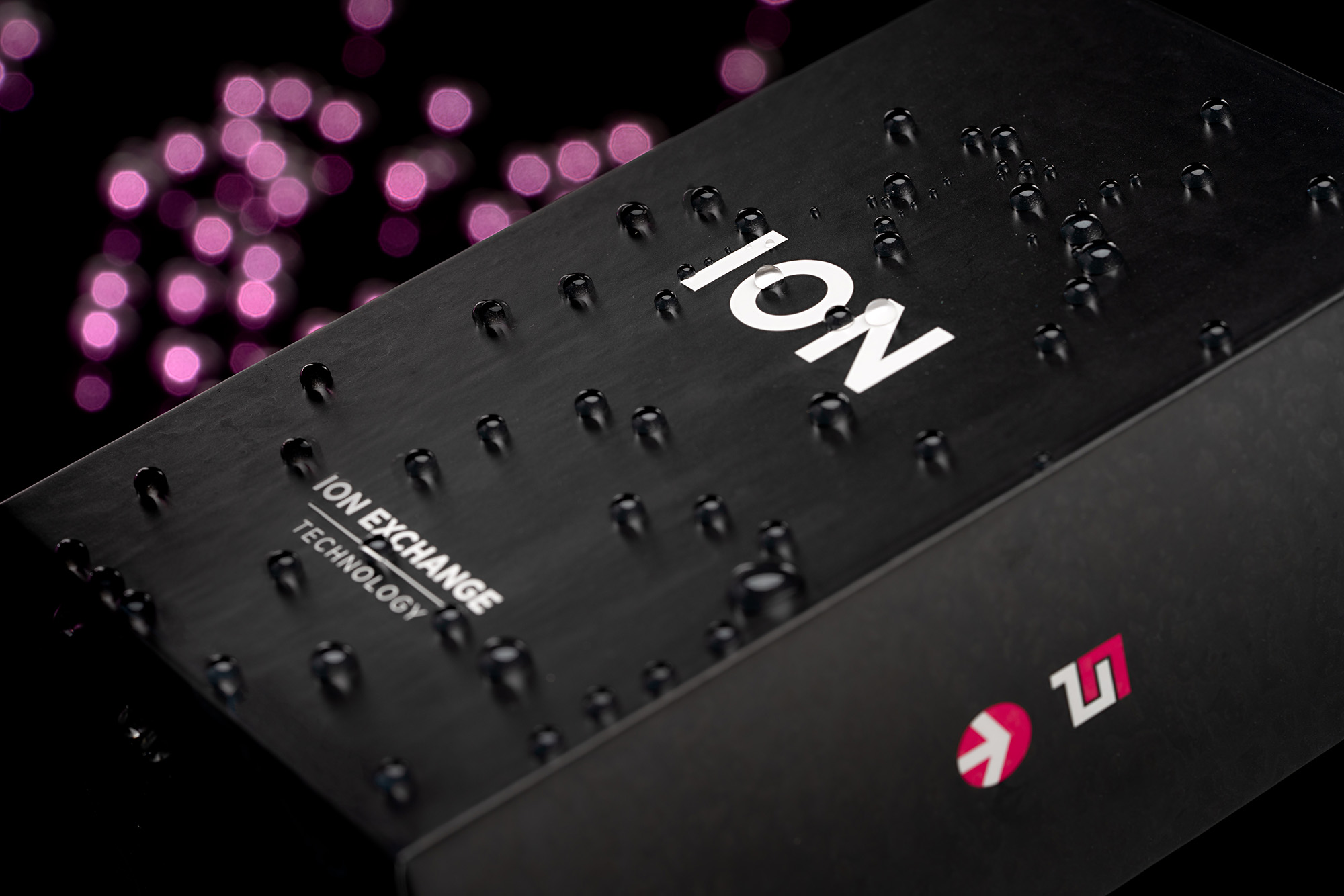
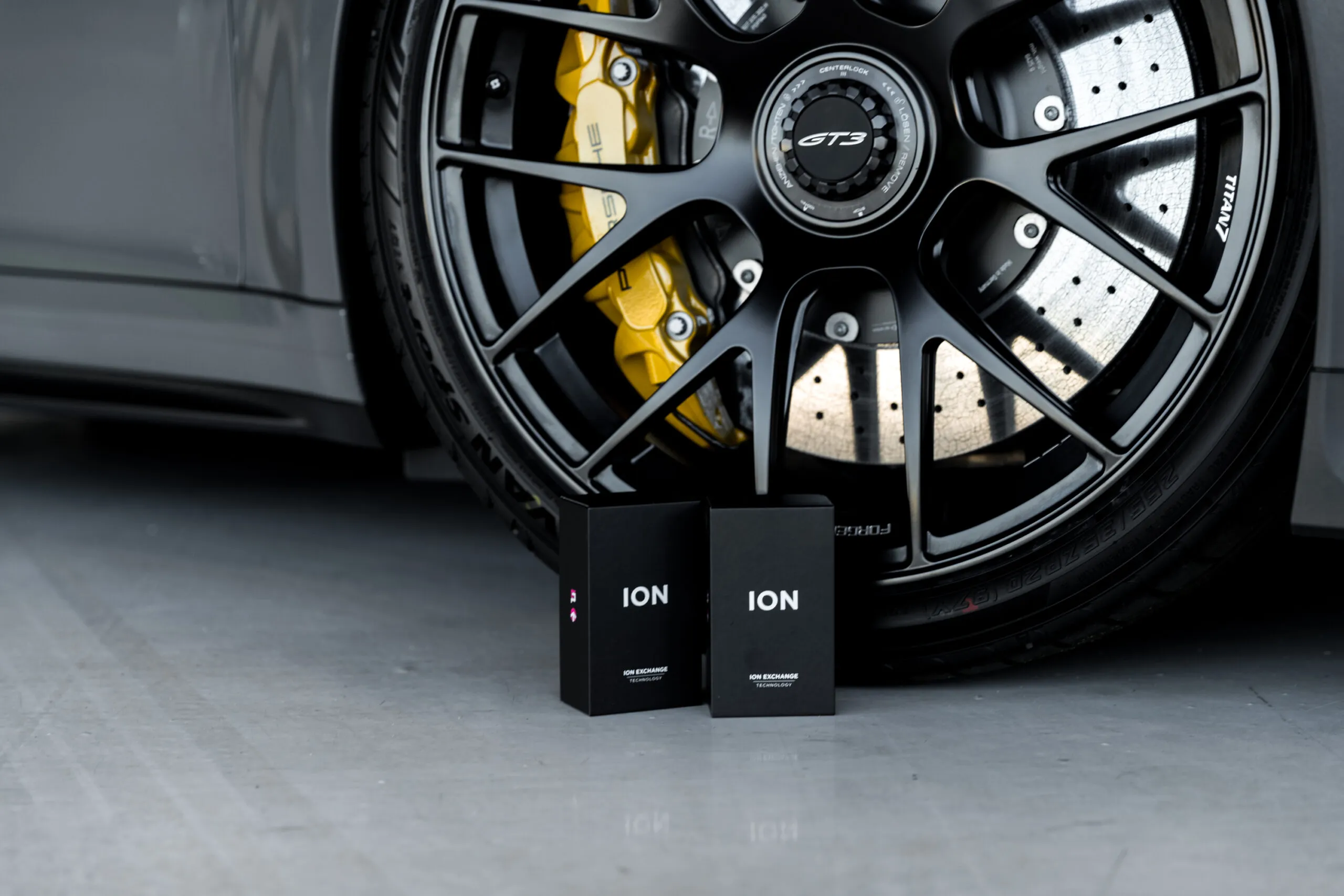
Ceramic Pro Las Vegas offers professional Ceramic Pro ION coating services.
ION is designed to provide gloss, water-repelling properties, and resistance to certain environmental contaminants on compatible exterior surfaces.
A professional coating system needs properly prepared paint.
Residual dirt, polishing oils, and bonded contamination can interfere with the desired finish or application.
Clay treatment may be part of preparation when the surface requires it.
Other vehicles may need a different decontamination approach.
Ceramic Pro ION uses a professional two-stage coating system.
The manufacturer’s process includes an ION Base Coat followed by an ION Top Coat.
The system is designed to create a durable protective finish with hydrophobic properties.
You can review the manufacturer’s Ceramic Pro ION information and our local ION service page to learn more.
No.
Ceramic coating isn’t a substitute for proper paint correction.
Swirl marks, scratches, and surface haze may remain visible after a transparent coating is applied.
If the finish has suitable defects, correcting them before coating can help produce a cleaner-looking result.
If you’re considering paint protection film instead of ceramic coating, surface cleanliness is still important.
PPF is an adhesive-backed protective film installed over suitable painted panels.
Dirt and bonded particles should be addressed before installation.
PPF is designed to sit closely against the painted surface.
If contamination remains underneath, it may affect the finished appearance.
Proper washing, decontamination, and inspection help prepare the panels.
That doesn’t mean every vehicle needs aggressive clay treatment before PPF.
The installer should choose the preparation method based on the paint’s condition and film manufacturer’s guidance.
Not always.
If the paint has visible swirl marks or scratches, polishing may improve its appearance before clear film is installed.
If the surface is already clean and in good condition, extensive correction may not be necessary.
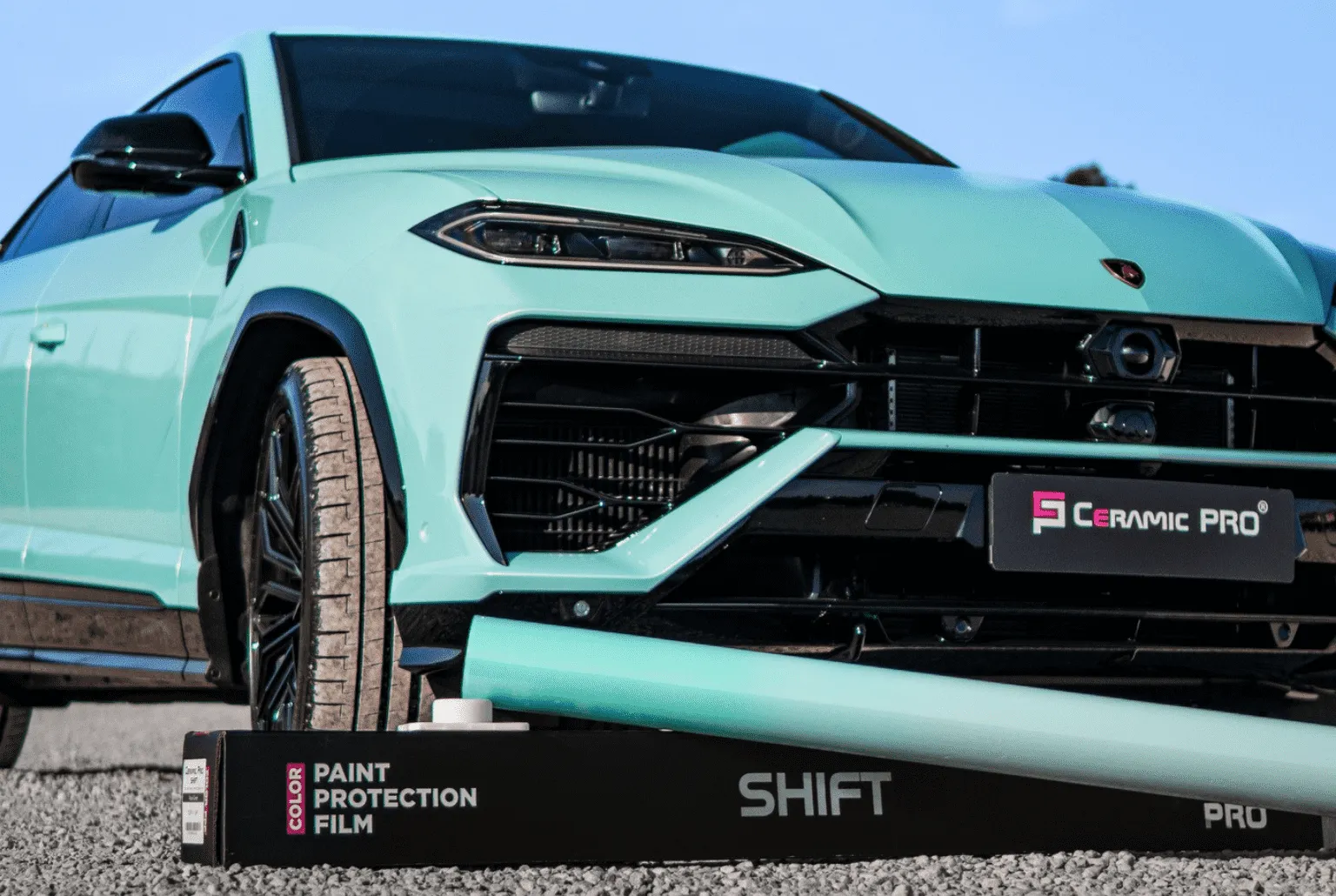
Our Ceramic Pro PPF services include coverage options for suitable painted surfaces.
Yes, when the products are compatible.
Some owners select PPF for panels exposed to road debris and ceramic coating for suitable surfaces where easier washing is a priority.
Our Ceramic Pro Ultimate Armor is one combination option worth discussing.
The correct surface preparation and installation order should follow manufacturer instructions.
After ceramic coating is applied, the maintenance routine changes.
You want to preserve the coating rather than repeatedly use abrasive decontamination methods.
According to Ceramic Pro’s Coating Aftercare Guide, its coating packages may take approximately two to three weeks to cure, depending on environmental conditions.
The manufacturer advises against washing the vehicle for at least two weeks after delivery.
Follow the written instructions provided for your selected coating.
Even coated paint can collect dust.
If the surface is dirty, rinse away loose particles before touching the paint.
Use approved automotive shampoo and clean washing equipment.
Avoid dragging dry towels across dusty panels.
A common mistake is assuming that clay bar treatment should become part of every routine wash.
Clay is a mechanical decontamination method.
Using it unnecessarily may mar the finish or damage the protective coating.
If your ceramic-coated paint begins to feel rough, ask your installer to assess the contamination.
A suitable chemical decontamination method may be preferable in some situations.
Mechanical treatment should only be used when appropriate for the coating and its maintenance instructions.
Ceramic coating can make certain dirt and grime easier to remove, but it doesn’t make paint completely stain-proof.
Bird droppings, insect residue, and other contaminants should be addressed promptly using approved methods.
Ceramic Pro recommends careful hand washing and advises against automatic brush-style washes for coated vehicles.
Dirty brushes can leave scratches even when the paint has ceramic protection.
Regular cleaning with suitable products helps preserve the finish and its water-repelling behavior.
If you’re considering clay bar decontamination before ceramic coating, a professional paint inspection is a useful first step.
Not every rough surface requires the same treatment.
At Ceramic Pro Las Vegas, we evaluate the condition of the paint before recommending ceramic coating, correction, or PPF.
Our shop welcomes vehicle owners from Las Vegas, NV, Henderson, NV, Enterprise, NV, Spring Valley, NV, and Summerlin South, NV.
Whether your car spends most of its time in a garage or regularly travels on busy Southern Nevada roads, proper surface preparation can help protect the finish you already have.
When contacting our team, mention your vehicle’s year, make, model, and existing paint condition.
Tell us if you’ve noticed rough paint after washing, stubborn specks, water spots, overspray, or swirl marks.
Also mention any previous ceramic coating, paint protection film, or repainting.
These details help us assess whether clay treatment, chemical cleaning, or paint correction may be appropriate.
As an official Ceramic Pro Elite Dealer, we offer professional Ceramic Pro coatings, paint correction, and PPF installation.
We can explain what preparation your vehicle needs before applying protection.
If the paint requires bonded contamination removal, we’ll discuss that preparation as part of the overall service.
If the finish is already clean and smooth, there’s no reason to recommend unnecessary abrasive treatment.
Clay bar decontamination is useful when bonded contamination remains on the paint after washing and suitable chemical cleaning. It isn’t automatically necessary on every panel of every vehicle. The finish should be inspected first. A professional can determine whether mechanical decontamination, chemical cleaning, polishing, or a combination is appropriate before coating.
Yes. Clay bar treatment can create fine scratches or marring if the material traps abrasive particles, is used with insufficient lubricant, or is pressed too hard. Some paint finishes show these marks more easily than others. Using a suitable clay grade, adequate lubrication, and light pressure helps reduce the risk. Polishing may be needed if visible marring occurs.
No. Clay bar treatment removes suitable contamination bonded to the surface. It does not correct scratches within the clear coat. Swirl marks and light scratches are addressed through appropriate paint correction methods. A vehicle may need both decontamination and polishing before ceramic coating.
Yes. New vehicles can accumulate contamination during transportation, storage, and dealership preparation. But a new car doesn’t automatically require clay treatment. If the paint is already smooth and clean, extensive mechanical decontamination may be unnecessary. A professional inspection helps determine the appropriate preparation.
Removing bonded contamination supports proper surface preparation before coating. The coating should be applied to a clean, suitable finish without leftover particles or polishing residue. Clay treatment may help when contamination is present, but it isn’t the final preparation step. A compatible panel cleaner may still be needed before ceramic coating is applied.
Don’t automatically clay an existing ceramic coating as part of routine maintenance. Mechanical decontamination can cause marring or damage the coating. If the finish feels rough, contact your installer for an assessment. Depending on the contamination and product requirements, suitable chemical decontamination may be recommended instead.
Ceramic Pro Las Vegas provides professional paint preparation, paint correction, and Ceramic Pro ceramic coating services at 8540 Dean Martin Dr., Suite 170, Las Vegas, NV 89139. Our certified team can inspect your vehicle for bonded contamination and discuss suitable preparation before coating. Call (702) 943-8877 or visit our contact page to request a quote and schedule an appointment.
A clean-looking vehicle isn’t always ready for ceramic coating.
Bonded contamination can remain on the paint after an ordinary wash, especially when the vehicle has encountered road grime, fallout, overspray, or other stubborn deposits.
Clay bar decontamination before ceramic coating can help remove those particles and prepare the finish for the next stage of treatment.
The most useful approach isn’t to clay every vehicle aggressively.
It’s to inspect the paint, identify the contamination, use suitable cleaning methods, and correct visible defects when needed.
At Ceramic Pro Las Vegas, our team can review your vehicle’s finish and explain the preparation required before Ceramic Pro protection is installed.
We offer professional paint correction, ceramic coating, and paint protection film for vehicle owners across the Las Vegas Valley.
Ready to prepare and protect your paint?
Call Ceramic Pro Las Vegas at (702) 943-8877 to discuss your vehicle’s condition and available ceramic coating options.
You can also request a quote and schedule an appointment through our contact page.
Ceramic Pro Las Vegas
8540 Dean Martin Dr., Suite 170
Las Vegas, NV 89139
Business Hours: Monday through Friday, 9 AM to 6 PM
Website: https://ceramicprolv.com
Give your vehicle a properly prepared finish before adding long-term Ceramic Pro protection.
The following manufacturer, paint-care, government, and local business sources support the information about bonded contamination, clay bar treatment, ceramic coating preparation, paint correction, and Southern Nevada conditions.
Tell us about your vehicle, daily driving, and goals so we can recommend the best package for protection and style. Share the services you want to compare, such as paint protection film, ceramic coating, window tint, vinyl wrap, or paint correction. Include your timeline and any photos that show panels, glass, or problem areas. The more details you provide, the more precise our estimate and scheduling will be.
Explore the many services we offer by clicking the boxes below