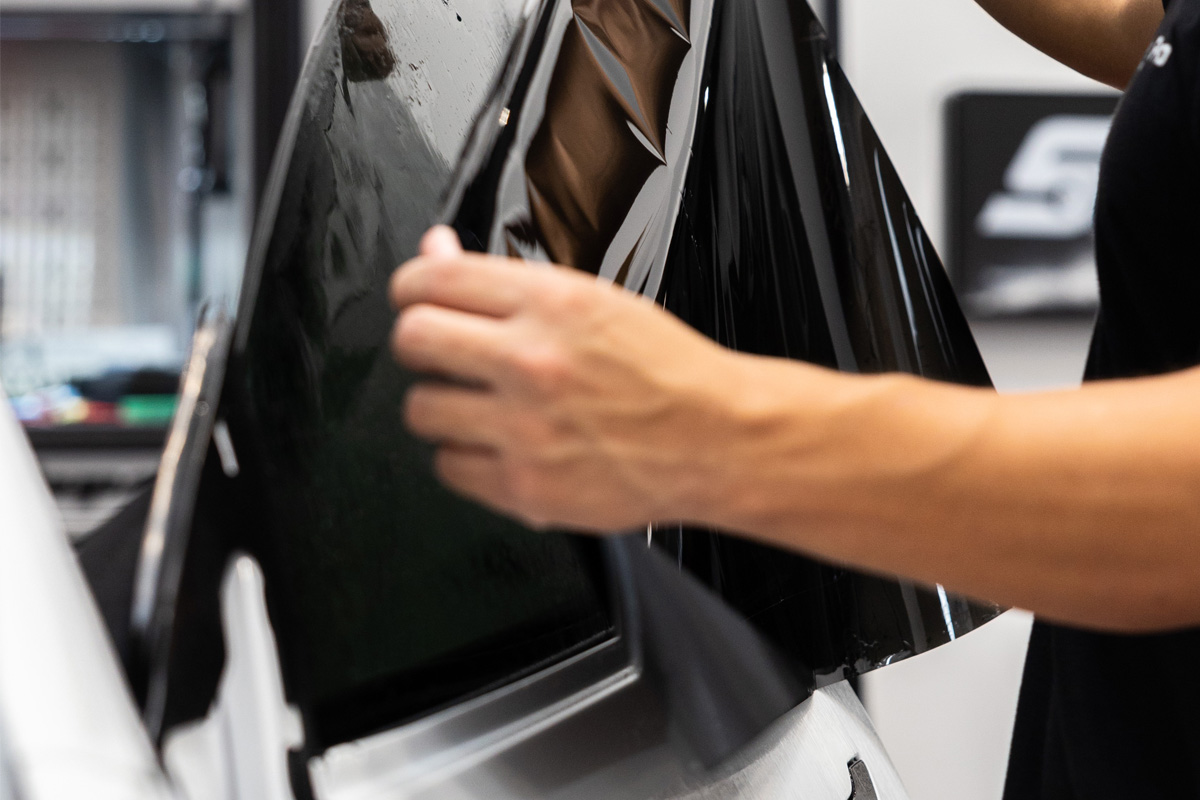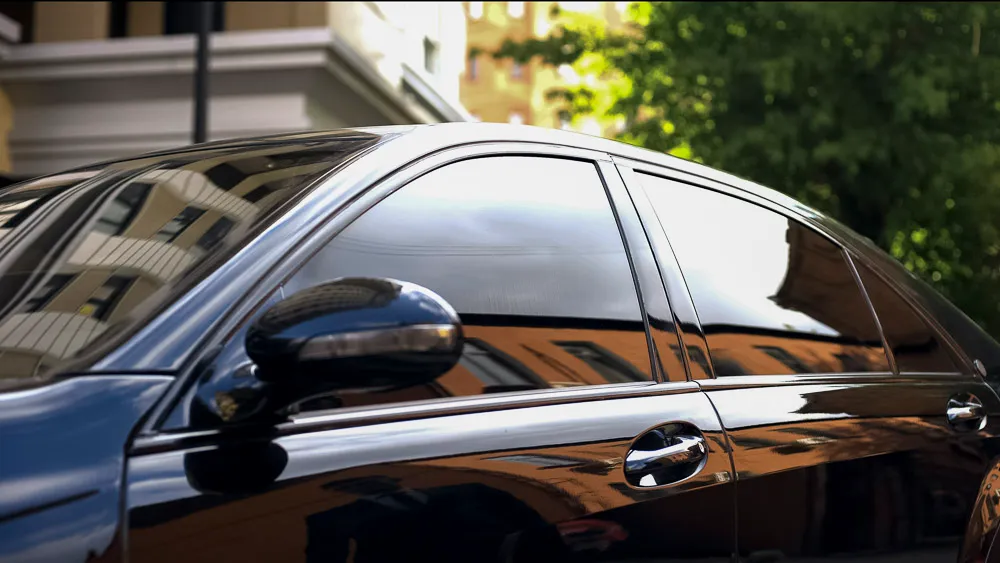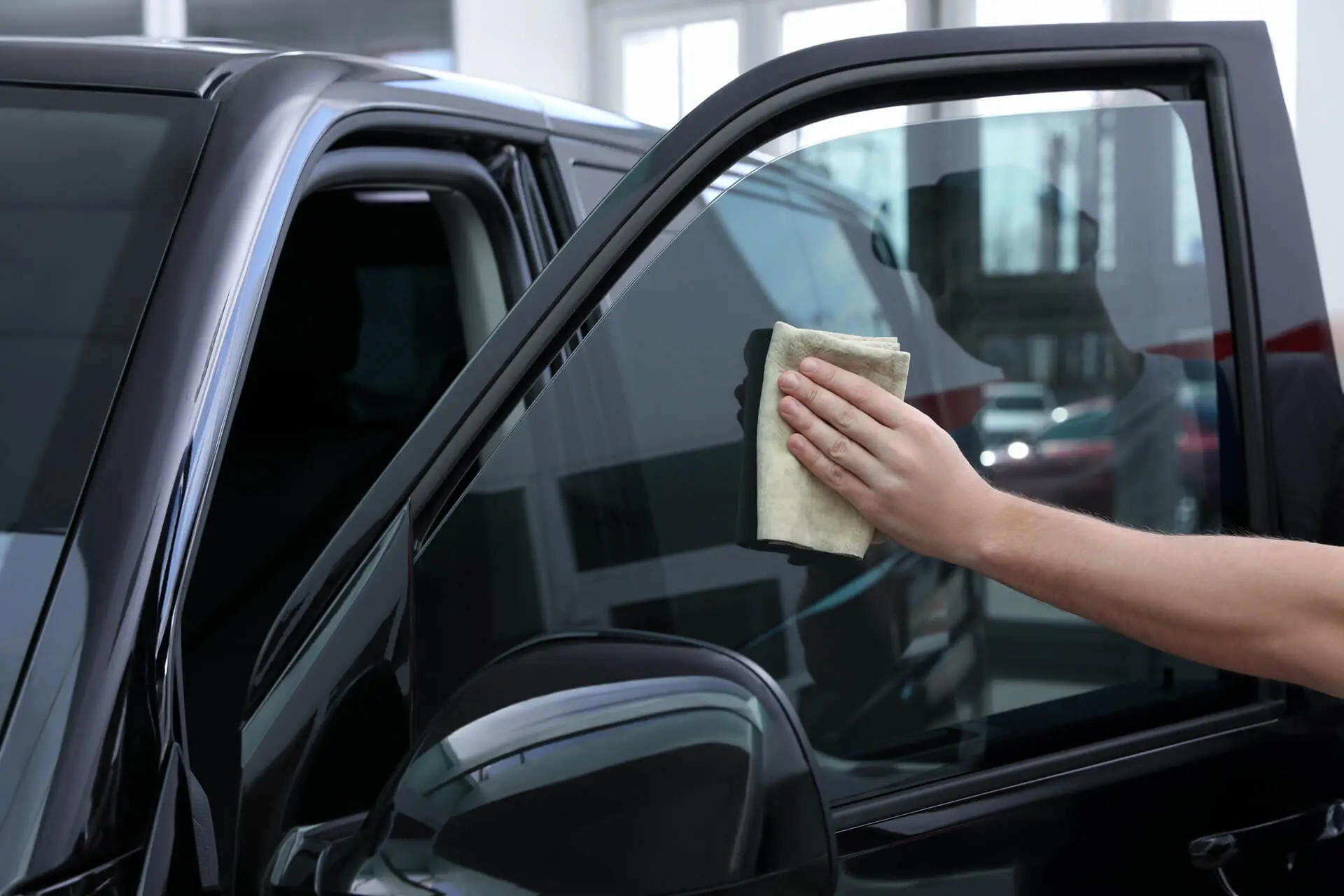

Ceramic tint in Henderson, NV gives drivers a different way to deal with Southern Nevada heat than simply putting darker film on the windows. While standard tint is often chosen for shade, glare reduction, or privacy, infrared-focused ceramic film is designed to reduce more of the heat-producing infrared energy passing through automotive glass.
That difference matters in Henderson, NV.
A dark window does not automatically mean strong heat rejection. A lighter ceramic film may reject more infrared energy than a darker entry-level film while allowing considerably more visible light through the glass.
For drivers comparing tint options, the choice should not begin with, “How dark should I go?”
A better question is, “What do I want the film to do?”
Ceramic Pro Las Vegas installs several window tint options for drivers throughout Henderson, NV and the Las Vegas Valley, including carbon, ceramic, and infrared-focused films.
This guide compares ceramic IR film with standard tint so you can understand heat rejection, visible light transmission, UV filtering, signal interference, Nevada tint rules, and which type of film may suit your vehicle.
Ceramic window film uses ceramic-based materials rather than relying only on dye or metallic particles.
The goal is to manage solar energy without requiring the glass to become extremely dark.
Ceramic Pro offers several films that use nano-ceramic technology, including Ceramic IR window tint and Ultimate IR window tint.
These films place a strong focus on infrared rejection.
Infrared radiation is part of the solar spectrum and contributes to the heat you feel coming through automotive glass.
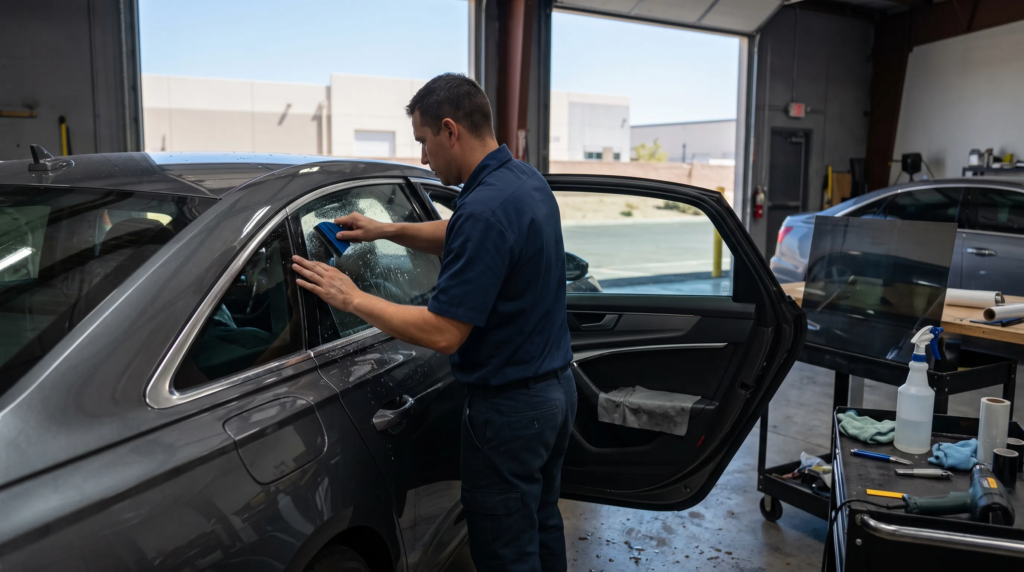
For a Henderson, NV driver who parks outside, commutes during the afternoon, or spends hours on Las Vegas Valley roads, that can matter more than tint darkness alone.
“Standard tint” is a broad term.
It can refer to dyed film, carbon film, metallic film, or other lower-tier automotive film products.
Many standard films do a good job of reducing visible light and glare.
A dark dyed film may give you:
What it does not tell you is how much infrared energy the film rejects.
Two films can look nearly identical from outside while performing very differently when exposed to strong sunlight.
That is where ceramic tint starts separating itself from tint chosen mainly for shade.
The largest difference between ceramic IR film and many standard films is how the product handles infrared energy.
Ceramic Pro describes its Ceramic IR film as using nano-ceramic technology paired with an infrared-focused layer. The company reports infrared rejection of up to 96% under its stated testing conditions.
Ceramic Pro Ultimate IR goes even further. Ceramic Pro’s published window-film specification sheet reports infrared rejection reaching up to 99% in certain test ranges.
A conventional dyed tint may make a window look dark without reaching that level of infrared performance.
Entry-level tint often gives drivers the visual changes they want.
That may be enough if your goals are privacy and reduced glare.
Ceramic IR film is aimed more heavily at drivers who want to reduce the feeling of solar heat entering through the glass.
This can be appealing in Henderson, NV, where summer driving often means strong sunlight hitting the side glass for long periods.
Ceramic film does not have to look unusual.
Depending on the VLT you select, ceramic tint can provide a dark factory-style appearance or remain relatively light.
The difference is happening in the film’s solar performance rather than simply how black it looks.
Henderson, NV sits in the Las Vegas Valley, where intense summer sunshine is part of everyday driving.
When sunlight enters the cabin, different wavelengths carry energy through the glass.
Visible light is what you see.
Infrared radiation is not visible to the eye, yet it contributes heavily to the heat you feel.
Ceramic tint targets this part of solar energy.
That means you can select a film based partly on heat performance rather than relying on extremely dark windows to make the cabin feel more comfortable.
For Henderson, NV drivers, this can matter when:
Ceramic tint will not keep a parked vehicle cold in desert summer conditions.
The cabin can still heat up.
The film’s job is to reduce a portion of the solar energy passing through treated glass.
This is one of the biggest misconceptions about automotive tint.
Darkness and heat rejection are different measurements.
A film that looks very dark may reduce plenty of visible light but still allow more infrared energy through than a lighter high-grade ceramic film.
Ceramic Pro’s Ultimate IR specification sheet gives a useful comparison.
The company lists Ultimate IR 80 at approximately 74% film-only visible light transmission. That is a relatively light film.
Ceramic Pro still reports up to 95% infrared rejection for that film in its published testing.
Compare that with a lower-grade dark film that may appear much darker but is not designed around the same infrared-rejection technology.
What this means is that Henderson, NV drivers can choose heat-control film without automatically choosing a near-black window.
VLT stands for visible light transmission.
It tells you how much visible light passes through the film.
Higher VLT means more visible light passes through.
Lower VLT means less visible light passes through.
A 70% film looks much lighter than a 20% film.
A 5% film looks very dark.
VLT does not tell you everything about heat performance.
When comparing ceramic tint in Henderson, NV, look at several measurements instead of VLT alone:
These numbers tell a fuller story about what a film actually does.
Drivers should also think about Nevada law before choosing tint darkness.
Under Nevada Revised Statutes section 484D.440, transparent material installed on the windows immediately to the right and left of the driver must be nonreflective and allow at least 35% total light transmission, subject to the statute’s 7% tolerance.
The word total matters.
Nevada measures the finished combination of film and automotive glass.
Installing film labeled 35% does not mean the completed window will necessarily measure exactly 35%.
Factory glass already reduces some visible light.
Adding film lowers the finished transmission further.
For this reason, ask your tint installer about the glass already on your vehicle rather than selecting front-window film only from the printed film percentage.
Nevada provides more flexibility for side windows behind the driver and the rear window when the vehicle has outside mirrors on both sides that allow the driver to see the highway behind the vehicle as required by state law.
Windshield rules are different from side-window rules.
Nevada permits tint material on the upper area of the windshield when it meets the placement requirements stated in NRS 484D.440.
Do not assume the same film that works on a rear side window can be installed across the full windshield.
Not every driver needs the highest-grade infrared film.
Carbon film can sit between entry-level dyed tint and higher-end ceramic IR products.
Ceramic Pro Las Vegas offers Carbon X window tint, which uses a blend of nano-carbon and nano-ceramic particles.
Ceramic Pro’s published film data lists Carbon X with 99.9% UV rejection and differing infrared performance based on VLT.
Think about how much time your vehicle spends in strong sunlight.
Someone who drives short distances and keeps the vehicle in a garage may make a different choice than someone whose car sits outside for eight hours each workday.
Ceramic Pro offers more than one infrared-focused film.
Ceramic Pro Ceramic IR uses nano-ceramic technology and an infrared-focused layer.
Ceramic Pro Las Vegas reports up to 96% infrared heat rejection under the manufacturer’s stated testing.
This makes Ceramic IR a strong choice for drivers focused heavily on desert heat.
Ceramic Pro Ultimate IR represents the higher heat-focused tier.
Ceramic Pro’s published film specifications show infrared rejection reaching up to 99% in certain test ranges.
The manufacturer’s published data also shows strong infrared performance at lighter VLT levels.
That can appeal to Henderson, NV drivers who want heat rejection without making the glass extremely dark.
Ask how much heat control matters compared with your desired appearance.
Ceramic IR may fit a driver who wants strong infrared rejection without moving into the highest film tier.
Ultimate IR may make more sense for a driver placing very high importance on infrared performance.
The shade you choose can then be discussed separately.
Ceramic Pro’s published specifications show how different film grades can perform despite having similar VLT choices.
Carbon X 35 is listed at approximately 38% film-only VLT. Ceramic Pro reports 38% infrared rejection across the 780 to 1700 nm range for film alone in its published chart.
Ultimate IR 35 is listed at approximately 36% film-only VLT. Ceramic Pro reports 89% infrared rejection over the same film-only wavelength range.
The shades are relatively close in visible transmission.
The infrared figures are not.
This is why comparing ceramic tint in Henderson, NV by shade alone can lead to the wrong conclusion.
Two windows can look similar and handle infrared energy very differently.
Ceramic Pro’s published window-film specification sheet lists 99.9% UV rejection for its Ultimate IR and Carbon X products.
UV filtering is different from infrared rejection.
UV radiation is associated with sun exposure and can also contribute to fading and deterioration of some interior materials over time.
Tint should not be treated as a substitute for personal sun protection, yet UV performance is still worth comparing when shopping for automotive film.
Ask for published manufacturer specifications rather than relying on generic phrases about “UV protection.”
Metal-containing tint films have historically raised concerns about electronic signal interference.
Ceramic and carbon films can avoid that issue by using non-metal construction.
Ceramic Pro Las Vegas describes its Carbon CS, Carbon X, Ceramic X, Ceramic IR, and Ultimate IR choices as signal-friendly options.
This can matter for vehicles that rely heavily on:
Modern vehicles depend heavily on electronics, so film construction deserves attention.
One area drivers sometimes overlook is nighttime visibility.
A very dark film allows less visible light through both during the day and after sunset.
Ceramic technology does not remove that basic relationship.
A 5% ceramic film is still very dark.
If you spend a lot of time driving at night, tell the installer.
Your ideal VLT may differ from someone who drives mostly during daylight.
This is another reason to separate film grade from film shade.
You can select a high-performing ceramic film and still choose a lighter VLT.
Tesla vehicles are common throughout Henderson, NV, and their glass-heavy designs make tint selection worth thinking about carefully.
Ceramic Pro Las Vegas offers dedicated Tesla window tinting along with Tesla Cybertruck window tint.
Tesla owners may compare:
A Tesla owner focused on cabin heat may want to compare Ceramic IR or Ultimate IR rather than simply asking for the darkest possible tint.
Daily driving patterns can help determine which film makes sense.
A Henderson, NV commuter traveling between Henderson and Las Vegas, NV may spend hours each week with sunlight coming through the side windows.
Someone driving between Green Valley Ranch, Henderson, NV and the southwest Las Vegas Valley may also experience long periods of direct sun depending on the time of day.
For daily drivers, think about:
These details can help narrow the film choice.
Choosing the right tint becomes easier when you separate performance from appearance.
If your main complaint is heat, compare infrared-rejection specifications first.
Look at Carbon X, Ceramic IR, and Ultimate IR.
Once you choose the film grade, decide how light or dark you want the windows to look.
Remember that Nevada regulates total light transmission on the windows directly beside the driver.
If you drive frequently after sunset, avoid choosing shade based only on daytime appearance.
Factory privacy glass and tinted factory glass can affect both appearance and finished VLT.
Seeing two films next to each other can help you understand color and darkness.
Ask about performance numbers while you compare appearance.
Find out what warranty applies to the film you select and keep your installation records.
Ceramic film is not automatically the right answer for every person.
If your main goal is simply making rear windows darker for privacy, you may not care as much about the highest infrared-rejection numbers.
A carbon film may meet your goals.
If the vehicle is rarely outside, extreme heat performance may matter less.
If your top concern is cabin heat during Henderson summers, ceramic IR film becomes much more appealing.
The choice should follow the way you use your vehicle.
Before booking ceramic tint in Henderson, NV, ask the shop:
A tint shop should be able to explain the product rather than simply handing you a shade chart.
Ceramic Pro Las Vegas serves drivers from Henderson, NV and surrounding Las Vegas Valley communities.
Our shop is located at:
8540 Dean Martin Dr. Ste 170, Las Vegas, NV 89139
We are open Monday through Friday from 9am to 6pm.
Ceramic Pro Las Vegas is an official Ceramic Pro Elite Dealer and installs multiple Ceramic Pro window-film grades.
Drivers can compare options including:
We also offer paint protection film, ceramic coating, paint correction, and vinyl wrap.
If you want to compare ceramic IR film with carbon or another tint option, call (702) 943-8877 or visit the Ceramic Pro Las Vegas contact page to schedule an appointment.
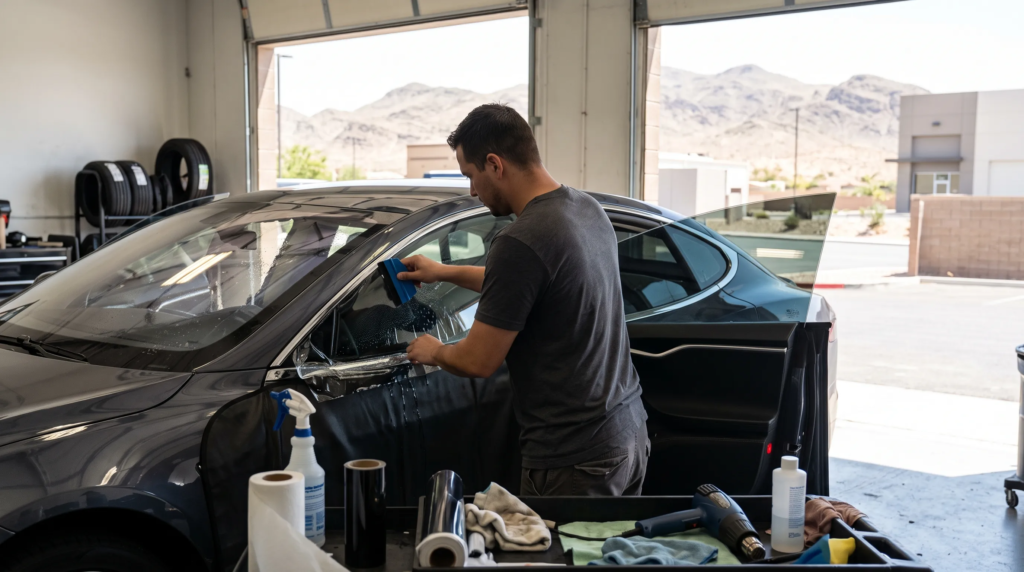
Tell us what you drive, whether heat or privacy matters most, and how dark you want the vehicle to look. We can compare film choices based on your vehicle and driving habits.
Ceramic tint can provide much higher infrared rejection than many entry-level dyed films. Ceramic Pro reports up to 96% infrared rejection for Ceramic IR and up to 99% in certain published tests for Ultimate IR. The best choice depends on the exact film, VLT, and what you want from the tint.
No. Ceramic Pro’s Ultimate IR specifications show strong infrared rejection even in lighter VLT films. That means a relatively light ceramic film can focus heavily on heat rejection without creating a very dark appearance.
Regular dark tint may focus mainly on reducing visible light, glare, and outside visibility. Ceramic IR film uses ceramic-based construction designed to reject a larger amount of infrared energy. Two films may look similarly dark while having very different infrared performance.
Nevada law requires the windows immediately beside the driver to have at least 35% total light transmission, with a 7% tolerance, when transparent tint material is installed. The finished glass-and-film combination matters, not just the number printed on the film.
Ceramic Pro’s published specifications show Ultimate IR providing much higher infrared-rejection figures than Carbon X at comparable VLT levels. Carbon X can still provide heat control, UV filtering, and glare reduction while sitting at a different film grade.
Ceramic Pro’s ceramic and carbon films use non-metal construction designed to avoid the electronic interference associated with some metallic tint products.
Ceramic Pro Las Vegas installs Ceramic Pro window films for drivers from Henderson, NV and across the Las Vegas Valley. Call (702) 943-8877 or visit our contact page to schedule an appointment. The shop is located at 8540 Dean Martin Dr. Ste 170, Las Vegas, NV 89139.
Tell us about your vehicle, daily driving, and goals so we can recommend the best package for protection and style. Share the services you want to compare, such as paint protection film, ceramic coating, window tint, vinyl wrap, or paint correction. Include your timeline and any photos that show panels, glass, or problem areas. The more details you provide, the more precise our estimate and scheduling will be.
Explore the many services we offer by clicking the boxes below