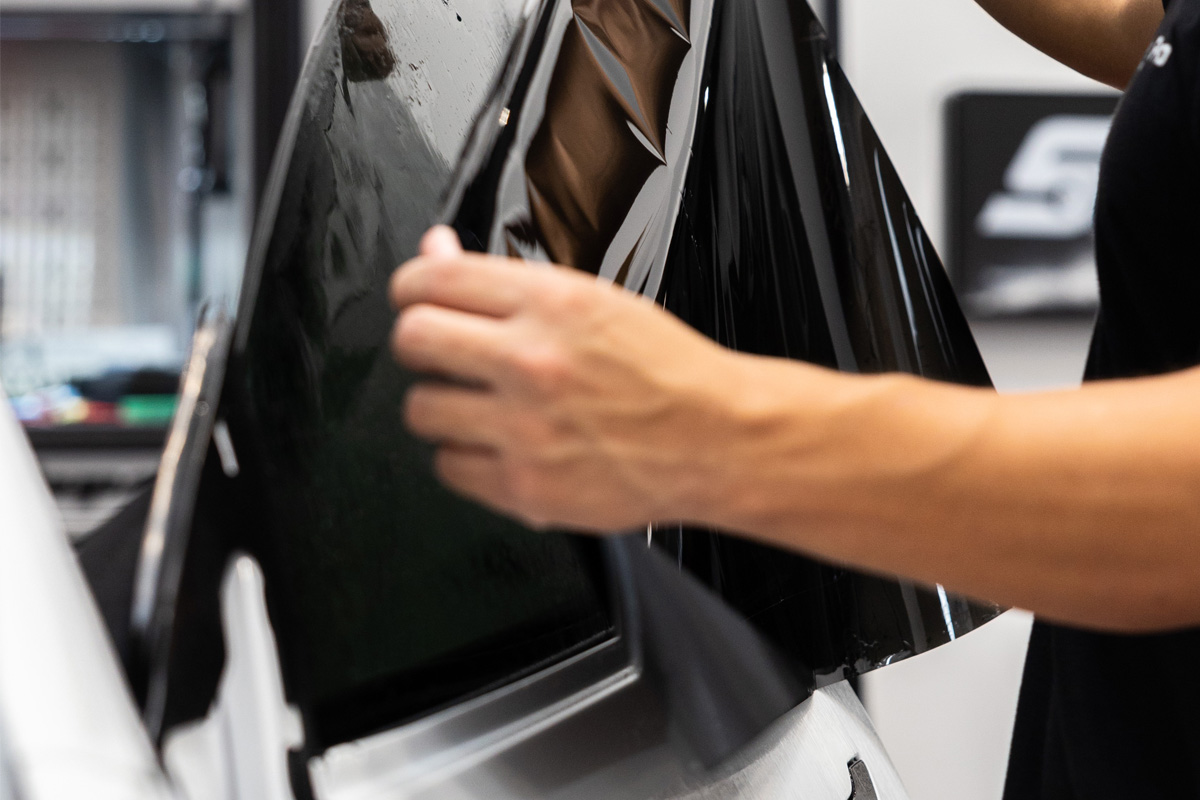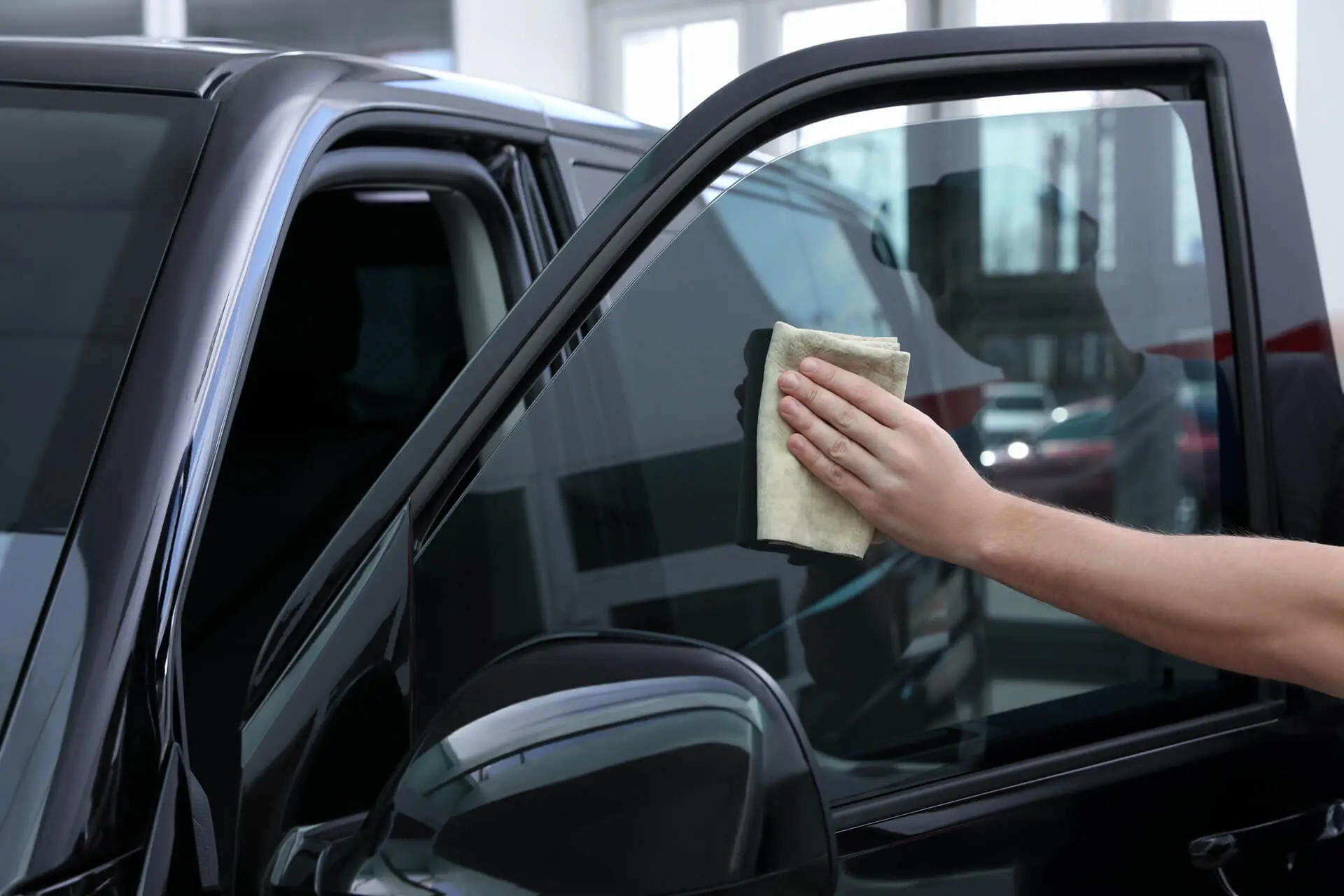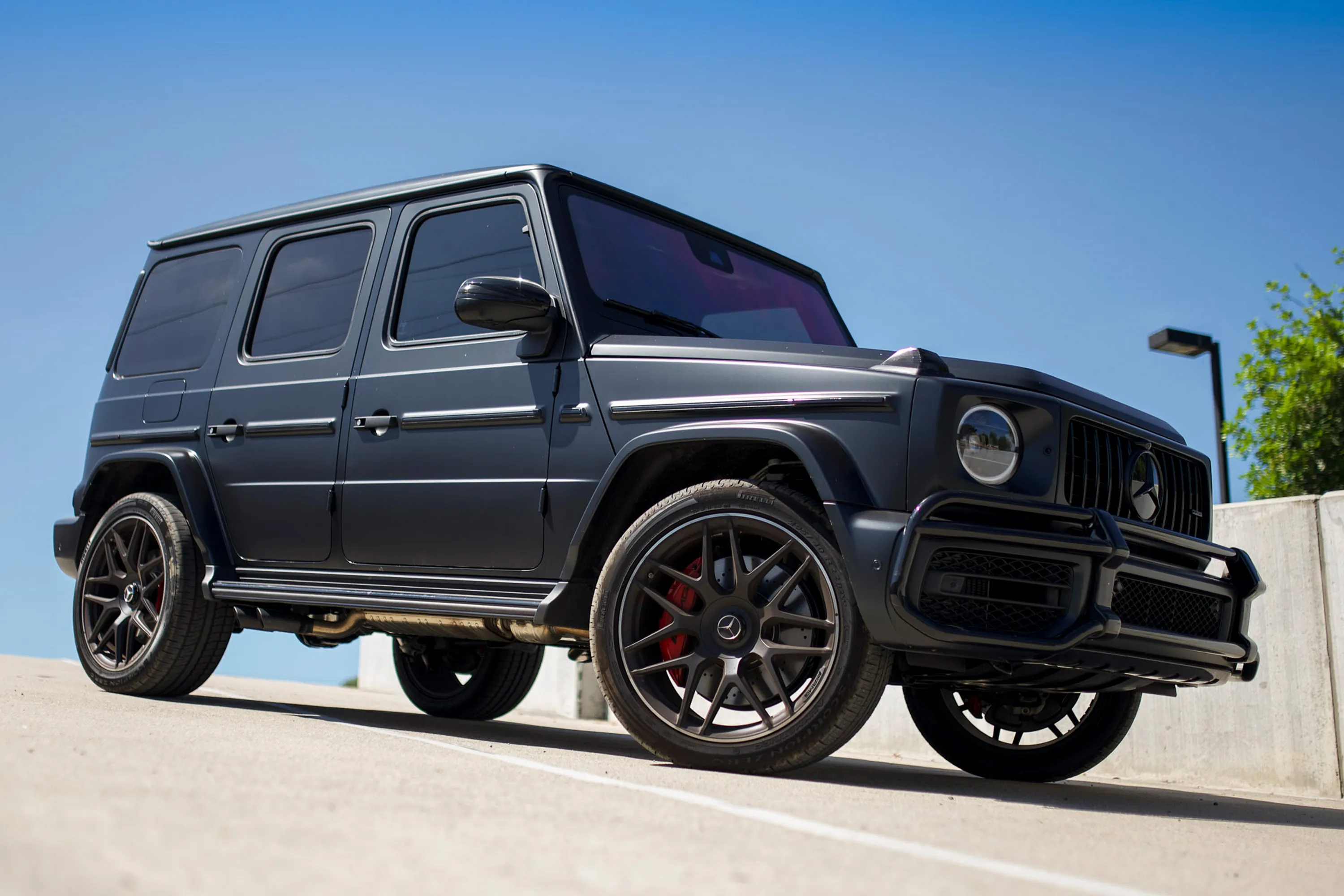

Ceramic Window Tint in Summerlin gives drivers a way to reduce heat, glare, and UV exposure while changing the appearance and privacy level of their vehicle. The biggest decision is usually shade, but choosing window tint based only on how dark it looks can lead to the wrong result.
Visible Light Transmission, or VLT, tells you how much visible light passes through the film. A lower VLT means a darker appearance. A higher VLT means a lighter film.
Heat rejection is a different measurement.
Ceramic Pro currently offers several window film lines, including Carbon X, Ceramic X, Ceramic IR, and Ultimate IR. These films come in different shades and can reject infrared heat even when the film itself is relatively light.
That distinction matters for Summerlin, NV drivers. You may want privacy on the rear windows, a lighter appearance up front, or strong infrared rejection on large areas of glass without making every window very dark.
Ceramic Pro Las Vegas is an official Ceramic Pro Elite Dealer located at 8540 Dean Martin Dr. Ste 170 in Las Vegas, NV. We install Ceramic Pro automotive window film for drivers from Summerlin, NV, Las Vegas, NV, Henderson, NV, and nearby communities.
Ceramic window tint is automotive film that uses ceramic-based particles to manage solar energy without relying on metallic construction.
Ceramic Pro says its ceramic window films are made to provide heat rejection, UV protection, glare reduction, and signal-safe performance.
That means properly selected ceramic film can reduce the amount of infrared heat entering through the glass while still maintaining visibility.
Ceramic Pro currently offers several window film lines with different levels of performance.
Those include:
The differences include film construction, available VLT choices, infrared rejection, and overall performance.
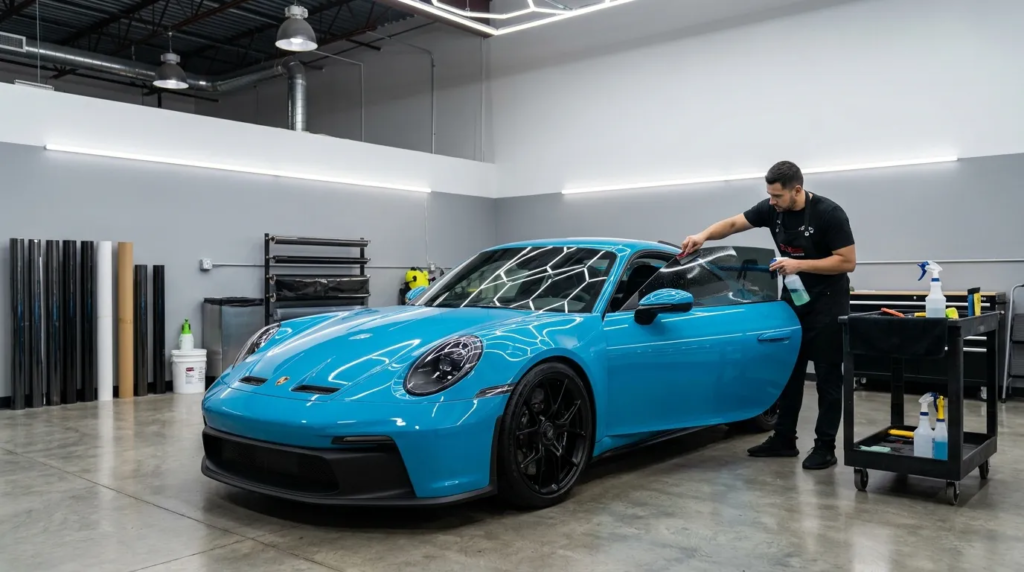
Drivers considering Ceramic Window Tint in Summerlin should look at those numbers rather than assuming all ceramic tint performs the same way.
Summerlin, NV sits along the western side of the Las Vegas Valley, where vehicles spend plenty of time under Southern Nevada sun.
Glass creates a direct path for solar energy into the cabin.
Seats, dashboards, steering wheels, center consoles, and interior trim absorb that energy and can become hot after the vehicle sits outside.
Window tint can reduce some of the solar energy entering through the glass.
Ceramic film can also help with glare and UV exposure.
For Summerlin drivers, the right tint choice may depend on:
That is why shade selection should start with how you use the vehicle.
VLT means Visible Light Transmission.
It measures the percentage of visible light that passes through a window film.
A higher number means more visible light passes through.
A lower number means less visible light passes through.
A film around 70% or 80% VLT appears relatively light.
These films are often chosen by drivers who want infrared and UV rejection without a heavily tinted appearance.
Films around 30% to 55% VLT create more visible shading while still allowing a fair amount of light through.
These can provide a balanced appearance for drivers who want both heat control and a tinted look.
Films around 5% to 20% VLT are much darker.
These shades provide more privacy but also reduce more visible light, which can affect nighttime visibility.
This is why Ceramic Window Tint in Summerlin should not be selected based on appearance alone.
The right shade depends on what matters most to you.
A lighter film may be the better fit.
Ceramic Pro offers high-VLT films that can maintain a close-to-clear appearance while still providing infrared and UV rejection.
A medium VLT may give the vehicle a darker look without making the windows extremely dark.
A lower VLT provides a darker appearance.
The tradeoff is reduced visible light, which can affect how much you see through the windows at night.
Do not assume the darkest film is the best performer.
Look at infrared rejection and TSER along with VLT.
Not necessarily.
This is one of the most useful things to understand before choosing ceramic window tint.
Darkness measures visible light transmission.
Heat rejection measures a different part of solar energy.
Ceramic Pro states that Ultimate IR can block up to 99% of infrared radiation under its published testing. The company also reports that its light 80% VLT Ultimate IR film can block up to about 95% of infrared energy within its stated test range. :contentReference[oaicite:0]{index=0}
That means a nearly transparent film can still offer strong infrared rejection.
For Summerlin, NV drivers who want heat control without very dark glass, this can be a useful option.
Light ceramic tint can be a good fit when you care more about solar performance than a dark appearance.
Ceramic Pro offers Ultimate IR in 70% and 80% VLT options. The manufacturer says these lighter films are designed to retain an OEM-style appearance while still providing high infrared rejection. :contentReference[oaicite:1]{index=1}
A light film may make sense for:
The real question is whether you want the tint to look dark or mainly perform.
Medium VLT films offer a balance between appearance and visibility.
These shades create a more obvious tinted look while still allowing more visible light through than very dark film.
They can make sense for:
A medium film can also make it easier to create a consistent appearance across windows that have different factory glass characteristics.
Dark film creates a much stronger privacy effect.
These shades are popular with drivers who want:
The tradeoff is visibility.
The darker the film, the less visible light passes through.
That can make side-window visibility more difficult at night, especially on poorly lit roads or when reversing.
Dark shades must also comply with Nevada law for the windows where they are installed.
Do not choose a 5% or 15% film simply because you like the way it looks in a photo.
Make sure it fits both your driving habits and legal requirements.
Carbon X is one of Ceramic Pro’s current automotive window film choices.
Ceramic Pro describes Carbon X as a blend of nano-carbon particles and infrared-blocking materials.
The manufacturer lists Carbon X as providing:
Carbon X may make sense for Summerlin, NV drivers who want a darker look and solid heat control without moving into the highest-performing ceramic tiers.
Ceramic Pro Las Vegas offers Ceramic Pro Carbon X window tint.
Ceramic IR places more attention on infrared heat rejection.
Ceramic Pro currently reports heat rejection performance in the upper portion of its window-film lineup and describes Ceramic IR as using nano-ceramic technology for strong infrared filtering. :contentReference[oaicite:2]{index=2}
Ceramic IR may be a good fit for:
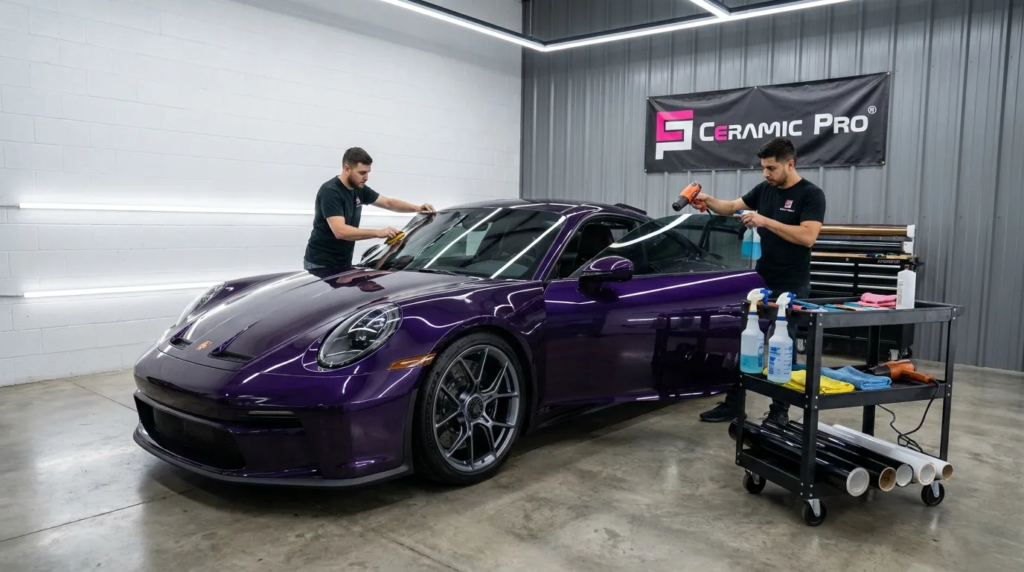
Ceramic Pro Las Vegas offers Ceramic Pro Ceramic IR window tint.
Ultimate IR is Ceramic Pro’s highest-performing window film line for infrared heat rejection.
Ceramic Pro states that Ultimate IR can reject up to 99% of infrared radiation and block more than 99% of UV radiation under its published testing. :contentReference[oaicite:3]{index=3}
Ceramic Pro also offers Ultimate IR in eight VLT choices.
That gives drivers more flexibility to choose appearance separately from heat rejection.
Ultimate IR may fit drivers who want:
Ceramic Pro Las Vegas offers Ceramic Pro Ultimate IR window tint.
A daily driver needs a balance of comfort, visibility, and appearance.
If you commute in bright afternoon conditions, a medium VLT may give you the look and glare reduction you want.
If you drive frequently at night, lighter film may be easier to live with.
Think about:
The same vehicle may also use different shades on different windows.
You do not necessarily need one VLT across the entire car.
Privacy generally increases as VLT decreases.
A 15% film lets less visible light through than a 35% film.
A 5% film is darker still.
The catch is that the same darkness that makes the interior harder to see from outside can also reduce what you see through the glass from inside.
That becomes more noticeable at night.
For Summerlin, NV drivers who want privacy without going extremely dark, a medium shade may provide a better balance.
Night driving is where many owners realize they chose film that is darker than they prefer.
Low-VLT films reduce visible light.
That can make it more difficult to see:
If you do a lot of night driving, tell the installer.
A lighter ceramic film can still provide strong heat rejection while allowing more visible light through.
That is one of the reasons ceramic film can be useful in Las Vegas, NV.
You can separate heat performance from darkness more than you can with many older tint technologies.
The windshield is one of the largest pieces of glass on most vehicles.
That also means it can be a major source of solar heat entering the cabin.
High-VLT ceramic film can be useful on compatible windshield areas where allowed by Nevada law.
Ultimate IR 70 and 80 are examples of lighter films Ceramic Pro offers for drivers who want infrared rejection without a dark windshield appearance. :contentReference[oaicite:4]{index=4}
Nevada law limits how tint can be applied to windshields, so the installer should discuss legal placement before the work begins. :contentReference[oaicite:5]{index=5}
Do not assume the same shade used on your side windows belongs on the windshield.
Panoramic roofs create a large overhead glass area.
That can make infrared heat rejection especially useful.
Ceramic Pro specifically identifies Ultimate IR as suitable for large automotive glass areas such as panoramic sunroofs. :contentReference[oaicite:6]{index=6}
A lighter high-performing film may help manage heat while retaining the bright, open feel of the cabin.
This can be useful on vehicles such as:
The correct film should be selected based on the glass and vehicle.
Many SUVs and crossovers come with darker rear privacy glass from the factory.
That does not automatically mean the glass provides the same heat rejection as a high-performing ceramic film.
Factory privacy glass mainly changes the amount of visible light passing through the glass.
Aftermarket ceramic film can add infrared and UV rejection depending on the product selected.
If your rear windows already look dark, ask the installer to show you how adding film will affect:
The final result depends on both the factory glass and the film placed over it.
Modern vehicles rely on wireless systems.
Those may include:
Ceramic Pro states that its Ultimate IR window film uses non-metallic construction designed to avoid signal interference. :contentReference[oaicite:7]{index=7}
Ceramic Pro’s current tint lineup also describes its films as signal safe. :contentReference[oaicite:8]{index=8}
This can matter on newer luxury vehicles and EVs that depend heavily on connected electronics.
Shade preference has to fit within Nevada law.
Nevada Revised Statutes regulate vehicle windows and glazing, including tint requirements. :contentReference[oaicite:9]{index=9}
There is also an official medical exemption process administered through the state. The Nevada exemption form states that approved exemptions will not authorize less than 20% VLT. :contentReference[oaicite:10]{index=10}
Because legal limits can vary by window position and vehicle type, ask the installer which shades can be used on:
The final installed VLT also depends on the existing vehicle glass.
That means a film labeled 35% does not necessarily produce exactly 35% VLT after it is installed over factory glass.
Start with four questions.
More privacy usually means a lower VLT.
More night driving may favor lighter tint.
If yes, compare Ceramic IR and Ultimate IR rather than choosing the darkest film automatically.
Your preferred shade still needs to fit current state requirements.
Here is a simple way to think about it.
Choose lighter ceramic tint when you want heat rejection with minimal visual change.
Choose medium ceramic tint when you want a balance of privacy, appearance, and visibility.
Choose darker ceramic tint when privacy and a dark appearance matter most and the application remains legal.
Bottom line, Ceramic Window Tint in Summerlin should be chosen by balancing VLT, heat rejection, privacy, nighttime visibility, vehicle glass, and Nevada law.
If you are comparing Ceramic Window Tint in Summerlin, Ceramic Pro Las Vegas can show you different Ceramic Pro film options and help you compare shade with heat-rejection performance.
We can discuss:
Visit us at:
Ceramic Pro Las Vegas
8540 Dean Martin Dr. Ste 170
Las Vegas, NV
Ceramic Pro Las Vegas is an official Ceramic Pro Elite Dealer serving Summerlin, NV, Las Vegas, NV, Henderson, NV, and nearby communities. Our shop also installs paint protection film, ceramic coating, vinyl wraps, and other vehicle-protection services. :contentReference[oaicite:11]{index=11}
Our business hours are Monday through Friday from 9 a.m. to 6 p.m.
Call (702) 943-8877 or visit our contact page to schedule an appointment.
The right shade depends on privacy, nighttime visibility, desired appearance, heat-rejection goals, and Nevada tint rules. Light, medium, and dark films can all make sense for different drivers.
Not automatically. VLT measures visible light, while infrared rejection measures heat-related infrared radiation. Ceramic Pro reports that light Ultimate IR films can still provide very high infrared rejection. :contentReference[oaicite:12]{index=12}
It can be if you want heat and UV rejection without making the glass look very dark. Ceramic Pro offers Ultimate IR in 70% and 80% VLT options and reports strong infrared rejection at those lighter shades. :contentReference[oaicite:13]{index=13}
Lower VLT films create a darker appearance and provide more privacy. The tradeoff is reduced visible light, especially at night. The selected application must also comply with Nevada law.
Yes, compatible ceramic film can be considered for panoramic glass. Ceramic Pro specifically describes Ultimate IR as suitable for large automotive glass such as panoramic sunroofs. :contentReference[oaicite:14]{index=14}
Ceramic Pro states that Ultimate IR uses non-metallic construction designed to avoid interference with radio, cellular, and satellite signals. :contentReference[oaicite:15]{index=15}
Ceramic Pro Las Vegas is located at 8540 Dean Martin Dr. Ste 170 in Las Vegas, NV and serves Summerlin, NV drivers. Call (702) 943-8877 or visit our contact page to schedule an appointment.
Ceramic Pro Window Tint
Publisher: Ceramic Pro
Publication Date: Current reference page
URL: https://ceramicpro.com/window-tint/
Ultimate IR Window Tint
Publisher: Ceramic Pro
Publication Date: Current reference page
URL: https://ceramicpro.com/ultimate-ir/
Ceramic Pro Las Vegas
Publisher: Ceramic Pro Las Vegas
Publication Date: Current reference page
URL: https://ceramicprolv.com/
Nevada Revised Statutes Chapter 484D
Publisher: Nevada Legislature
Publication Date: Current law
URL: https://www.leg.state.nv.us/NRS/NRS-484D.html
Nevada Window Tint Exemption Application
Publisher: Nevada Department of Motor Vehicles / Nevada Department of Public Safety
Publication Date: Current form
URL: https://dmv.nv.gov/pdfforms/do200.pdf
Tell us about your vehicle, daily driving, and goals so we can recommend the best package for protection and style. Share the services you want to compare, such as paint protection film, ceramic coating, window tint, vinyl wrap, or paint correction. Include your timeline and any photos that show panels, glass, or problem areas. The more details you provide, the more precise our estimate and scheduling will be.
Explore the many services we offer by clicking the boxes below