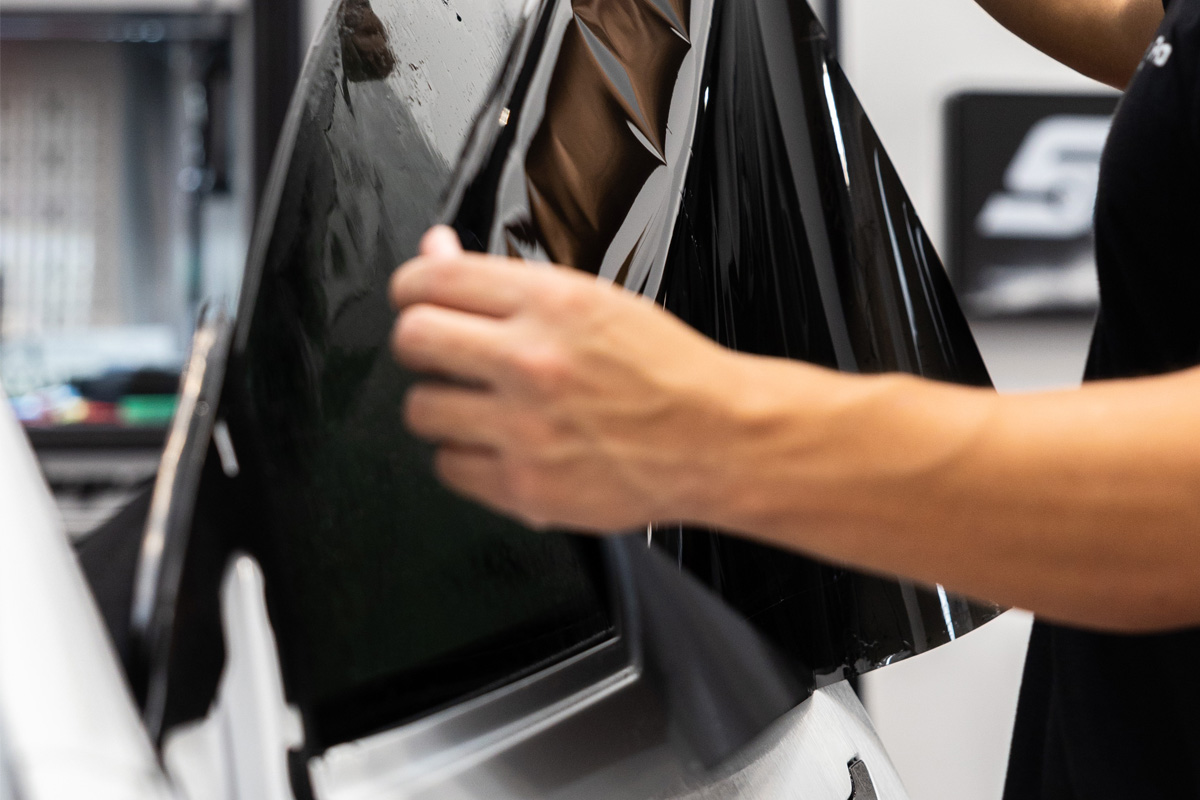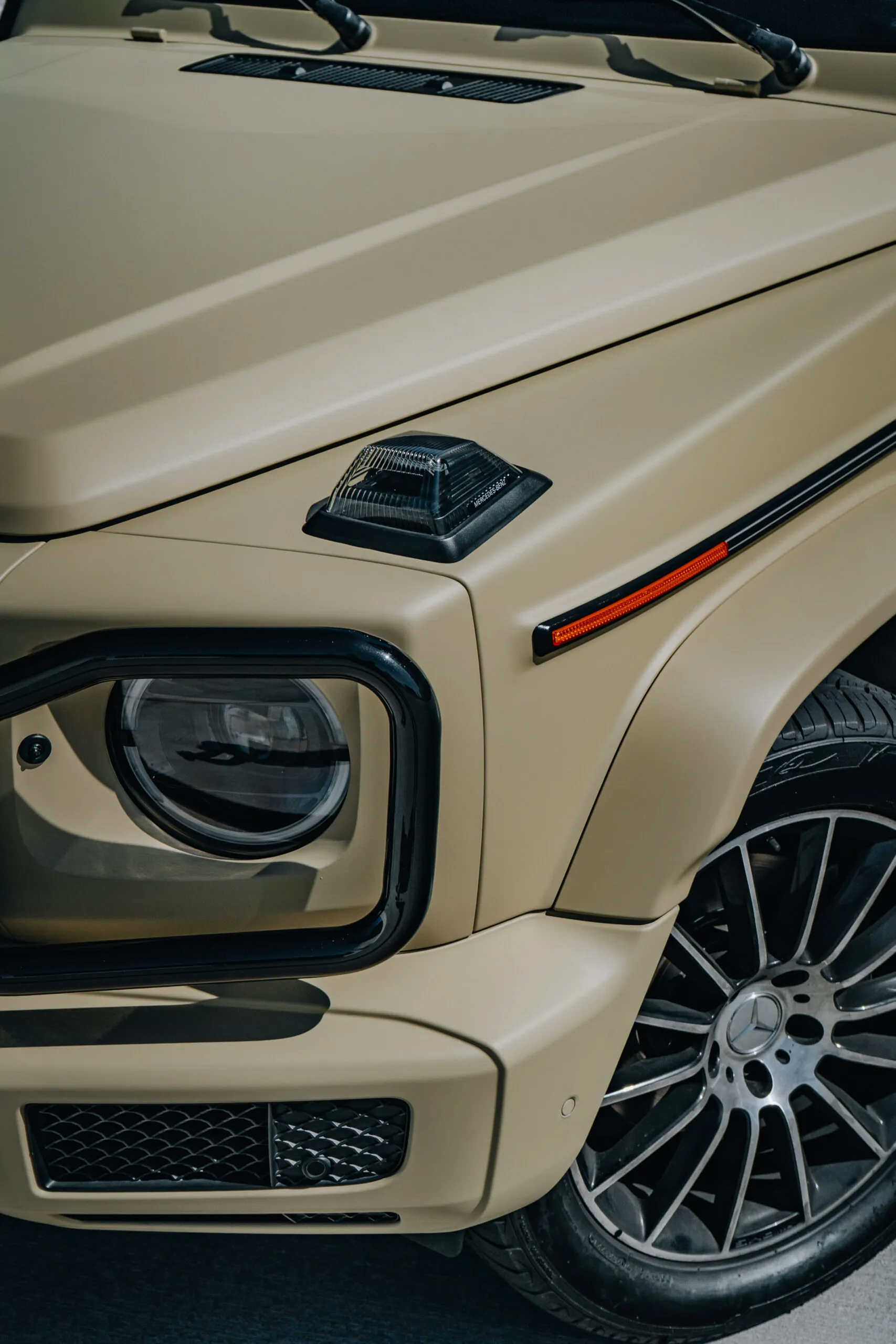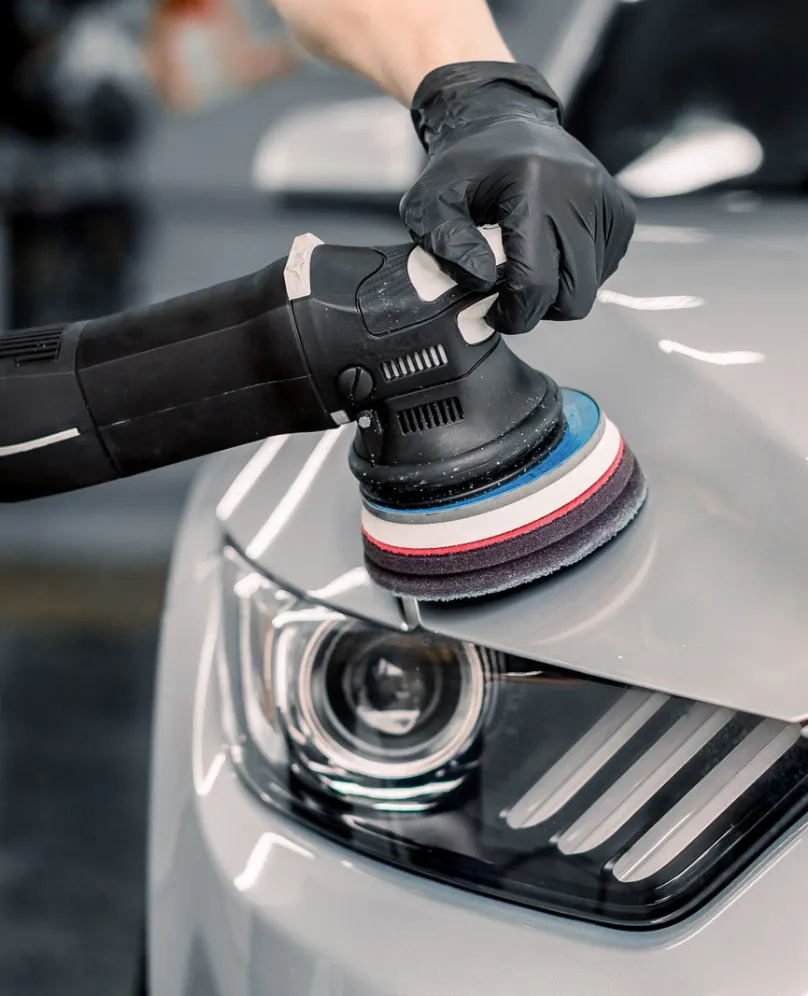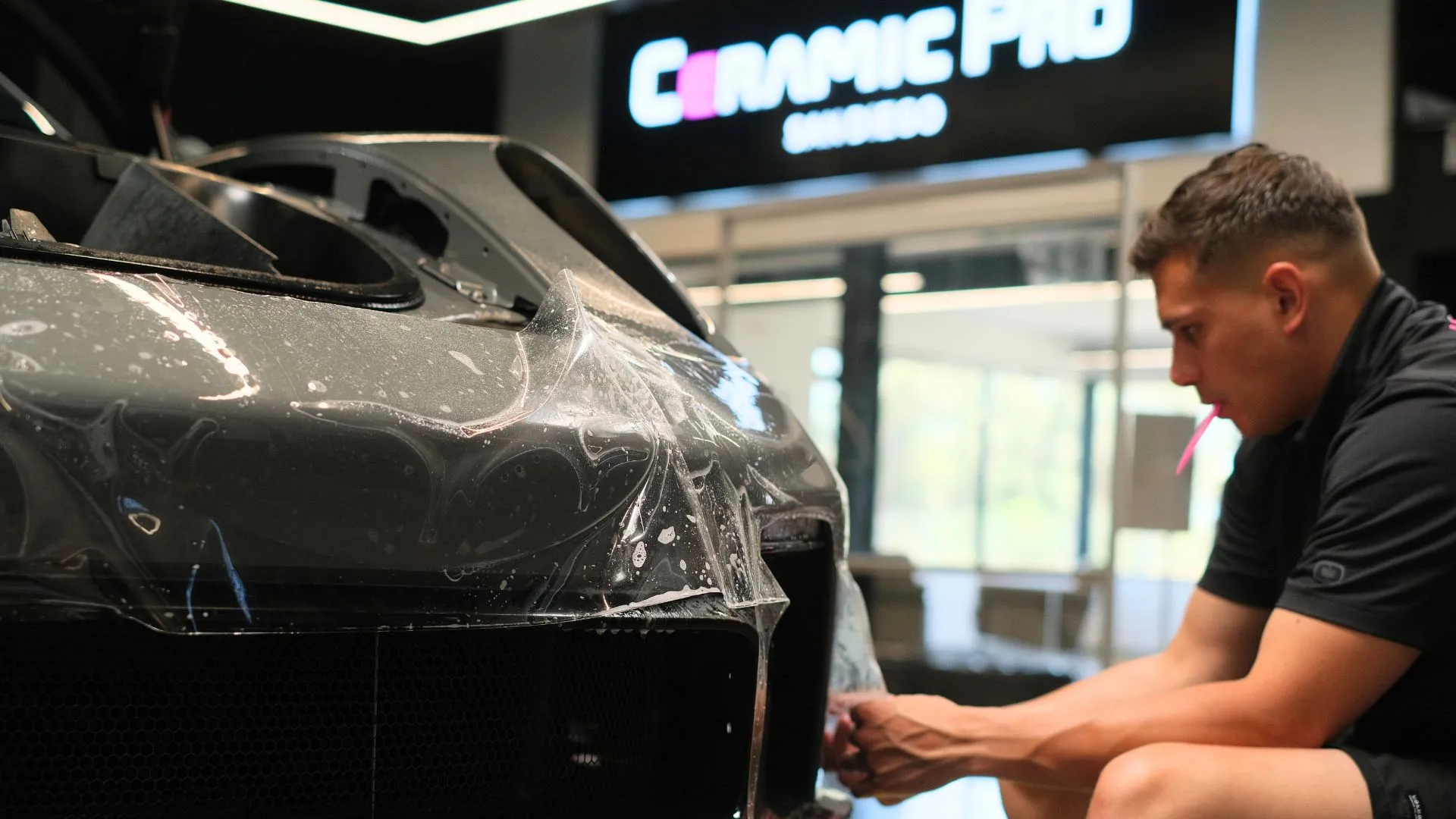

PPF for pickup trucks in Las Vegas, NV helps protect your truck’s paint from rock chips, flying gravel, road debris, and the everyday wear that comes with commuting, working, and towing around Southern Nevada. Whether you own a Ford F-150, Chevrolet Silverado, GMC Sierra, Ram 2500, or Toyota Tundra, full front paint protection film can help keep your hood, bumper, and fenders looking good after countless miles on the road.
Think about what your truck goes through during a normal week.
You might spend Monday traveling along I-15 for work, Tuesday visiting a construction site, and Saturday pulling a trailer out of town. Along the way, your front bumper and hood face everything from loose gravel to insects and highway debris.
One small stone can leave a permanent chip in your paint.
Now imagine dozens of those impacts happening over several years.
A pickup truck may be built for demanding jobs, but its painted surfaces are still vulnerable to damage. That’s why many truck owners consider paint protection film before the first chips start appearing.
At Ceramic Pro Las Vegas, we install professional Ceramic Pro Paint Protection Film for pickups, SUVs, luxury vehicles, and daily commuters. As an official Ceramic Pro Elite Dealer, our certified team provides premium protection products with applicable warranty coverage.
Let’s look at why full front PPF makes sense for work trucks and tow rigs, which panels deserve protection, and how to choose the right coverage.
Pickup trucks are designed to handle demanding conditions.
They haul equipment, pull trailers, transport supplies, and carry families across town.
But even a heavy-duty truck with a powerful engine and reinforced suspension still has an automotive paint finish that can chip or scratch.
PPF for pickup trucks in Las Vegas, NV gives owners an additional protective layer over the areas most exposed to road hazards.
If you spend much of your week traveling on I-15 or the 215 Beltway, you’ve probably heard rocks strike your truck.
Sometimes they bounce harmlessly away.
Other times, you arrive home and discover a small paint chip on the hood or front bumper.
Loose stones can become airborne when vehicles pass over them. Construction traffic and debris near road shoulders may also contribute to the problem.
The front end of your pickup meets those hazards first.
According to 3M’s Scotchgard Paint Protection Film Pro Series 200 product information, automotive PPF is designed to protect painted surfaces against stone chips, scratches, insect residue, and outdoor exposure.
Film helps absorb many smaller impacts before they reach your truck’s factory paint.
It isn’t guaranteed to stop every rock, but it can reduce common damage associated with highway travel.
Living in the Mojave Desert means dealing with dust and wind.
The National Weather Service’s Climate of Las Vegas describes how strong winds in the valley can produce blowing dust and sand.
If your truck spends time near unpaved lots, construction areas, or desert access roads, loose particles may collect across its exterior.
Dust alone doesn’t always scratch paint.
The problem often begins when those particles are rubbed against the finish during cleaning or everyday contact.
PPF creates a replaceable protective surface over the painted panels it covers.
Certain films also feature topcoats designed to reduce the appearance of light scratches.
Not every pickup owner is trying to maintain a spotless show truck.
Maybe your Silverado carries tools every day. Perhaps your Super Duty pulls equipment between job sites.
You still want the paint to hold up.
A truck that looks well cared for can make a good impression when you’re meeting customers or arriving at a property.
Protecting the original paint may also help reduce the need for cosmetic repairs later.
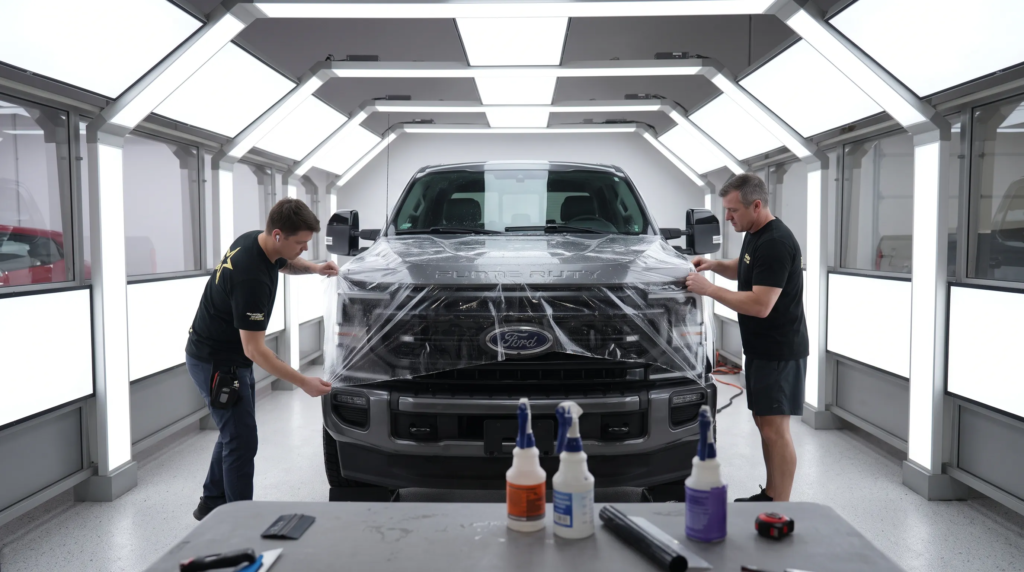
PPF isn’t going to stop every dent or scrape, but it can help preserve the appearance of panels exposed to ordinary road debris.
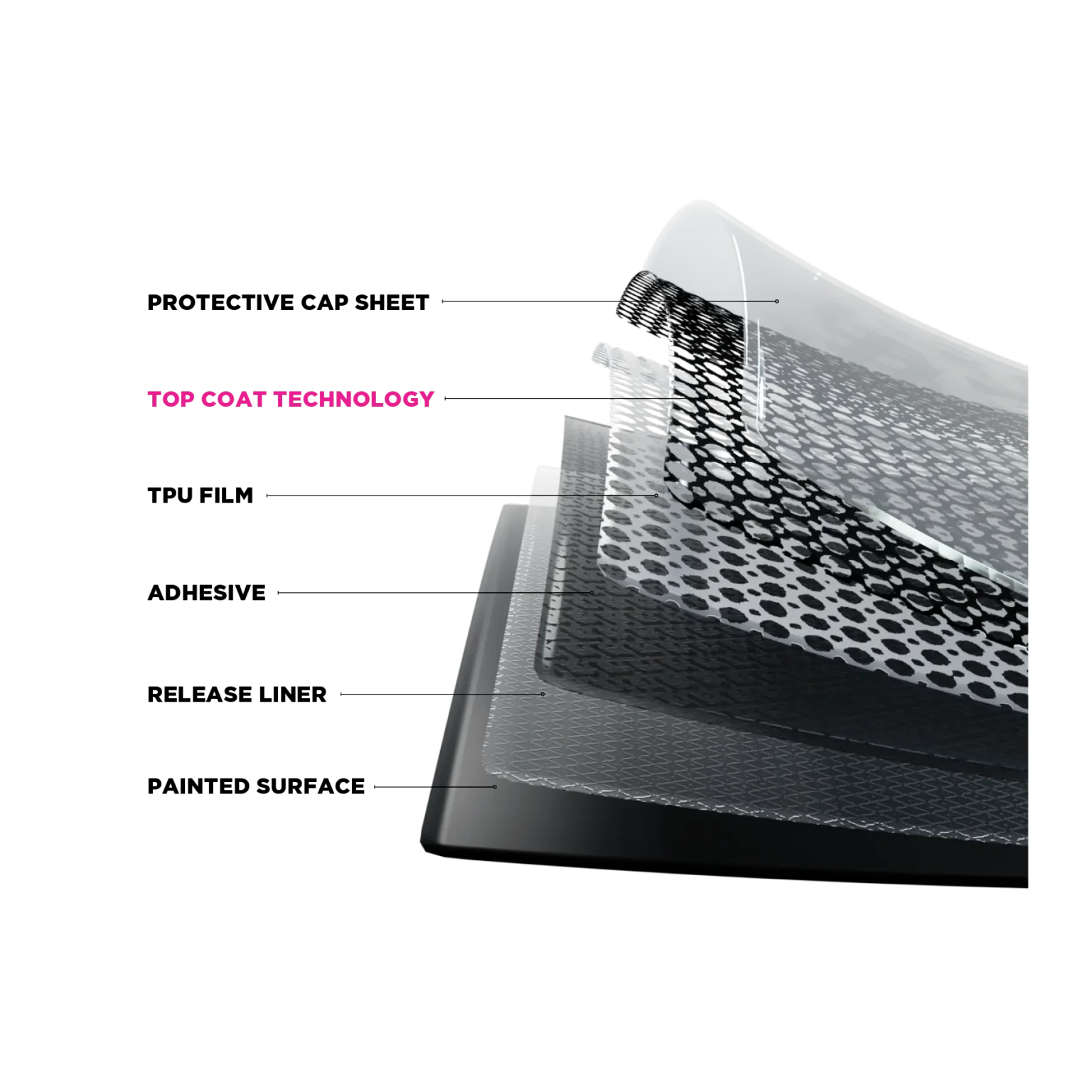
Paint protection film, often called PPF or clear bra, is a transparent protective material installed over compatible painted vehicle surfaces.
Modern automotive PPF commonly uses thermoplastic polyurethane.
This flexible material can conform to body panels while providing a physical barrier against certain types of damage.
Your truck’s factory finish includes protective paint layers and a clear coat.
The clear coat provides gloss and helps guard the color underneath, but it can still develop chips, scratches, and swirl marks.
PPF adds another layer above that finish.
When small debris strikes a protected panel, it contacts the film first.
The film may absorb enough energy to prevent the impact from damaging the paint.
If the film becomes seriously damaged, a professional can inspect it and determine whether replacing the affected section is appropriate.
Traditional clear gloss PPF is designed to preserve the appearance of your existing paint.
This makes it appealing for owners who like their truck’s original color.
A properly installed film should have a clean appearance with minimal visible edges.
The result depends on film quality, panel shape, surface preparation, and installation technique.
For owners who want a different look, matte and colored PPF options may also be available.
Some premium paint protection films feature self-healing topcoats.
These products are designed to reduce the appearance of certain light scratches and swirl marks in the film surface.
Ceramic Pro offers self-healing PPF technologies, including products designed to recover from minor surface marks.
The Ceramic Pro PPF Guide explains how these film systems provide impact protection and surface recovery.
Self-healing doesn’t mean the film repairs deep tears, punctures, or damaged paint underneath.
Those situations may require professional repair or film replacement.
One of the most popular approaches to PPF for pickup trucks in Las Vegas is full front coverage.
Instead of protecting only a small portion of the hood, this option covers much of the truck’s forward-facing painted bodywork.
At Ceramic Pro Las Vegas, our Ceramic Pro Paint Protection Film service includes full front coverage options.
Coverage commonly includes the following areas, with the exact plan confirmed for your truck.
Pickup trucks often have large, broad hoods.
The hood is also one of the first painted surfaces you’ll notice when standing in front of your vehicle.
A few stone chips can stand out on a clean black, white, blue, or metallic finish.
Full-hood PPF protects the complete painted panel rather than leaving part of it exposed.
It also avoids the film line that may be visible across the hood with some partial-coverage installations.
For pickup owners who spend time on highways, this can be an appealing advantage.
The front bumper encounters plenty of road debris.
On many trucks, it sits directly behind the airflow and debris coming from vehicles ahead.
Painted bumper sections can develop chips, stains, and scratches from ordinary road use.
PPF can help protect these compatible painted surfaces.
If your truck has an unpainted steel bumper, chrome trim, textured plastic, or aftermarket accessories, the installer should assess each material separately.
Not every bumper component is suitable for conventional paint protection film.
Front fenders can be exposed to flying gravel and minor surface abrasion.
This matters on trucks with wide fender designs or pronounced body contours.
Covering the complete painted fenders provides more consistent protection than treating only small sections.
The installer should also check any factory flares or aftermarket parts for film compatibility.
Side mirrors extend beyond the truck’s body.
They encounter wind, insects, and small airborne debris during highway travel.
Painted mirror caps are often suitable for PPF.
Because they have curved surfaces, careful fitting helps maintain a clean appearance.
Depending on the selected package and truck design, full front protection may also include painted door handle recesses or other small sections.
These areas experience frequent contact during everyday use.
Headlight protection may also be discussed when the product and vehicle manufacturer allow it.
Before installation, confirm the exact panels included in your package.
A pickup used for work may encounter different conditions from a vehicle that spends most of its time parked in a garage.
That’s why selecting PPF for pickup trucks in Las Vegas should begin with how the truck is actually used.
Construction vehicles often travel through areas with loose dirt, small stones, and unfinished surfaces.
Even if you stay on paved roads most of the day, entering and leaving a gravel parking area can expose your truck to abrasive debris.
Small stones may be thrown by other vehicles or your own tires.
Full front PPF helps protect forward-facing painted panels, while additional lower-body coverage can help address debris near the wheels.
Plumbers, electricians, landscapers, contractors, and other service professionals often rely on pickup trucks.
A truck may travel between several job sites in one day.
That means repeated exposure to road debris, parking areas, and everyday contact.
PPF can help reduce cosmetic wear on compatible painted surfaces.
For businesses operating several pickups, consistent protection plans may also make exterior care easier to organize.
Not all paint damage on a work truck comes from the road.
Toolboxes, ladders, cargo, and equipment can contact painted areas during loading.
These are different hazards from small freeway stones.
Full front PPF doesn’t cover the entire pickup bed or tailgate.
If loading-related scratches are a concern, ask about additional film for compatible painted edges and panels.
For heavy cargo contact, a dedicated bed liner or other physical protection may be more suitable.
PPF is not intended to replace equipment designed to withstand heavy loading impacts.
Work trucks may have aftermarket bumpers, light bars, grille guards, fender flares, or other accessories.
These parts can change which painted surfaces are exposed and how film can be installed.
A professional installer should inspect the modifications before planning the coverage.
Film should never interfere with sensors, lights, cameras, cooling openings, or other vehicle functions.
If your truck regularly pulls a travel trailer, boat, enclosed cargo trailer, or equipment trailer, you probably spend considerable time on highways.
That additional road exposure makes front-end paint protection worth considering.
Think about a Ram 2500 used to pull a travel trailer.
During the week, it may serve as a normal commuter vehicle.
On weekends, it travels outside Las Vegas, NV toward campgrounds or other destinations.
Those extra highway miles create more opportunities for loose stones and road debris to strike the front end.
PPF won’t change the truck’s towing performance.
Its purpose is to help protect the painted surfaces during the trip.
Many pickup owners use their trucks for boating, camping, and off-road recreation.
A truck pulling a trailer may travel through different environments during the same trip.
You might begin on city streets, spend time on the freeway, and eventually reach a dusty parking area or gravel access road.
Full front coverage helps with highway exposure.
If your truck regularly encounters loose gravel near its tires, consider discussing rocker panel and lower-door protection too.
The tailgate is another area worth inspecting on a tow rig.
When connecting trailers, handling cargo, or working near a hitch, painted tailgate surfaces may be exposed to occasional contact.
A suitable film can help reduce light scuffs on compatible painted areas.
It won’t prevent dents caused by trailer hardware or heavy objects.
If the tailgate has existing paint damage, that should be addressed before film installation.
Paint protection film is not a replacement for proper towing equipment or maintenance.
It won’t protect a hitch from heavy impacts, prevent trailer sway, or stop damage caused by an improperly connected trailer.
Keep trailer equipment, safety chains, and hitch components maintained according to their manufacturers’ instructions.
Film is for compatible vehicle surfaces, not structural towing protection.
If you’re considering PPF for pickup trucks in Las Vegas, another decision is how much of the vehicle to cover.
Full front protection is a common starting point, but it isn’t the only option.
Some owners want to focus on the front bumper.
This may make sense when their concern is damage to the truck’s painted front end.
The limitation is that the hood, fenders, and other panels remain exposed.
Partial front coverage protects selected panels rather than the entire forward-facing painted surface.
Package contents differ between installers.
At Ceramic Pro Las Vegas, listed partial front packages focus on the front bumper and selected lighting areas, while full front packages extend coverage to the hood, fenders, and mirrors.
Ask to review the exact coverage map before scheduling.
Full front PPF protects more of the truck’s exposed painted front end.
It’s worth considering when you regularly travel on highways, use your pickup for work, or want to avoid visible film boundaries across large panels.
On a pickup with a broad hood and large fenders, full-panel coverage can provide a cleaner overall appearance.
Full vehicle PPF extends protection to the painted body panels included in the installation plan.
That can include doors, rear fenders, and other surfaces beyond the front.
For an owner who wants broader protection against light scuffs and road debris, full-body film may be appealing.
Keep in mind that full vehicle PPF still does not make a pickup immune to dents, deep scratches, or damage from heavy equipment.
The right coverage depends on your truck’s use and the surfaces you want to protect.
Full front coverage handles many common road hazards, but pickup trucks have other vulnerable areas.
Additional panels may deserve attention depending on your truck’s design and equipment.
Rocker panels run along the lower sides of your truck.
They can encounter grit and small stones thrown from the tires.
If your truck has larger tires, wider wheels, or a suspension lift, the exposed areas may differ from the original factory configuration.
An installer can inspect the truck and help determine whether rocker panel protection would be useful.
Certain truck body designs leave painted sections near the wheel openings exposed to debris.
Film on compatible lower doors or rear fender sections may reduce chips caused by ordinary road grit.
This is worth discussing for pickups that often travel on loose gravel.
Painted bed rails and tailgate edges sometimes experience contact during loading and unloading.
PPF may help resist light surface scuffs in these areas.
For heavy work use, though, dedicated bed caps, liners, or other suitable accessories may offer more appropriate protection.
If your pickup frequently travels off-road, explain that to the installer.
Film can help with certain scratches and light abrasion, but sharp rocks, branches, and severe contact can damage the material or the paint underneath.
Vehicles used in demanding off-road situations may require a combination of paint protection and other protective accessories.
Choosing the right film matters, especially when your pickup spends time outdoors or regularly encounters road debris.
At Ceramic Pro Las Vegas, we install Ceramic Pro paint protection products designed to protect compatible automotive finishes.
Ceramic Pro offers paint protection film with self-healing surface technology.
This feature is designed to reduce the appearance of certain light scratches in the film’s topcoat.
For truck owners who wash their vehicles regularly or encounter minor surface contact, that can help preserve a cleaner appearance.
Deep cuts and punctures won’t disappear through self-healing.
If the film suffers more serious damage, an installer may recommend replacing the affected section.
Selected Ceramic Pro PPF products feature hydrophobic topcoats.
These surfaces encourage water to bead and help certain contaminants release during washing.
For trucks exposed to dust, road film, and insect residue, easier cleanup can be useful.
The KAVACA Ceramic Coated Paint Protection Film information describes the manufacturer’s protective and water-repelling properties.
You still need to wash the truck properly.
No film keeps a vehicle permanently clean or free from dust.
Some pickup owners prefer a satin or blacked-out appearance.
Our Ceramic Pro Matte Paint Protection Film offers a different finish from traditional clear gloss protection.
We also provide Ceramic Pro Black PPF and Color PPF for compatible applications.
These products can help change the appearance of selected panels while providing physical protection.
If you want to keep your truck’s original factory look, traditional clear PPF is usually the starting point.
Ceramic Pro Las Vegas is an official Ceramic Pro Elite Dealer.
Our team installs Ceramic Pro products and offers applicable warranty-backed services.
Warranty conditions vary depending on the film, coverage, and maintenance requirements.
Ask which written warranty applies to your truck before scheduling.
Another common question is whether a pickup needs PPF, ceramic coating, or both.
The two treatments do different jobs.
Paint protection film provides a physical layer over compatible painted surfaces.
Its main advantage is resistance to certain impacts, chips, and light scratches.
For a truck that spends time on highways and gravel roads, this protection can be useful.
Ceramic coating is a liquid-applied protective treatment.
It can improve water repellency, help resist certain environmental contaminants, and make routine washing easier.
Ceramic coating does not provide the same physical impact resistance as paint protection film.
A ceramic coating alone won’t reliably prevent a stone from chipping the paint.
Our Ceramic Pro ceramic coating services include options for truck owners who want easier exterior maintenance.
Yes, when the selected products are compatible.
A common plan is to protect vulnerable painted panels with PPF and apply suitable ceramic coating treatments where appropriate.
Ceramic Pro Las Vegas also offers Ceramic Pro Ultimate Armor, which combines film and coating technologies.
The exact products and application order should follow manufacturer instructions.
For a truck that sees both work and recreational use, combining physical film protection with coating benefits may be worth discussing.
Pickup trucks present some different installation considerations from smaller passenger cars.
Large body panels, bumper designs, textured trim, and aftermarket equipment can all affect the plan.
Before installation, the painted surfaces should be inspected for chips, scratches, previous repairs, and other defects.
A new truck may still have minor surface marks from transportation or washing.
A used work truck may need additional preparation.
PPF won’t repair damaged paint, so an inspection helps identify anything that needs attention before the film is installed.
The truck needs to be cleaned and decontaminated.
Dust, road film, and bonded particles can interfere with proper film installation.
If the truck has suitable clear-coat defects, our paint correction services may help improve the appearance before PPF is applied.
Not every truck needs the same amount of correction.
Deep chips and damaged paint may require separate repairs.
Pickup trucks have different bumper and hood designs.
A Ford F-150 may require a different film pattern from a Chevrolet Silverado 2500HD or Toyota Tacoma.
The installer should review the body panels, trim, sensors, and accessories before fitting the film.
Large panels may require careful handling to maintain proper alignment.
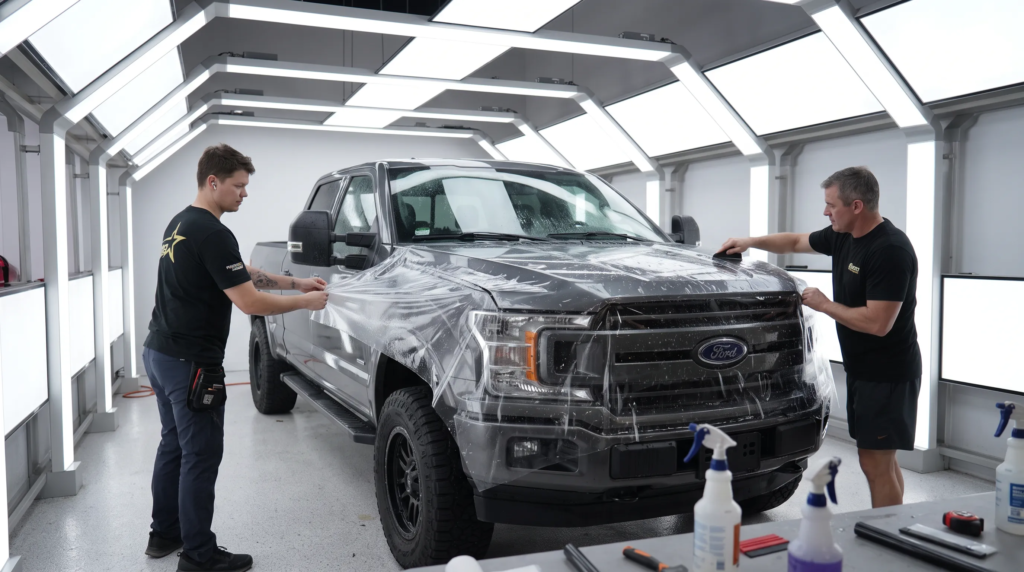
The film is positioned over the prepared surfaces and fitted to the vehicle’s body lines.
The installer works around curves, panel edges, and compatible painted details.
Good fitting helps reduce visible edges and prevent unnecessary lifting.
The finished appearance depends on the material, truck design, and application method.
After installation, the film should be inspected.
Some moisture or temporary installation marks may remain while the material settles.
Your installer should explain the expected curing period, cleaning restrictions, and when to return if something looks unusual.
At Ceramic Pro Las Vegas, installation timing depends on the truck and the coverage selected.
Our team can discuss the schedule during your consultation.
PPF for pickup trucks in Las Vegas is designed to handle ordinary road exposure, but the material still needs care.
Work trucks can become dirty quickly, especially when they visit gravel lots or dusty properties.
Proper cleaning helps preserve the film’s appearance.
According to Ceramic Pro’s KAVACA PPF Aftercare Guide, the manufacturer advises waiting 48 hours after the vehicle is released before washing the freshly installed film.
Follow the exact instructions supplied for your selected product.
If you notice temporary moisture pockets or bubbles, avoid pressing or puncturing them.
Contact your installer if they remain after the expected settling period.
If your pickup returns from a dusty job site, don’t wipe the dirt away with a dry towel.
Loose grit can scratch the surface.
Rinse the truck first, using a gentle water flow and approved cleaning methods.
Use clean wash mitts and film-safe products.
Ceramic Pro recommends regular washing, often weekly in dusty conditions, to limit contamination buildup.
Work trucks may need cleaning more often after certain jobs or trips.
Use products approved for the film and avoid harsh cleaning chemicals.
Ceramic Pro warns that high-pressure washing can damage PPF or lift film edges.
Don’t direct a pressure washer nozzle toward seams or exposed edges.
A gentle rinse and careful hand washing are safer approaches for routine care.
Highway travel can leave insects and road grime across the front bumper and hood.
Clean those contaminants using products approved for the installed film.
Don’t use abrasive pads or aggressive scrubbing.
Las Vegas sunshine can make truck body panels extremely hot.
Washing in direct sunlight can cause water and soap to dry too quickly.
Choose shade or a cooler part of the day when possible.
After washing, use clean microfiber towels to dry the surface.
If you’re looking for PPF for pickup trucks in Las Vegas, choosing a shop familiar with large vehicles and different body styles matters.
At Ceramic Pro Las Vegas, we provide professional Ceramic Pro paint protection film installation for truck owners who want to protect their painted surfaces from everyday wear.
Our team can review suitable PPF options for many popular pickups, including:
Coverage depends on the vehicle’s condition, body panels, and available installation options.
If your truck has aftermarket accessories, larger tires, or other modifications, mention them during your consultation.
Our Las Vegas, NV shop welcomes customers from across the valley, including Enterprise, NV and Summerlin South, NV.
Whether your truck spends its days on construction sites, traveling between businesses, or pulling a trailer on weekends, we can help you review the areas most likely to encounter paint damage.
When you contact us, tell our team about your pickup and how you use it.
Helpful details include:
This helps us discuss suitable coverage and explain the installation plan.
PPF is worth considering if your pickup regularly encounters highway debris, gravel, or other conditions that can chip painted surfaces. Full front PPF helps protect vulnerable areas such as the hood, painted bumper, fenders, and mirror caps. It’s useful for daily commuters, work trucks, and pickups used for towing. The right coverage depends on your vehicle and how you use it.
Full front PPF commonly includes the entire hood, painted front bumper, front fenders, and painted side mirror caps. Certain packages may also cover door handle areas or compatible lighting surfaces. Exact coverage depends on the truck and installer. Ceramic Pro Las Vegas can review the panels included in your installation before scheduling.
PPF helps protect covered painted surfaces from some road debris and light abrasion encountered during highway travel. That can be useful for pickups that spend long periods pulling trailers. It does not protect the hitch, prevent dents from trailer equipment, or eliminate every rock-chip risk. Additional protection may be useful for lower body panels exposed to gravel.
Yes, provided the painted surfaces are suitable. A professional should first inspect the truck for rock chips, scratches, previous repairs, and clear-coat damage. Some surfaces may benefit from paint correction before installation. PPF won’t repair existing damage, and compromised paint may need attention before film is applied.
Self-healing PPF can reduce the appearance of certain light surface scratches in the film’s topcoat. It cannot repair deep cuts, punctures, or damaged paint underneath. Heavy equipment contact and severe abrasion may permanently damage the film. A professional installer can inspect affected areas and discuss whether the film needs replacement.
Full front coverage focuses on the painted panels most exposed to forward-facing road debris. Full vehicle PPF covers more surfaces and may be appealing if you also want protection for doors and rear body panels. Work trucks with frequent gravel exposure may benefit from adding rocker panels and lower sections. The right plan depends on how the truck is used.
Ceramic Pro Las Vegas provides professional Ceramic Pro paint protection film installation at 8540 Dean Martin Dr., Suite 170, Las Vegas, NV 89139. As an official Ceramic Pro Elite Dealer, we offer full front and other PPF coverage options with applicable warranty-backed services. Call (702) 943-8877 or visit our contact page to discuss your truck and schedule an appointment.
Your pickup truck works hard.
Whether you’re commuting on I-15, heading to a construction site, or pulling a trailer for a weekend trip, the front of your truck encounters road debris almost every time it leaves the garage.
PPF for pickup trucks in Las Vegas, NV provides a practical way to protect the painted areas most likely to receive rock chips and everyday surface damage.
Full front coverage helps protect the hood, painted bumper, front fenders, and other compatible high-impact panels.
Additional coverage can be considered for rocker panels, lower doors, and other areas exposed to gravel or regular contact.
At Ceramic Pro Las Vegas, our certified team can inspect your pickup, explain available Ceramic Pro film options, and help you choose coverage suited to your truck’s normal use.
As an official Ceramic Pro Elite Dealer, we provide professional installation and applicable warranty-backed protection.
Ready to protect your pickup truck?
Call Ceramic Pro Las Vegas at (702) 943-8877 to discuss full front PPF for your work truck, daily commuter, or tow rig.
You can also request a quote and schedule an appointment through our contact page.
Ceramic Pro Las Vegas
8540 Dean Martin Dr., Suite 170
Las Vegas, NV 89139
Business Hours: Monday through Friday, 9 AM to 6 PM
Website: https://ceramicprolv.com
Keep your truck ready for work, towing, and everyday travel with professional Ceramic Pro paint protection film.
The following sources support the information about paint protection film, rock-chip resistance, Ceramic Pro film technology, installation, maintenance, and Las Vegas weather conditions.
Tell us about your vehicle, daily driving, and goals so we can recommend the best package for protection and style. Share the services you want to compare, such as paint protection film, ceramic coating, window tint, vinyl wrap, or paint correction. Include your timeline and any photos that show panels, glass, or problem areas. The more details you provide, the more precise our estimate and scheduling will be.
Explore the many services we offer by clicking the boxes below