
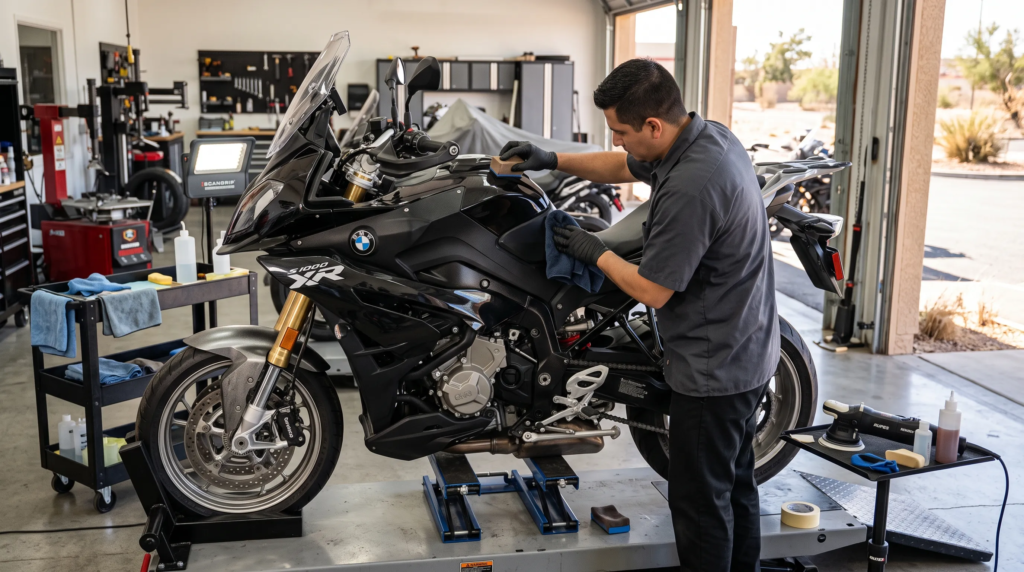
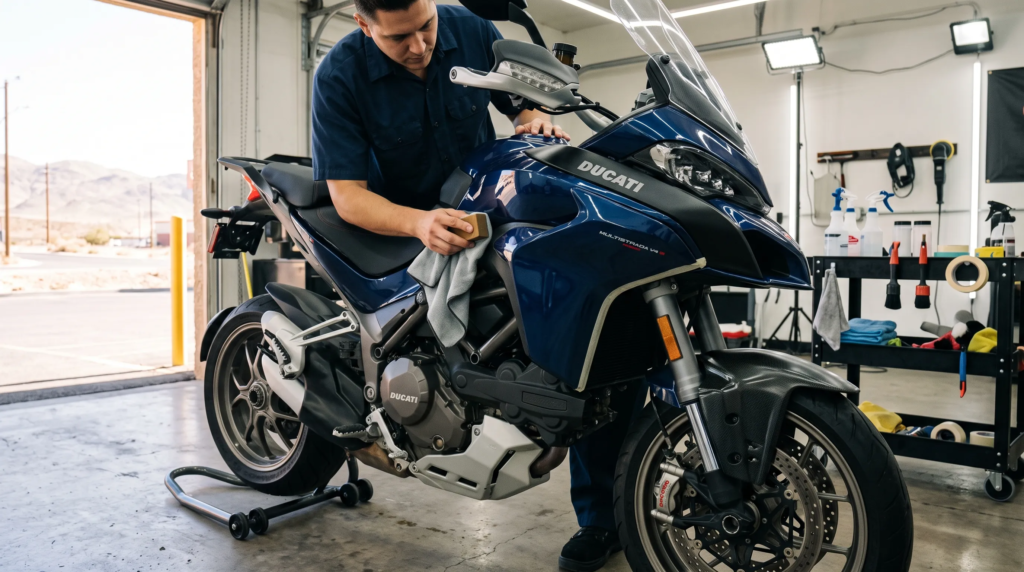
Motorcycle ceramic coating in Las Vegas gives riders a way to protect many of the exposed painted and finished surfaces that face Southern Nevada sun, road grime, bug residue, brake dust, and frequent cleaning. Unlike a car, a motorcycle leaves nearly everything out in the open. The fuel tank, fairings, wheels, painted panels, plastics, windscreen, and metal pieces can all see direct exposure during normal riding.
That makes surface selection a big part of coating a motorcycle correctly.
A product that works well on painted fairings may not be the right choice for a wheel, brake caliper, exhaust component, seat, or windscreen. The coating needs to match the material and the temperatures that surface experiences.
Ceramic Pro Las Vegas is an official Ceramic Pro Elite Dealer at 8540 Dean Martin Dr. Ste 170, Las Vegas, NV 89139. The shop’s published service lineup includes professional ceramic coating, Ceramic Pro ION, paint correction, PPF, and other vehicle protection services.
Ceramic Pro Las Vegas does not currently publish a dedicated motorcycle coating service page, so motorcycle owners should confirm the exact surfaces and coating products available for their bike before booking. Ceramic Pro’s own product information does list motorcycles as a use area for its Top Coat product, and Ceramic Pro dealer materials describe professional coating use on motorcycles and multiple surface types.
If you are considering motorcycle ceramic coating in Las Vegas, here is what to know about tanks, fairings, wheels, plastics, windscreens, hot components, preparation, and aftercare.
Motorcycles expose more surfaces directly to the environment than most passenger vehicles.
A rider in Las Vegas, NV may deal with:
A motorcycle also has more tight spaces than a car. Dirt can collect around bolts, wheels, forks, fairing seams, engine covers, and small trim pieces.
Motorcycle ceramic coating in Las Vegas can make compatible coated surfaces more hydrophobic and easier to wash.
Ceramic Pro describes its automotive coatings as creating water-repelling surfaces that resist contamination, oxidation, chemicals, and environmental exposure depending on the coating being used.
That does not mean a coated motorcycle stays clean by itself.
It means grime may be less likely to stick as firmly to a properly coated surface.
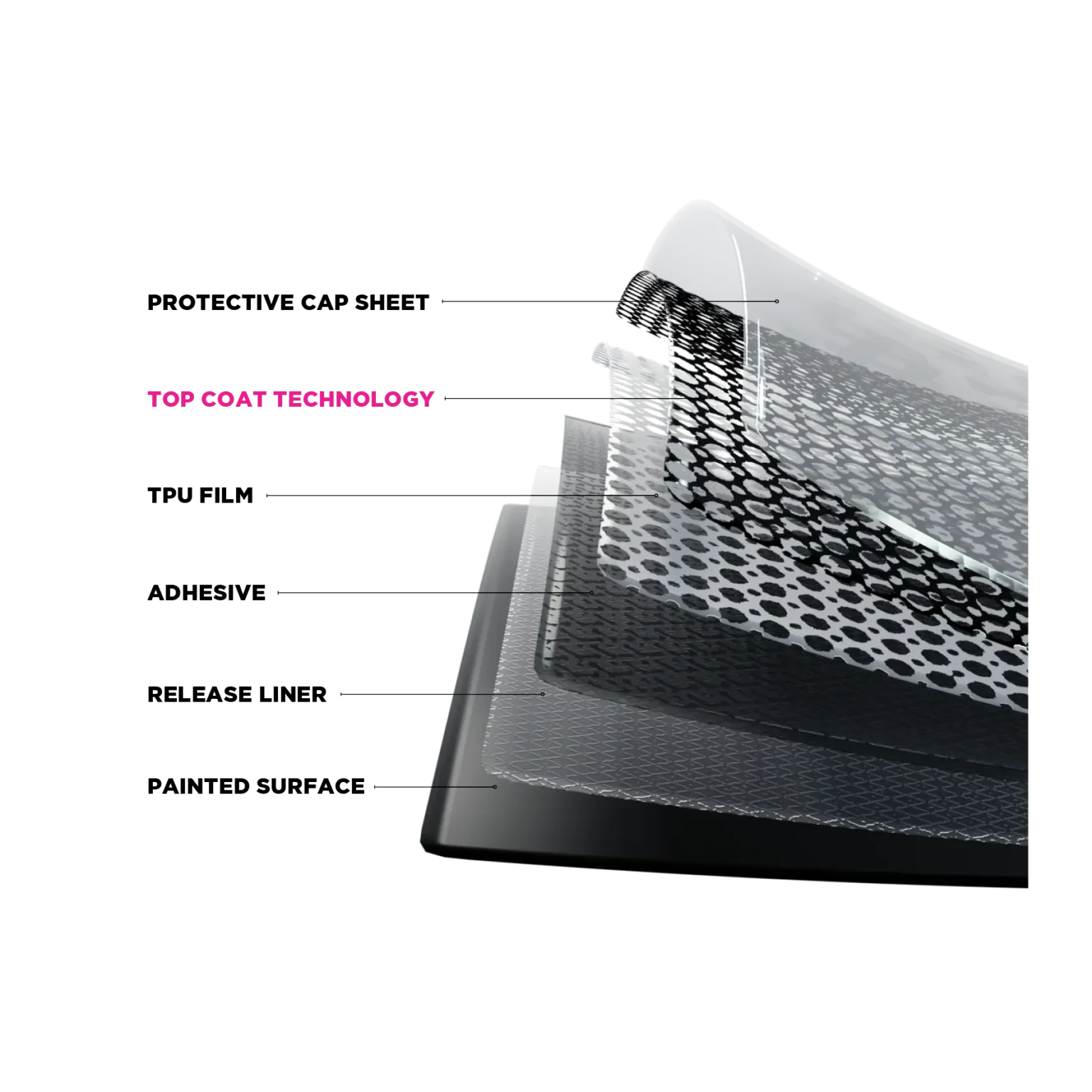
A professional ceramic coating bonds to a compatible prepared surface and creates a thin protective layer.
Ceramic Pro’s Top Coat technical sheet lists motorcycles among its approved use areas. The same sheet lists paint, clear coat, metal, plastic, leather, and other suitable materials among applicable substrates for that product.
Ceramic Pro also makes separate products for specific surfaces, such as Wheel & Caliper coating.
This matters because a motorcycle contains many different materials in a very small area.
A complete bike may have:
Not every surface should automatically receive the same coating.
The installer should identify what each piece is made from before deciding what belongs on it.
The fuel tank is one of the most noticeable painted surfaces on many motorcycles.
It also receives frequent contact.
Your legs may touch the tank while riding. Riding gear can rub against the sides. Fuel can drip near the filler area. Dust and bug residue can settle on the upper surfaces.
That makes the tank a common area to discuss when booking motorcycle ceramic coating in Las Vegas.
A coating on compatible painted tank surfaces can provide:
Ceramic coating does not stop physical rubbing from damaging a finish indefinitely.
Tank pads, protective film, or another physical barrier may still make sense in areas where jackets, zippers, belts, knees, or riding gear make repeated contact.
If physical abrasion is your concern, ask whether a small amount of PPF would make more sense on that area than coating alone.
Painted fairings are another strong candidate for motorcycle ceramic coating.
Fairings can collect:
Front fairings and lower fairings can become dirty quickly because they sit directly in airflow and near the road.
Ceramic coating can make those surfaces easier to clean when the underlying material and finish are compatible.
Glossy painted fairings can receive a coating designed for automotive paint when the finish is suitable.
A well-prepared glossy panel can take on deeper reflections after proper polishing and coating.
Matte and satin surfaces require more care.
You do not want to apply a product or polishing process that changes the intended sheen.
If your motorcycle has matte paint or satin bodywork, tell the installer before anything is polished or coated.
The product needs to be approved for that finish.
Wheels see some of the hardest conditions on a motorcycle.
They collect:
Ceramic Pro makes a dedicated Wheel & Caliper coating designed for wheels and brake calipers.
Ceramic Pro states that this coating is made to handle heat and chemical exposure while creating hydrophobic behavior that reduces brake-dust adhesion.
For motorcycle ceramic coating in Las Vegas, wheel coating can be useful for riders who spend a lot of time cleaning spoke wheels, gloss-black wheels, painted wheels, or intricate factory wheel designs.
The coating will not stop brake dust from appearing.
It can make routine wheel cleaning less frustrating.
Ask what parts of the wheel will be coated.
There is a difference between:
Some areas may require wheel removal for full access.
Do not assume a “wheel coating” service means every inch of the wheel will be treated.
Ceramic Pro specifically makes Wheel & Caliper coating for this purpose.
Brake calipers face:
Ceramic Pro describes the product as providing resistance to corrosion, chemical staining, oxidation, and brake-dust buildup.
The caliper surface still needs to be suitable for coating.
Painted or finished calipers should be inspected before application.
Brake rotors and braking surfaces are a different matter.
Products that change friction should not be casually applied to parts whose job depends on controlled friction.
A motorcycle coating appointment should clearly separate cosmetic wheel and caliper surfaces from functional braking areas.
If you are unsure what can be treated, ask the installer to identify the exact parts before application.
Motorcycles often use a mix of painted plastic, textured plastic, gloss carbon fiber, matte carbon fiber, and other composites.
Ceramic Pro states that its coating range can work across several compatible surface types, including plastics.
Clear-coated carbon fiber can often be treated more like another clear-coated exterior surface, depending on the finish.
Raw or matte materials should be evaluated separately.
The coating should not create an unwanted appearance change.
When booking motorcycle ceramic coating in Las Vegas, point out:
The installer can then decide which coating is suitable for each area.
Motorcycle windscreens are not all made from the same material as automotive windshield glass.
Many are made from acrylic, polycarbonate, or another clear plastic.
That distinction matters.
Ceramic Pro makes a dedicated Glass coating designed for automotive glass, but a motorcycle windscreen should not automatically receive a glass-only product without checking the windscreen material and coating compatibility.
Clear plastic can react differently from glass.
The same applies to:
Ask the installer to identify the material before applying anything.
Do not assume “clear surface” means “glass.”
This is one area where product selection becomes especially important.
Ceramic coatings for painted bodywork and wheels should not automatically be applied to exhaust headers or other very high-temperature components.
Ceramic Pro’s Top Coat technical data lists defined thermal performance conditions, while Wheel & Caliper is made for the demanding environment around wheels and brakes.
Exhaust systems can reach temperatures that differ greatly by motorcycle, component, riding conditions, tuning, and location on the exhaust.
Ceramic Pro Las Vegas has published guidance explaining that a coating needs to match the actual temperature range and substrate of the part being treated.
For exhaust headers, catalytic-converter areas, and other extreme-temperature components, ask specifically whether Ceramic Pro Las Vegas has a product approved for that surface and operating temperature.
Do not assume the product used on your fuel tank should also go on your exhaust.
Preparation is a major part of professional motorcycle ceramic coating in Las Vegas.
A bike can look clean while still having:
The coating is transparent.
If a fairing has swirl marks before coating, the coating does not erase them.
If a tank has visible scratches, those scratches can remain visible afterward.
That is why the installer needs to inspect the finish before coating.
Not every motorcycle needs paint correction.
Some bikes have well-maintained paint.
Others may show years of:
Paint correction can reduce suitable defects before coating.
Motorcycles create some special challenges for polishing because painted panels can be smaller, curved, narrow, or surrounded by trim and hardware.
A fuel tank also has different contours from a car hood.
The installer should decide how much polishing makes sense after looking at the bike.
Do not assume every motorcycle needs the same correction process.
Cleaning is one of the strongest everyday reasons riders consider ceramic coating.
Motorcycles can be time-consuming to wash because there are so many exposed parts.
A hydrophobic coating can reduce how firmly water and grime remain on compatible treated surfaces.
That may help with:
A coating does not eliminate detailing.
You still need to wash the motorcycle.
The goal is to make routine maintenance easier while placing a sacrificial coating over the finish.
Motorcycle ceramic coating has limits.
It does not make a motorcycle immune to:
If physical impact is your concern, ceramic coating is not the same as PPF.
Some motorcycle panels may be suitable for paint protection film, depending on their shape and finish.
You can ask Ceramic Pro Las Vegas whether paint protection film is practical for specific motorcycle panels.
Desert dust creates a common motorcycle-care problem.
A freshly cleaned bike can collect a light coating of dust after sitting outside.
Do not rub that dust off aggressively with a dry towel.
Fine particles can act as abrasives when dragged across glossy paint.
A safer approach is proper washing or rinsing according to the coating manufacturer’s care directions.
Coating can make dirt easier to release, but it cannot make grit harmless.
This matters on dark motorcycles where light scratches can become easy to see under strong Las Vegas, NV sunlight.
Front fairings, headlights, windscreens, mirrors, and forks can collect bug residue during rides.
Bug splatter should not be left on the surface for long periods, especially when the motorcycle sits in heat afterward.
A coated painted surface can make bug cleanup easier.
The same care rule still applies.
Remove contamination rather than letting it remain through repeated heat cycles.
Pay extra attention after highway rides and longer trips around Southern Nevada.
Once motorcycle ceramic coating in Las Vegas is installed, aftercare matters.
Let the bike cool before washing.
This is especially relevant around the engine, exhaust, wheels, and brakes.
Use products that are compatible with the coating and the motorcycle’s materials.
Harsh cleaners should not be the default.
Use separate wash tools for wheels and painted bodywork.
Brake dust can become abrasive.
Do not repeatedly allow mineral-rich water to dry on coated surfaces.
Hard-water spotting can still occur.
Clean insect residue from painted panels rather than letting it bake under the sun.
Do not drag desert grit over glossy painted panels with a dry cloth.
If you are already coating the bodywork, wheels are worth discussing during the same appointment.
Motorcycle wheels can require more cleaning than many car wheels because access is tighter and brake dust becomes visible quickly.
A dedicated wheel coating can make the surface more water-repellent and reduce how strongly some contamination sticks.
Ask whether coating will cover:
The shop can explain what is practical without interfering with braking, tires, bearings, or other mechanical areas.
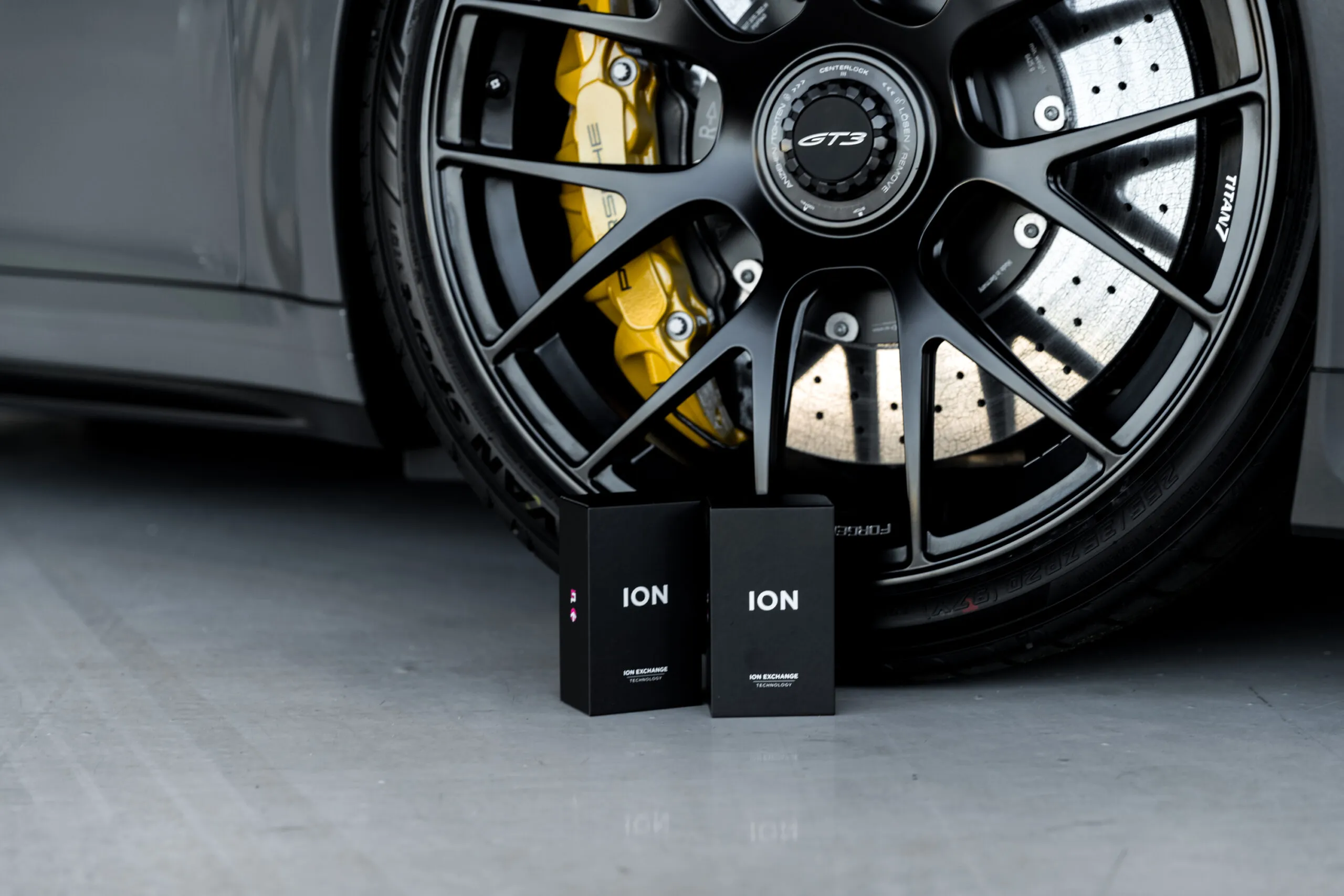
Ceramic Pro Las Vegas offers Ceramic Pro ION as one of its professional vehicle coating systems.
Ceramic Pro describes ION as a two-component coating system consisting of ION Base and ION Top.
The Ceramic Pro Las Vegas website currently presents ION mainly within its automotive vehicle-protection services. It does not publish a motorcycle-specific ION package.
For a motorcycle, the installer should determine which Ceramic Pro coating product is suited to each surface rather than assuming a passenger-car package transfers directly to the bike.
That distinction matters.
A motorcycle may need one coating on painted bodywork and another on wheels or calipers.
Many types of motorcycles may have suitable coated surfaces.
That can include:
The model matters less than the materials and finish.
A fully faired sport bike presents different surfaces from a chrome-heavy cruiser.
An adventure bike may have more textured plastics.
A touring motorcycle may have large painted panniers, fairings, and a tall windscreen.
The installer should look at the actual motorcycle before deciding what should be coated.
Before scheduling motorcycle ceramic coating in Las Vegas, ask:
These questions help turn a generic “ceramic coating” appointment into a surface-by-surface plan for your motorcycle.
Ceramic Pro Las Vegas is an official Ceramic Pro Elite Dealer serving riders and vehicle owners throughout the Las Vegas Valley.
The shop is located at:
8540 Dean Martin Dr. Ste 170, Las Vegas, NV 89139
Business hours are Monday through Friday, 9am to 6pm.
Ceramic Pro Las Vegas currently lists services including:
The current Ceramic Pro Las Vegas service pages do not list a dedicated motorcycle ceramic coating package.
If you want ceramic coating for a motorcycle, call (702) 943-8877 or visit the Ceramic Pro Las Vegas contact page and describe the bike.
Include:
The shop can confirm whether the motorcycle and proposed surfaces are suitable for the Ceramic Pro products currently offered.
Yes, compatible painted and clear-coated motorcycle tanks can be suitable for ceramic coating. Ceramic Pro lists motorcycles among the use areas for its Top Coat product. The tank should be inspected and prepared before coating. Areas exposed to repeated physical rubbing may still benefit from a separate physical protective layer.
Compatible painted fairings can be coated. Gloss paint, matte finishes, carbon fiber, textured plastic, and graphics may require different treatment, so the installer should identify the material before choosing the product.
Ceramic Pro makes a dedicated Wheel & Caliper coating intended for wheels and calipers. It is designed to handle heat, brake dust, chemical exposure, and road contamination. Brake rotors, pads, tires, and other friction-dependent components should not be treated as cosmetic coating surfaces.
No. Ceramic coating is not a substitute for paint protection film. It can create a hydrophobic, easier-to-clean surface, but it is not designed to absorb the kind of physical impact that causes a rock chip.
Do not assume the same coating used on paint can be used on exhaust parts. Exhaust temperatures vary greatly and can exceed the rated temperature of some coating products. Ask the installer whether a product is approved for the exact part and expected operating temperature.
Ceramic Pro Las Vegas currently publishes ceramic coating as part of its vehicle-protection service lineup but does not list a dedicated motorcycle ceramic coating page. Ceramic Pro manufacturer materials do list motorcycles as a use area for certain coatings. Call (702) 943-8877 to confirm motorcycle service and surface compatibility before booking.
Call Ceramic Pro Las Vegas at (702) 943-8877 or visit the contact page. The shop is located at 8540 Dean Martin Dr. Ste 170, Las Vegas, NV 89139. Provide the motorcycle year, make, model, finish, wheel type, and the surfaces you want protected.
Tell us about your vehicle, daily driving, and goals so we can recommend the best package for protection and style. Share the services you want to compare, such as paint protection film, ceramic coating, window tint, vinyl wrap, or paint correction. Include your timeline and any photos that show panels, glass, or problem areas. The more details you provide, the more precise our estimate and scheduling will be.
Explore the many services we offer by clicking the boxes below